l
l
blogger better. Powered by Blogger.

Search

Labels

blogger better

Followers

Blog Archive

Total Pageviews

Labels

Download

Blogroll

Featured 1

Curabitur et lectus vitae purus tincidunt laoreet sit amet ac ipsum. Proin tincidunt mattis nisi a scelerisque. Aliquam placerat dapibus eros non ullamcorper. Integer interdum ullamcorper venenatis. Pellentesque habitant morbi tristique senectus et netus et malesuada fames ac turpis egestas.

Featured 2

Curabitur et lectus vitae purus tincidunt laoreet sit amet ac ipsum. Proin tincidunt mattis nisi a scelerisque. Aliquam placerat dapibus eros non ullamcorper. Integer interdum ullamcorper venenatis. Pellentesque habitant morbi tristique senectus et netus et malesuada fames ac turpis egestas.

Featured 3

Curabitur et lectus vitae purus tincidunt laoreet sit amet ac ipsum. Proin tincidunt mattis nisi a scelerisque. Aliquam placerat dapibus eros non ullamcorper. Integer interdum ullamcorper venenatis. Pellentesque habitant morbi tristique senectus et netus et malesuada fames ac turpis egestas.

Featured 4

Curabitur et lectus vitae purus tincidunt laoreet sit amet ac ipsum. Proin tincidunt mattis nisi a scelerisque. Aliquam placerat dapibus eros non ullamcorper. Integer interdum ullamcorper venenatis. Pellentesque habitant morbi tristique senectus et netus et malesuada fames ac turpis egestas.

Featured 5

Curabitur et lectus vitae purus tincidunt laoreet sit amet ac ipsum. Proin tincidunt mattis nisi a scelerisque. Aliquam placerat dapibus eros non ullamcorper. Integer interdum ullamcorper venenatis. Pellentesque habitant morbi tristique senectus et netus et malesuada fames ac turpis egestas.

Tuesday, April 24, 2018

Meet the quantum blockchain that works like a time machine

A new – and theoretical – system for blockchain-based data storage could ensure that hackers will not be able to crack cryptocurrencies once we all enter the quantum era. The idea, proposed by researchers at the Victoria University of Wellington in New Zealand, would secure our crypto futures for decades to coming using a blockchain technology that is like a time machine.

You can check out their findings here.

To understand what’s going on here we have to define some terms. A blockchain stores every transaction in a system on what amounts to an immutable record of events. The work necessary for maintaining and confirming this immutable record is what is commonly known as mining. But this technology – which the paper’s co-author Del Rajan claims will make up “10 percent of global GDP… by 2027” – will become insecure in an era of quantum computers.

Therefore the solution is to store a blockchain in a quantum era requires a quantum blockchain using a series of entangled photons. Further, Spectrum writes: “Essentially, current records in a quantum blockchain are not merely linked to a record of the past, but rather a record in the past, one does that not exist anymore.”

Yeah, it’s weird.

From the paper intro:

Our method involves encoding the blockchain into a temporal GHZ (Greenberger–Horne–Zeilinger) state of photons that do not simultaneously coexist. It is shown that the entanglement in time, as opposed to an entanglement in space, provides the crucial quantum advantage. All the subcomponents of this system have already been shown to be experimentally realized. Perhaps more shockingly, our encoding procedure can be interpreted as non-classically influencing the past; hence this decentralized quantum blockchain can be viewed as a quantum networked time machine.

In short the quantum blockchain is immutable because the photons that it contains do not exist in the current time but are still extant and readable. This means you can see the entire blockchain but you cannot “touch” it and the only entry you would be able to try to tamper with is the most recent one. In fact, the researchers write, “In this spatial entanglement case, if an attacker tries to tamper with any photon, the full blockchain would be invalidated immediately.”

Is this really possible? The researchers note that the technology already exists.

“Our novel methodology encodes a blockchain into these temporally entangled states, which can then be integrated into a quantum network for further useful operations. We will also show that entanglement in time, as opposed to entanglement in space, plays the pivotal role for the quantum benefit over a classical blockchain,” the authors write. “As discussed below, all the subsystems of this design have already been shown to be experimentally realized. Furthermore, if such a quantum blockchain were to be constructed, we will show that it could be viewed as a quantum networked time machine.”

Don’t worry about having to update your Bitcoin wallet, though. This process is still very theoretical and not at all available to mere mortals. That said, it’s nice to know someone is looking out for our quantum future, however weird it may be.


https://ift.tt/eA8V8J Meet the quantum blockchain that works like a time machine https://ift.tt/2FcXjUc

Spotify beefs up its free tier as Apple Music gains traction

Today at the Gramercy Theater in NYC, Spotify’s Chief R&D Officer Gustav Söderström announced a brand new free version of the Spotify mobile app.

By leveraging their investment in machine learning, Spotify’s new free tier recommends music to users on the fly. That said, the free tier has always limited users to shuffle. With the new version, users can listen on-demand to whatever song they want, as many times as they want, as long as those songs appear on one of the 15 personalized discovery playlists.

In total, that’s around 750 tracks (>40 hours of music) that Spotify is serving up to users for on-demand listening.

Spotify will also make recommendations in the free mobile version based on existing user-made playlists, from the songs on those playlists to the name of the playlist itself.

Finally, Spotify has built in a low-data mode that cuts data consumption by up to 75 percent. In the past, Spotify didn’t allow offline listening for free, meaning that users were somewhat tethered to wifi if they needed to conserve data.

With the new data consumption system (it’s unclear how this will work), users can actually listen to much more music with wireless data.

In 2014, Spotify introduced its free tier to mobile, letting users listen to their playlists on shuffle with ads. It was a huge part of Spotify’s free-tier growth. In fact, today Spotify has 90 million users on the free tier. And many of those convert to paid users — the company now has 70 million paid subscribers.

The company has focused heavily on mobile since 2014, especially where it concerns the premium mobile player.

Spotify is built upon three tiers: ubiquity, personalization and freemium. Söderström explained that Spotify thinks of itself as the broadcast radio of the 90s, where discovery of great music was supported by ads and drove people to the record stores.

Spotify’s free tier represents broadcast radio for Spotify, and is a critical piece of Spotify’s overall strategy as paid services like Apple Music continue to grow.


https://ift.tt/eA8V8J Spotify beefs up its free tier as Apple Music gains traction https://ift.tt/2Hrhq3g

Flipboard launches a new tech section

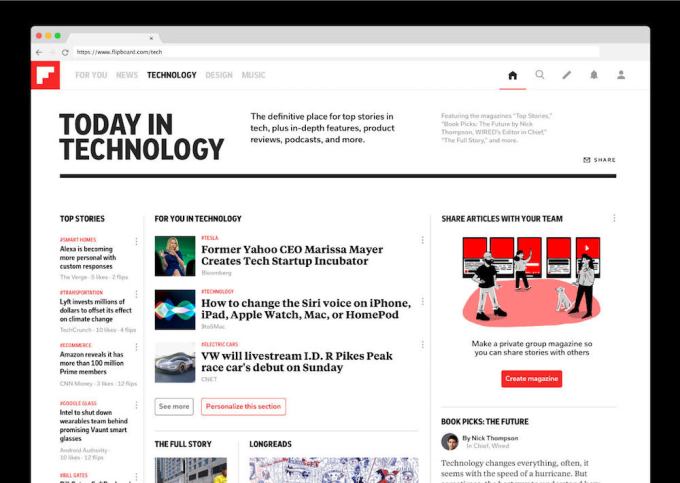
With recent changes, Flipboard has been placing a big emphasis on allowing readers to go deep on their interests. Now it’s adding even more features around one particular interest, in the Technology section of the Flipboard website and app.

“We want to make Flipboard definitive for tech insiders and enthusiasts,” said CEO Mike McCue.

This positions Flipboard as more of a direct competitor to a tech news aggregator like Techmeme, but with more curation from partners and from readers themselves.

The most immediately noticeable change is what the company describes as “newspaper-like, high-density layout.” Basically, it moves away from the image-heavy look that Flipboard is known for, towards a layout that places a bigger emphasis on headlines and text, designed for quick scanning.

While McCue said the new look is “really meant for the desktop,” Flipboard has also created a version for the mobile web, and the app will also vary between a high-density and low-density layout depending on the stories. (If it seems strange for Flipboard to be placing such a big emphasis on its web experience, remember that the company has also been shifting its focus away from its own native article formats towards the mobile web.)

Flipboard tech desktop

Regardless of which layout you’re seeing, the section will also have new content. Some of it will be curated by Flipboard publishers, with The Verge creating roundups for Gadgets News and Artificial Intelligence, the Wirecutter offering Deals of the Week and the team here at TechCrunch curating our latest Features.

“Flipboard has really become more of an ecosytem,” McCue said. “Publishers and curators are curating stories around all sorts of different topics. We want to provide access to that ecosystem on any platform, with or without the app.”

Teams can also create their own magazines, which are basically private collections of stories. So if you’re at a startup and want all of your colleagues to be up-to-date on the latest headlines about your industry and competitors, you can curate a magazine that’s only visible to them.

Flipboard will also be asking experts and influencers for book recommendations, starting with Wired Editor in Chief Nick Thompson’s roundup of “Five Books I’ve Recently Read About the Future.”

And all of this will be rounded up in a daily email, which will include the latest tech headlines as well as selections from the team magazine. On Saturday, the newsletter will focus on the book recommendations, with links to buy the books on Amazon.

McCue suggested that if all this new content is embraced by readers, we might see Flipboard start to pursue a similar strategy around other topics, with a focus on reaching professional readers. Next up: Advertising.

Flipboard has tried to allow people to explore their interests, now it’s taking aim with a new section focused specifically on technology; Mike quote; the most noticeable change is a new layout (a greater shift to the web); will also include new content; new team magazine feature; it’s also a new email


https://ift.tt/2HWdpVt Flipboard launches a new tech section https://ift.tt/2qV3Tdd

Delivery robotics company Marble raises $10 million, with plans to move beyond food

San Francisco-based robotics company Marble announced this morning that it’s just closed a $10 million Series A. The round, which involves the likes of Tencent, Lemnos, Crunchfund and Maven, brings the startup’s total funding to $15 million.

In press material tied to the announcement, Marble’s careful not to get hung up on the whole food delivery label that’s been hung on the company since its early days. Instead, Marble’s now referring to itself as “the last-mile logistics company,” a catchy title that points to its broader ambitions to help meet the growing expectations of e-commerce consumers.

“Two day [delivery] has become the norm of expectations,” Marble CEO Matthew Delaney told TechCrunch. “It’s the Amazon effect. Everyone is trying to figure out how to get things to meet the consumer demand of faster and cheaper. That move from next day to same day and sooner is the inevitable trend that is happening.”

This time last year, the company made headlines for cruising down the San Francisco sidewalks with a Yelp Eat24 logo, playing the role traditionally reserved for humans on bicycles and mopeds. The system’s on-board LIDAR sensor help it navigate around pedestrians and other potential hazards, with plans for on-board temperature control helping keep food hot or cold as it cruises toward its destination.

Even then the company touched upon broader ambitions, including groceries, prescriptions and package delivery. Now, it seems, the company is ready to expand those trials.

“It’s a lot more than just food delivery. It’s about rearchitecting the urban supply chain of the future, to open up these services that everyone can afford,” says Delaney, “and bring that next level conveyance to everyone. The at-home parent with six kids or the homebound, elderly or disabled. They don’t have this option. Nobody can afford these services.”

Of course, the company and its competition are going to have to work with regulators to see that future to fruition. Marble’s hometown has halted sidewalk trials out of the same concerns that recently found it putting the kibosh on the city’s recent scooter obsession.

“If we don’t value our society,” City Supervisor Norman Yee said at the time, “if we don’t value getting the chance to go the store without being run over by a robot[…]what is happening?”

Delaney says the company is exploring other avenues for testing, but remains hopeful that it will be able to use its own backyard. “We’ve had so many other states and cities reach out to us. We continue to remain optimistic about San Francisco. It’s our home town. We want to continue to work with the local government to move regulation forward. We want our home town to benefit from this, instead of being the one backwards place.”


https://ift.tt/eA8V8J Delivery robotics company Marble raises $10 million, with plans to move beyond food https://ift.tt/2vPAbvZ

DoorDash makes a big push into grocery delivery through a pilot program with Walmart

DoorDash is about to make a huge move into grocery delivery, but instead of going all out as a delivery service on its own, it’s instead going to be working behind the scenes to power delivery networks for larger companies — with Walmart as its first big partner.

While Instacart looks to control the end-to-end customer experience for grocery delivery, and Amazon is off doing Amazon-y things with its Whole Foods delivery system, DoorDash is hoping it can build a network that any company that needs some delivery network can tap without giving up its direct relationship with their customers. DoorDash is rolling out grocery delivery with Walmart in Atlanta in the first of what may be a major move to become a back-end platform for companies like Walmart, which want a delivery button on their website but don’t want to build the entire network themselves. By doing that, it offers DoorDash a potentially nice neutral niche as grocery delivery heats up.

“You can use the term white label, but our drivers still will often wear the DoorDash shirt and have the DoorDash bag,” DoorDash COO Christopher Payne said. “But if you go to Walmart.com, and order from Walmart in Atlanta, you’ll have no idea it’s from DoorDash. We’re very supportive of that scenario, that’s the DoorDash Drive scenario. We’re excited to build a business with them and provide this capability.”

Payne said he hopes this will be one of the first of a major expansion of that DoorDash Drive initiative to become a tool that businesses can start tapping for local delivery. And while DoorDash may partly be giving up that direct relationship with users, it can start getting a lot more data when it comes to deliveries. That data then helps it become more and more efficient, ensuring that it can get deliveries done in the best matter and attract more customers, leading to the need for more drivers, and so on.

DoorDash also basically started the whole last-mile delivery business on hard mode with restaurant delivery, Payne said. What DoorDash loses in that direct user experience is paid back in data, Payne says, and that’s more than valuable enough.

“It turns out restaurant delivery is probably one fo the hardest delivery use cases you have — you have to get a pizza somewhere in 20 or 30 minutes or it won’t be crisp, and you have to get an ice cream cone somewhere before it melts. Grocery delivery tends to be delivered earlier in the day, which is before dinner or before you go to work,” he said. “That works out perfectly for us, actually, because our drivers aren’t busy or are less busy than they would be otherwise. It’s a delivery window, as opposed to one that’s getting something to you at an exact moment and time. That’s actually much easier and less demanding than a real-time delivery.

It’s still a significant step beyond its core competency, which is restaurant delivery. But while that has the potential to be a big business, it’s also going to top out at some point. GrubHub, for example, has a market cap of nearly $9 billion — but Amazon, the backbone of how many consumers engage with physical goods through the Internet, is a $700 billion-plus company. If DoorDash is going to continue to grow, it has to start expanding into new lines of revenue, and figuring out how to take all the data and tools it’s built and bring them to new businesses is going to be critical.

Amazon changed the calculus of last-mile grocery delivery, and it pretty much did it overnight — or at least over the span of a few months, which is the equivalent of overnight for a $700 billion company. Amazon acquired Whole Foods, and all of its locations in major metropolitan areas, for $13.7 billion and very quickly began offering two-hour delivery for prime customers for Whole Foods. On top of that, the company quickly started offering a credit card with an absurdly good reward system that’s tied directly to Prime purchases and Whole Foods (assuming you stay within the Prime ecosystem).

That’s meant that larger companies find themselves trying to figure out how to make such an agile move, and do it as soon as possible. For Walmart, getting this partnership with DoorDash allows it to just add a small segment to its typical customer flow without having to build out a full-on logistics delivery system. The opportunity to expand that to other businesses is pretty natural, and that’s the theme behind the Drive platform, and in theory offers businesses a way to quickly ramp up a delivery network without having to hand off the customer relationship to DoorDash. That may, in the end, be much more palatable for businesses.

“One of the other advantages of partnering with a company like Walmart isn’t just that they’re a leading grocer in the US,” Payne said. “They’re in a lot of other lines of businesses. As they want to expand and deliver more to their customers, they have physical assets to do that, so it provides a nice solution for us to test other items in the future. I would say grocery delivery is very much in its early days, it’s roughly equivalent to where food delivery was four years ago. We’re all going to be learning together, and it also means there’s gonna be a lot of other competition as there is in food delivery. But we believe our merchant operational excellence and quality of delivery will set us apart, and that’ll be proven in time.”


https://ift.tt/eA8V8J DoorDash makes a big push into grocery delivery through a pilot program with Walmart https://ift.tt/2FbTpez

DoorDash makes a big push into grocery delivery through a pilot program with Walmart

{rss:content:encoded} DoorDash makes a big push into grocery delivery through a pilot program with Walmart https://ift.tt/2FbTpez https://ift.tt/2HOjF48 April 24, 2018 at 02:00PM

DoorDash is about to make a huge move into grocery delivery, but instead of going all out as a delivery service on its own, it’s instead going to be working behind the scenes to power delivery networks for larger companies — with Walmart as its first big partner.

While Instacart looks to control the end-to-end customer experience for grocery delivery, and Amazon is off doing Amazon-y things with its Whole Foods delivery system, DoorDash is hoping it can build a network that any company that needs some delivery network can tap without giving up its direct relationship with their customers. DoorDash is rolling out grocery delivery with Walmart in Atlanta in the first of what may be a major move to become a back-end platform for companies like Walmart, which want a delivery button on their website but don’t want to build the entire network themselves. By doing that, it offers DoorDash a potentially nice neutral niche as grocery delivery heats up.

“You can use the term white label, but our drivers still will often wear the DoorDash shirt and have the DoorDash bag,” DoorDash COO Christopher Payne said. “But if you go to Walmart.com, and order from Walmart in Atlanta, you’ll have no idea it’s from DoorDash. We’re very supportive of that scenario, that’s the DoorDash Drive scenario. We’re excited to build a business with them and provide this capability.”

Payne said he hopes this will be one of the first of a major expansion of that DoorDash Drive initiative to become a tool that businesses can start tapping for local delivery. And while DoorDash may partly be giving up that direct relationship with users, it can start getting a lot more data when it comes to deliveries. That data then helps it become more and more efficient, ensuring that it can get deliveries done in the best matter and attract more customers, leading to the need for more drivers, and so on.

DoorDash also basically started the whole last-mile delivery business on hard mode with restaurant delivery, Payne said. What DoorDash loses in that direct user experience is paid back in data, Payne says, and that’s more than valuable enough.

“It turns out restaurant delivery is probably one fo the hardest delivery use cases you have — you have to get a pizza somewhere in 20 or 30 minutes or it won’t be crisp, and you have to get an ice cream cone somewhere before it melts. Grocery delivery tends to be delivered earlier in the day, which is before dinner or before you go to work,” he said. “That works out perfectly for us, actually, because our drivers aren’t busy or are less busy than they would be otherwise. It’s a delivery window, as opposed to one that’s getting something to you at an exact moment and time. That’s actually much easier and less demanding than a real-time delivery.

It’s still a significant step beyond its core competency, which is restaurant delivery. But while that has the potential to be a big business, it’s also going to top out at some point. GrubHub, for example, has a market cap of nearly $9 billion — but Amazon, the backbone of how many consumers engage with physical goods through the Internet, is a $700 billion-plus company. If DoorDash is going to continue to grow, it has to start expanding into new lines of revenue, and figuring out how to take all the data and tools it’s built and bring them to new businesses is going to be critical.

Amazon changed the calculus of last-mile grocery delivery, and it pretty much did it overnight — or at least over the span of a few months, which is the equivalent of overnight for a $700 billion company. Amazon acquired Whole Foods, and all of its locations in major metropolitan areas, for $13.7 billion and very quickly began offering two-hour delivery for prime customers for Whole Foods. On top of that, the company quickly started offering a credit card with an absurdly good reward system that’s tied directly to Prime purchases and Whole Foods (assuming you stay within the Prime ecosystem).

That’s meant that larger companies find themselves trying to figure out how to make such an agile move, and do it as soon as possible. For Walmart, getting this partnership with DoorDash allows it to just add a small segment to its typical customer flow without having to build out a full-on logistics delivery system. The opportunity to expand that to other businesses is pretty natural, and that’s the theme behind the Drive platform, and in theory offers businesses a way to quickly ramp up a delivery network without having to hand off the customer relationship to DoorDash. That may, in the end, be much more palatable for businesses.

“One of the other advantages of partnering with a company like Walmart isn’t just that they’re a leading grocer in the US,” Payne said. “They’re in a lot of other lines of businesses. As they want to expand and deliver more to their customers, they have physical assets to do that, so it provides a nice solution for us to test other items in the future. I would say grocery delivery is very much in its early days, it’s roughly equivalent to where food delivery was four years ago. We’re all going to be learning together, and it also means there’s gonna be a lot of other competition as there is in food delivery. But we believe our merchant operational excellence and quality of delivery will set us apart, and that’ll be proven in time.”

Belgium’s Cowboy raises $3M led by Index to launch a smarter e-bike

Cowboy, the startup that’s building a new, smarter electronic bicycle, quietly launched in its home country of Belgium this past week, whilst simultaneously disclosing it has raised $3 million in seed funding.

Notably, the round is led by Index Ventures. The London and San Francisco-based VC appears to be particularly bullish on electric-powered mobility, recently backing electric scooter startup Bird.

France’s Hardware Club, and Kima Ventures also participated in Cowboy’s seed round, along with individual investors Thibaud Elziere (eFounders), Bertrand Jelensperger (LaFourchette), Harold Mechelynck (Ogone), Frederic Potter (Netatmo) and Francis Nappez (BlaBlaCar).

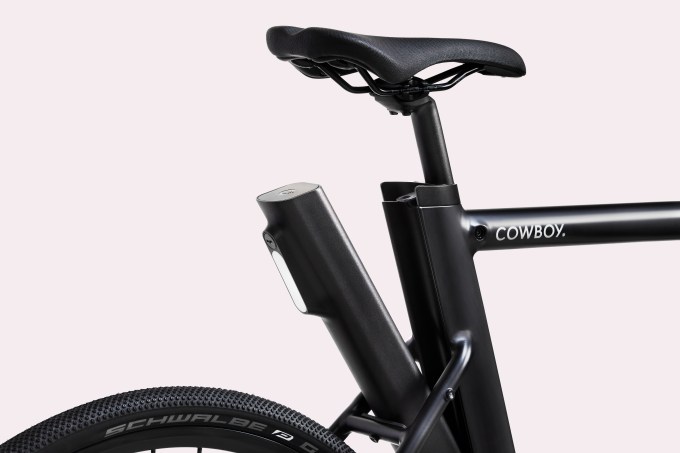
Founded by Adrien Roose and Karim Slaoui, who both previously co-founded Take East Easy, an early Deliveroo competitor, and Tanguy Goretti, who was previously co-founder ride-sharing startup Djump, Cowboy has set out to build and sell a better designed e-bike that it claims addresses issues that have historically held back the category’s mass appeal. This includes a more elegant design than many existing models currently on the market, making the bike ‘smart’ by being connected to a mobile phone and ‘over the air’ through cellular and GPS networks, and better affordability than comparative offerings.

In a call last week, Roose gave me a brief run down of the Cowboy’s features and a little of the product’s back story, including how Index got interested. He says he first became aware of e-bikes (or “ped-elec” bikes that combine a manual pedal and electric motor) after being puzzled that they weren’t more widely used by Take Eat Easy’s bicycle couriers. Riders that did use an e-bike tended to be older, suggesting that current e-bikes didn’t appeal to a younger demographic.

After researching the market a lot deeper, Cowboy’s eventual founders also noticed that most e-bikes use entirely off the shelf components, which not only constrains differentiation, but also price, since most of the margin goes to parts suppliers and retailers. By designing a completely new e-bike, where the body and brain is bespoke — namely, the chassis/battery, and printed circuit board (PCB) — and where the product is sold direct online, the team believed there was an opportunity to re-define the e-bike category entirely.

The resulting Cowboy e-bike is pitched as a better ride, powered by “intuitive and automatic motor assistance”. This uses built-in sensor technology that measures speed and torque, and adjusts to pedalling style and force to deliver an added boost of motor-assisted speed at key moments e.g. when you start pedalling, when you accelerate, or go uphill.

In addition, the Cowboy it attempting to be more secure thanks to its connectivity. You unlock the bike via the Cowboy smart phone app, which also supports on-board navigation and a data dashboard that tracks speed and other useful stats.

It is also worth noting that this is definitely a vertical platform in the longer-run. That IoT-styled SIM card and GPS have been added to the e-bike for a reason. Initially it will be used for diagnostics and ‘find my bike’ in case of theft, but one can easily imagine other premium services being offered on top, such as bike insurance perhaps.

The battery is said to be good to go for around 50km, and takes 2.5 hours to fully charge. As part of the bespoke design, it is integrated into the frame under the saddle and is easily removable. The Cowboy claims to be one of the lightest urban electric bikes on the market, too (the bike and battery together weigh 16kg).

However, as with any product where it’s ultimately about the ride, you probably need to try a Cowboy before truly appreciating it — which, as a powered wheelchair user with limited muscle strength, I’m never going to be able to do. Instead, I’ll note that a pre-production model — which Roose admits still had many remaining issues to iron out — won the prestigious EuroBike trade fair in July 2017.

He also echoes this sentiment when I ask him to tell the story of how the Cowboy team first got the attention of Index Ventures. He says that the startup weren’t originally planning to raise a large seed round, having already got a commitment from Cowboy’s original backers for enough follow-on investment to do a production run and small launch in Belgium. However, knowing that hardware is, well, hard, and that costs can easily overshoot, the company was advised by Hardware Club (who he says has been instrumental in making Cowboy a reality) to find a larger VC backer to mitigate this risk. Index Partner Martin Mignot, who led the round, was immediately interested and then convinced after actually trying the e-bike, but Roose says that it took a lot more to persuade the rest of the Index team to back Cowboy when he subsequently pitched the startup over a video call.

Which brings us to Cowboy’s go-to-market strategy. If you really need to touch the device to truly appreciate it, how will the startup sell directly online? In Brussels, Roose says the startup is experimenting with recruiting product ambassadors — people who already have a Cowboy in their possession — who will be able to bring the device to a prospective buyer to try beforehand. This isn’t as scalable as a pure digital marketing effort, but is still likely a lot cheaper than selling to physical retailers, which in turn would push up the €1,790 price. Meanwhile, the company is only delivering to Belgium for now, but with capital in the bank it plans to launch more widely in Europe next year.


https://ift.tt/2HLGTYw Belgium’s Cowboy raises $3M led by Index to launch a smarter e-bike https://ift.tt/2Hq7uaa

Facebook reveals 25 pages of takedown rules for hate speech and more

Facebook has never before made public the guidelines its moderators use to decide whether to remove violence, spam, harassment, self-harm, terrorism, intellectual property theft, and hate speech from social network until now. The company hoped to avoid making it easy to game these rules, but that worry has been overridden by the public’s constant calls for clarity and protests about its decisions. Today Facebook published 25 pages of detailed criteria and examples for what is and isn’t allowed.

Facebook is effectively shifting where it will be criticized to the underlying policy instead of individual incidents of enforcement mistakes like when it took down posts of the newsworthy “Napalm Girl” historical photo because it contains child nudity before eventually restoring them. Some groups will surely find points to take issue with, but Facebook has made some significant improvements. Most notably, it no longer disqualifies minorities from shielding from hate speech because an unprotected characteristic like “children” is appended to a protected characteristic like “black”.

Nothing is technically changing about Facebook’s policies. But previously, only leaks like a copy of an internal rulebook attained by the Guardian had given the outside world a look at when Facebook actually enforces those policies. These rules will be translated into over 40 languages for the public. Facebook currently has 7500 content reviewers, up 40% from a year ago.

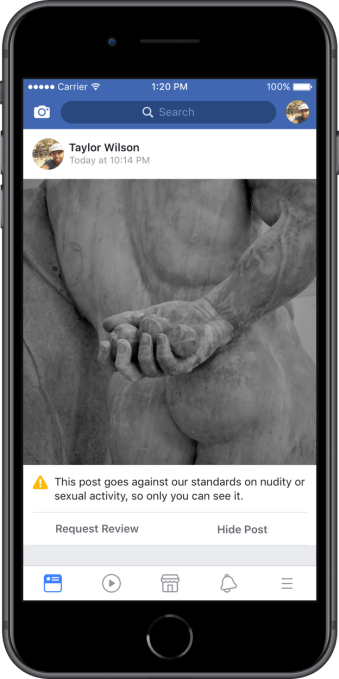
Facebook also plans to expand its content removal appeals process, It already let users request a review of a decision to remove their profile, Page, or Group. Now Facebook will notify users when their nudity, sexual activity, hate speech or graphic violence content is removed and let them hit a button to “Request Review”, which will usually happen within 24 hours. Finally, Facebook will hold Facebook Forums: Community Standards events in Germany, France, the UK, India, Singapore, and the US to give its biggest communities a closer look at how the social network’s policy works.

Fixing the “white people are protected, black children aren’t” policy

Facebook’s VP of Global Product Management Monika Bickert who has been coordinating the release of the guidelines since September told reporters at Facebook’s Menlo Park HQ last week that “There’s been a lot of research about how when institutions put their policies out there, people change their behavior, and that’s a good thing.” She admits there’s still the concern that terrorists or hate groups will get better at developing “workarounds” to evade Facebook’s moderators, “but the benefits of being more open about what’s happening behind the scenes outweighs that.”

Content moderator jobs at various social media companies including Facebook have been described as hellish in many exposes regarding what it’s like to fight the spread of child porn, beheading videos, racism for hours a day. Bickert says Facebook’s moderators get trained to deal with this and have access to counseling and 24/7 resources, including some on-site. They can request to not look at certain kinds of content they’re sensitive to. But Bickert didn’t say Facebook imposes an hourly limit on how much offensive moderators see per day like how YouTube recently implemented a four-hour limit.

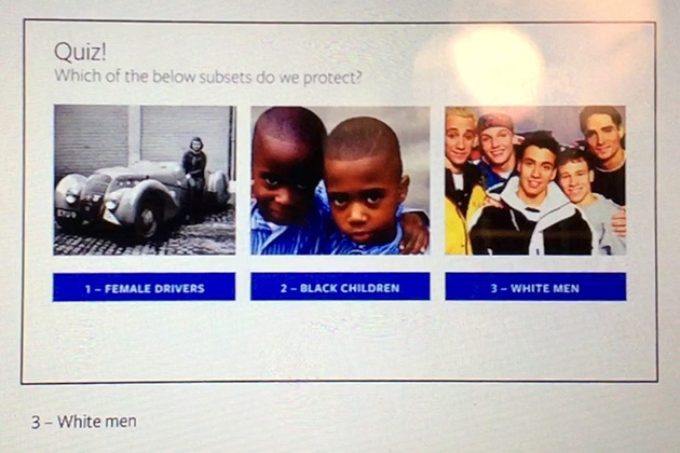
A controversial slide depicting Facebook’s now-defunct policy that disqualified subsets of protected groups from hate speech shielding. Image via ProPublica

The most useful clarification in the newly revealed guidelines explains how Facebook has ditched its poorly received policy that deemed “white people” as protected from hate speech, but not “black children”. That rule that left subsets of protected groups exposed to hate speech was blasted in a ProPublica piece in June 2017, though Facebook said it no longer applied that policy.

Now Bickert says “Black children — that would be protected. White men — that would also be protected. We consider it an attack if it’s against a person, but you can criticize an organization, a religion . . . If someone says ‘this country is evil’, that’s something that we allow. Saying ‘members of this religion are evil’ is not.” She explains that Facebook is becoming more aware of the context around who is being victimized. However, Bickert notes that if someone says “‘I’m going to kill you if you don’t come to my party’, if it’s not a credible threat we don’t want to be removing it.” 

Do community standards = editorial voice?

Being upfront about its policies might give Facebook more to point to when it’s criticized for failing to prevent abuse on its platform. Activist groups say Facebook has allowed fake news and hate speech to run rampant and lead to violence in many developing countries where Facebook hasn’t had enough native speaking moderators. The Sri Lankan government temporarily blocked Facebook in hopes of ceasing calls for violence, and those on the ground say Zuckerberg overstated Facebook improvements to the problem in Myanmar that led to hate crimes against the Rohingya people.

Revealing the guidelines could at least cut down on confusion about whether hateful content is allowed on Facebook. It isn’t. Though the guidelines also raise the question of whether the Facebook value system it codifies means the social network has an editorial voice that would define it as a media company. That could mean the loss of legal immunity for what its users post. Bickert stuck to a rehearsed line that “We are not creating content and we’re not curating content”. Still, some could certainly say all of Facebook’s content filters amount to a curatorial layer.

But whether Facebook is a media company or a tech company, it’s a highly profitable company. It needs to spend some more of the billions it earns each quarter applying the policies evenly and forcefully around the world.


from Social – TechCrunch https://ift.tt/2qVuM0q Facebook reveals 25 pages of takedown rules for hate speech and more Josh Constine https://ift.tt/2F9zYmB
via IFTTT

Monday, April 23, 2018

From Ferraris to flying taxis: Q&A with Lilium’s new Head of Product Design

Munich-based Lilium, the super ambitious company developing an electric vertical take-off and landing (VTOL) jet and accompanying “air taxi” service, continues to hire top talent to make its vision a reality. The latest new recruitment is car design veteran Frank Stephenson, who has previously worked for Ferrari, Maserati, and Mini, to name but a few.

Considered one of the world’s most renowned and influential car designers in recent times, 58-year-old Stephenson’s portfolio includes iconic designs such as the BMW X5, New MINI, Ferrari F430, Maserati MC12, and McLaren P1. Now he’s embarking on adding the Lilium jet to that list.

Officially starting next month, he’ll be tasked with recruiting an entirely new design team to shape both the interior and exterior of the jet itself, as well as a design language for the company’s wider infrastructure, including landing pads and departure lounges.

In a call with Stephenson yesterday morning, I got to ask him why he’s ditched Ferraris for flying taxis, what his new role will entail more specifically, and to dig a little deeper into how he thinks about design and why good design really matters. A lightly edited transcript of the full Q&A follows.

TC: I don’t know a huge amount about designing cars, let alone designing cars that can fly. Designing a modern-day car involves a heck of a lot of people and designing something like the Lilium jet again involves a whole team of people. As head of design, how does your role fit into the larger machine of building a vehicle or ‘flying car’?

So if you have a Michelin rated-restaurant and you’ve got to feed 100 people, you’re going to have quite a few cooks in there and the waiters and everybody else to run the machine. But the chef, the guy that’s got the Michelin stars… gets all the credit for it. But it’s all the other guys doing the work for him and he’s basically overseeing it and he’s trying to keep everything moving along the right track. That’s kind of what it’s like. I mean, I’m not probably your standard type of design director because I like to get in and cook and mix up the stuff too. I just have never been able to stop getting my hands dirty. I guess in that respect, the design directors come across often as prima donnas almost and sit back and watch the guys work and every now and then say he likes it or he doesn’t like it. But I am more of a hands on type of director.

I like to build small teams. I don’t like huge teams because it takes a lot longer to get things done and the energy sometimes isn’t as strong with a big team as it is with a smaller team. You’ve got to work faster and much more focused and much more efficiently to get the amount of work done. So that sort of builds the steam up in the pressure cooker, but if you love design it’s absolutely the right temperature to be working at. You want to be under pressure to deliver great design. And typically if you think about a design too long, it gets watered down and loses that character, that pureness that you had at the beginning. So smaller teams tend to come up with better ideas I think, or more dramatic ideas, than huge companies with huge design teams.

I don’t set the brief because that comes from marketing, what product segment or what market segment the product should fit. So if they’re telling us to design a two-seater vehicle or a five seater vehicle or whatever then that becomes the target of the design team to deliver in a certain time span. What I do is I meet with the marketing guys, I meet with engineering guys.

The engineering guys will lay out what we call a package, where all the critical components are for the vehicle. With a car it is typically where does the passenger and the driver sit, where are the wheels and where is the engine and how much trunk or boot space are we going to have. Things like that. And then I work around all those components with the aerodynamic engineers, suspension and everything.

What I have to do basically is get the team going with theme ideas and really innovative breakthrough ideas, because that’s what designers do. They don’t repeat stuff, they have to come up with stuff that basically moves the game forward. You’ve got to create within this design team a kind of awesome childlike creativity and emotion feeling. It takes a lot of brainstorming and inspiration. You sort of set the tone of that kind of atmosphere within design to get the designers going and then the mood gains momentum.

I’m very advanced in the way I think — I have to be because of the way design is geared, you do a lot of computer work — but I typically make sure that we all start pen on paper sketching, because that is really the only way to get a design or a spark out of your mind. If you go through a computer it loses the human… So I pretty much try to keep the design team on paper as long as possible.

The moment we come up with great ideas, we work with engineers. Typically I try to get engineers and designers working together in the same studio or very tightly together so there’s no loss of traction, and to make sure that what we’re doing can be made. We typically create scale models out of clay. We maybe do two, maybe three, different designs, and as those designs evolve one will get chosen as the favourite theme. That goes to full-scale. And then when this clay model is finally approved by engineering, and approved by finance, and approved by marketing, and approved by design, we will recommend that to the CEO and he’ll have a look at it if he hasn’t followed throughout the process, and then that product will become the model for prototyping and we’ll take moulds off of it and create the real panels for the car and then it goes into production. Pretty much that’s it in a nutshell.

As a design director I have to control everything from the look to the colour to the ergonomics to the feasibility of it. And then with Lilium the requirements will probably branch out over into what the Lilium port will look like that you access to get into your jet. So the whole kind of environment from an aesthetic or emotional point of view.

TC: Give me more of a sense of the relationship between design and engineering (or form and function)… Aren’t you somewhat constrained in your imagination by the science of flying?

No, that’s what a bad designer would tell you, ‘I’m constrained, that’s why the vehicle doesn’t look as good as it should’. But the fact is he’s getting paid the big bucks to make that thing look good and if he can’t make it look good he’s just not good enough. So there’s no excuse in my book for bad design or anything that looks bad. Absolutely no excuse. Anything can be made beautiful and should be made desirable, obviously.

We have to have constraints because safety and engineering require that. If we don’t have constraints then designers aren’t designers they’re just artists and they’re not doing the job. You can make a pretty picture but if it doesn’t work at the end of the day then you haven’t really designed anything, you’ve just drawn a pretty picture.

So in terms of constraints, yeah, but that is what makes the game so fun for a designer, that you’re working within rules and legislation and restrictions which make it a challenge. That’s why you get good-looking cars and other cars that don’t look as good. Like I said, if there is a beautiful small car, why aren’t all small cars beautiful? It’s a taste thing obviously. Some people like some designs, a lot of people like other designs. But good design is absolutely not subjective. There’s good design and bad design, and there are a lot of bad designs out there — not to knock them or criticise — but there are principles for good design that designers typically learn when they’re being educated. If you don’t apply those laws of good design then you’re not going to have a good design.

Inspiration for good design comes from a lot of different sources, but if you’re looking at inspiration from trendy sources like fashion or other types of design that are in one day and out the next then you’re not gonna have a timeless design or an iconic design. Iconic designs are typically timeless designs, they last forever. Anything that was designed iconically 40 years ago will still look great 40 years in the future. The design is so good that it just lasts and lasts and lasts. It is hard to achieve that, but if you use the right type of mental design approach then it’s achievable.

I think designing cars is not harder or easier than designing an aircraft, it’s just making the absolutely best product you can make that works well. Typically if you design something that works very, very well it looks fantastic. If you design something that doesn’t work very well then the design doesn’t matter at the end of the day. One of the interesting things is people always say that form follows function. I’ve never heard anything more ridiculous in my life because for me form equals function. If the product works well, it looks great. There’s nothing in the world that works fantastically well and looks awful, that combination doesn’t exist. Especially in nature. You look at all these beautiful animals and organisms in nature that work incredibly well, and therein lies the beauty of nature. Horses and cheetahs and all these amazing animals, nobody sat down and designed this amazing looking animal. Evolution caused it to be absolutely fantastic at what it does, and through being fantastic at what it does, the result is the look, and that look is awesome. That same principle is how I feel about design. If you work very good with the engineers and you create optimised solutions, it’s very easy to make them look good, it’s almost inherent in that way.

TC: Regards the Lilium jet… what is the main challenge in your mind of designing what is a new type of transportation?

My challenge — simply put — is to make the person who gets into the jet not want to get out of it. You know. Although he’s reached his destination he’ll want to do it again and again and again. The reason behind that is because all the new generations coming along after the old farts like us are basically looking for experiences. They’re not so much geared towards buying materialistic things. They love experiences. And that’s what Lilium is going to be offering, an experience and a service. And I see that as the future. For me it’s an amazing opportunity to be able to take something from scratch and develop it into a reality .

It’s always been a sort of science fiction, when you see The Jetsons, the cartoons and things… it’s like, one day, but not in my lifetime. Well, here’s news for the world, it’s coming before they know it and it’s going to be here very, very soon. And these things have to look as amazing as the technology that they’re bringing with them.

What I need to do is not just make it an incredible aesthetic joy to be in, but when you get inside of one of these things you don’t want to get out of it. It’s going to be the experiences that you have when you’re inside this transportation device. If you could just take that situation of being inside of a capsule, what would you want to occur there? You want to relax, you want to socialize, you want to work, you want to be entertained. All that is now incredibly possible.

I mean all the advances … where everything coming now is digital and so real that you can actually imagine something on the inside being the new wave of entertainment. So basically you’re in your private space, you get to turn it into a virtual world where you’re being transported from A to B or wherever your destination is. And within that space in time you’re in the ideal atmosphere. You’re not really sitting in a plane and just going along for the ride, which is what you do pretty much in a taxi. All the new materials that are coming about at the moment in terms of seats, flooring, lighting, buttons, displays, image projection, sounds, and temperature control. You know all the things that we try to shoot into new cars as a next step for luxury, those are just going to become everyday things that are making the whole ride an incredible experience.

Regretfully they’ll be a lot shorter in duration because of the nature of the jet being you know very high-speed and all that. But it’s kind of like if you can imagine somebody who loves roller coasters they’re always at the end thinking ‘oh my gosh that was too quick, I want to do this thing again’. That is the kind of positive feeling you should have when you get out of the vehicle.

TC: I saw this documentary a while back that made the point that the world we live in is predominately designed by humans and therefore design can make or break our everyday experiences. As a designer, is it really difficult for you living in a world where, let’s face it, a lot of design is awful?

Some designers take it as a job. Other people just live it. And design is all about making the world a better place not a prettier place. That’s [just] a consequence of making it a better place, but making it a better place is what the end goal should be. It’s a shame that there aren’t more designers in the world thinking about making the world a better place.

TC: How did you get this job ? Did they come to you? Were you just like, ‘I’ve done cars, I want to do something new’?

It was fate, that thing when two separate paths suddenly collide. I think it was more like that. I’d left McLaren in November 2017, not because I was frustrated or anything like that but because I thought there was something bigger than just designing products that nobody really needs, they just desired and want. What was I doing, I was just clogging up the road networks even more and not making the world a better place, probably a more exciting place, but not socially better. And so I left with my ideas of starting my own design studio, which I’ve been sort of kicking off, in terms of how to improve the world, and then I heard about Lilium and Lilium contacted me.

It was just a match made in heaven. It met all my principles of working for an exciting and incredibly innovative company from the very beginning. To be able to establish a design department for them with a design DNA, a design language, the design team, the studio. Doing something for the future of humanity. Staying with transportation, but making it even better than it ever was. Making something science fiction reality.

TC: Are there any particular designers or designs that you can point to and say that designer or product has stood the test of time?

That’s really, really tough. I can tell you specific products for their aesthetic value but I think I have to go deeper than that because you know everybody admires different designers for different reasons. If you could put two guys together that would be da Vinci and Einstein. I mean da Vinci was probably the guy because he not only could paint and draw and all that but he was also an incredible engineer and he figured out how to make these things work and he wanted things to look great too. So if I could say one person for me it would be da Vinci more than anybody else just because the guy could paint, the guy could engineer. Anything he ever touched was absolutely amazing. He was doing flying machines way back too. I like his natural approach. I like people who are really in tune with nature because for me that’s the best inspiration we have. He came up with things that never existed before for the benefit of humanity. Pretty much. If he would have been that kind of guy today he would be the absolutely most awesome human being on earth. I’ve got tons of books on his works and him, and everything like that, just because he’s so inspiring to me.


https://ift.tt/eA8V8J From Ferraris to flying taxis: Q&A with Lilium’s new Head of Product Design https://ift.tt/2HU3WOu

Facebook’s new authorization process for political ads goes live in the US

Earlier this month — and before Facebook CEO Mark Zuckerberg testified before Congress — the company announced a series of changes to how it would handle political advertisements running on its platform in the future. It had said that people who wanted to buy a political ad — including ads about political “issues” — would have to reveal their identities and location and be verified before the ads could run. Information about the advertiser would also display to Facebook users.

Today, Facebook is announcing the authorization process for U.S. political ads is live.

Facebook had first said in October that political advertisers would have to verify their identity and location for election-related ads. But in April, it expanded that requirement to include any “issue ads” — meaning those on political topics being debated across the country, not just those tied to an election.

Facebook said it would work with third parties to identify the issues. These ads would then be labeled as “Political Ads,” and display the “paid for by” information to end users.

According to today’s announcement, Facebook will now begin to verify the identity and the residential mailing address of advertisers who want to run political ads. Those advertisers will also have to disclose who’s paying for the ads as part of this authorization process.

This verification process is currently only open in the U.S. and will require Page admins and ad account admins to submit their government-issued ID to Facebook, along with their residential mailing address.

The government ID can either be a U.S. passport or U.S. driver’s license, a FAQ explains. Facebook will also ask for the last four digits of admins’ Social Security Number. The photo ID will then be approved or denied in a matter of minutes, though anyone declined based on the quality of the uploaded images won’t be prevented from trying again.

The address, however, will be verified by mailing a letter with a unique access code that only the admin’s Facebook account can use. The letter may take up to 10 days to arrive, Facebook notes.

Along with the verification portion, Page admins will also have to fill in who paid for the ad in the “disclaimer” section. This has to include the organization(s) or person’s name(s) who funded it.

This information will also be reviewed prior to approval, but Facebook isn’t going to fact check this field, it seems.

Instead, the company simply says: “We’ll review each disclaimer to make sure it adheres to our advertising policies. You can edit your disclaimers at any time, but after each edit, your disclaimer will need to be reviewed again, so it won’t be immediately available to use.”

The FAQ later states that disclaimers must comply with “any applicable law,” but again says that Facebook only reviews them against its ad policies.

“It’s your responsibility as the advertiser to independently assess and ensure that your ads are in compliance with all applicable election and advertising laws and regulations,” the documentation reads.

Along with the launch of the new authorization procedures, Facebook has released a Blueprint training course to guide advertisers through the steps required, and has published an FAQ to answer advertisers’ questions.

Of course, these procedures will only net the more scrupulous advertisers willing to play by the rules. That’s why Facebook had said before that it plans to use AI technology to help sniff out those advertisers who should have submitted to verification, but did not. The company is also asking people to report suspicious ads using the “Report Ad” button.

Facebook has been under heavy scrutiny because of how its platform was corrupted by Russian trolls on a mission to sway the 2016 election. The Justice Department charged 13 Russians and three companies with election interference earlier this year, and Facebook has removed hundreds of accounts associated with disinformation campaigns.

While tougher rules around ads may help, they alone won’t solve the problem.

It’s likely that those determined to skirt the rules will find their own workarounds. Plus, ads are only one of many issues in terms of those who want to use Facebook for propaganda and misinformation. On other fronts, Facebook is dealing with fake news — including everything from biased stories to those that are outright lies, intending to influence public opinion. And of course there’s the Cambridge Analytica scandal, which led to intense questioning of Facebook’s data privacy practices in the wake of revelations that millions of Facebook users had their information improperly accessed.

Facebook says the political ads authorization process is gradually rolling out, so it may not be available to all advertisers at this time. Currently, users can only set up and manage authorizations from a desktop computer from the Authorizations tab in a Facebook Page’s Settings.


from Social – TechCrunch https://ift.tt/eA8V8J Facebook’s new authorization process for political ads goes live in the US Sarah Perez https://ift.tt/2HpiXH4
via IFTTT

Google beats expectations again with $31.15B in revenue

{rss:content:encoded} Google beats expectations again with $31.15B in revenue https://ift.tt/2JjXf7G https://ift.tt/2qYGTef April 23, 2018 at 10:23PM

Alphabet, Google’s parent company, reported another pretty solid beat this afternoon for its first quarter as it more or less has continued to keep its business growing substantially — and is growing even faster than it was a year ago today.

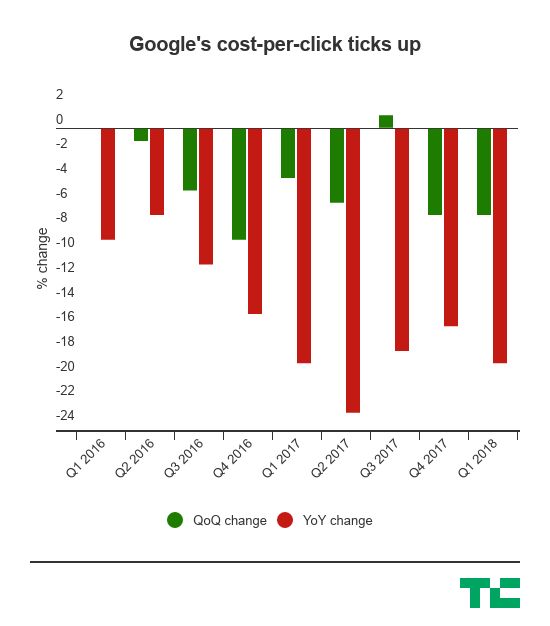
Google said its revenue grew 26% year-over-year to $31.16 billion in the first quarter this year. In the first quarter last year, Google said its revenue had grown 22% between Q1 of 2016 and Q1 of 2017. All this is a little convoluted, but the end result is that Google is actually growing faster than it was just a year ago despite the continued trend of a decline in its cost-per-click — a rough way of saying how valuable an ad is — as more and more web browsing shifts to mobile devices. Last year, Google said it recorded $24.75 billion in the first quarter.

Once again, Google’s “other bets” — its fringe projects like autonomous vehicles and balloons — showed some additional health as that revenue grew while the losses shrank. That’s a good sign as it looks to explore options beyond search, but in the end it still represents a tiny fraction of Google’s overall business.

Here’s the final scorecard:

  • Revenue: $31.16 billion, compared to $30.36 billion Wall Street estimates and up 26% year-over-year.
  • Earnings: $9.93 per share, compared to $9.28 per share from Wall Street
  • Other Revenues: $4.35 billion, up from $3.27 billion in Q1 last year
  • Other Bets: $150 million, up from $132 million in Q1 2017
  • Other Bets losses: $571 million, down from $703 million in the first quarter last year
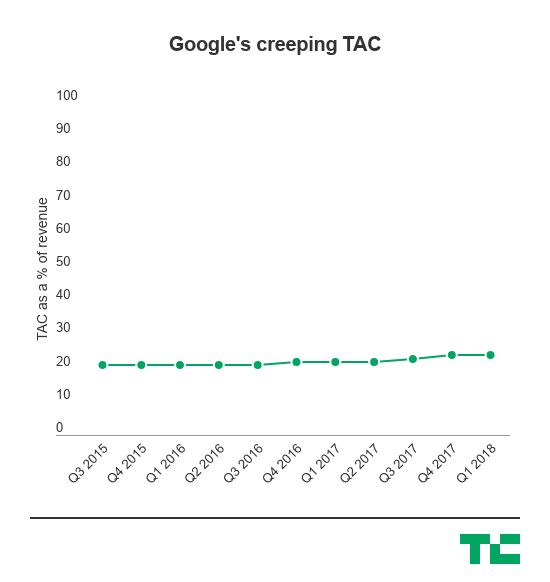
  • TAC as a % of Revenue: 24%

In the end, it’s a beat compared to what Wall Street wanted, and it’s getting a very Google-y response. Investors were looking for earnings of $9.35 per share on $30.36 billion in revenue. Google’s stock is up around 2% in extended trading, which for Google is adding more than $10 billion in value as it races alongside Microsoft and Amazon to chase Apple as the most valuable company in the world by market cap. Google jumped as much as 5% in extended trading, though it’s flattened out

Google’s traffic acquisition cost, or TAC, appears to also remain stable as a percentage of its revenue. This is a little bit of a sticking point for observers for the company and a potential negative signal for investors as more and more web browsing shifts to mobile. It’s ticked up very slowly over the past several years, but is now sitting at around 24% of its total revenue.

Google, at its core, is an advertising company that is going to make money off its billions of users across all of its properties. But as everything goes to mobile devices, the actual value of those ads is going to drop off over time simply because mobile browsing has a different set of behaviors. Google’s business has always been to offset that cost-per-click with a growing number of impressions — and, indeed, it seems like the status quo is sticking around for this one.

Indian lending platform Capital Float raises $22M Series C extension from Amazon

Capital Float, the fintech startup that says it is India’s largest online lender, announced today that it has raised $22 million in new funding from Amazon. At the end of last year, reports surfaced that Amazon was considering an investment in Capital Float as an extension of its $45 million Series C, which was announced last August. The Bangalore-based startup confirmed to TechCrunch that Amazon’s investment is indeed an extension of that round and brings the total equity it has raised over the past 12 months to $67 million.

Over the same period, Capital Float also raised $80 million of debt from banks and other financial companies, which it combines with its own balance sheet to finance loans to small businesses and other borrowers. Amazon India is among several e-commerce platforms that the company has partnered with to provide loans to sellers, including Snapdeal and Shopclues.

Since its inception in 2013 by co-founders Sashank Rishyasringa and Gaurav Hinduja, Capital Float has raised a total of about $110 million in equity funding from investors, including Ribbit Capital, SAIF Partners, Sequoia India, Creation Investments and Aspada, as well as total debt lines of $130 million.

During the last six months, Capital Float added 50,000 new customers, bringing its total customer base to more than 80,000 people in more than 300 cities. The startup says it currently disburses more than 10,000 loans each month and now has an outstanding loan portfolio of more than $170 million, with a default rate of about 2 percent. About 70 percent of its loans are microloans ranging from 25,000 rupees to 500,000 rupees (about $376 to $7,530).

With the investment from Amazon, the startup has set an ambitious goal of adding 300,000 new customers and originating more than $800 million in loans this year.

In a press statement, Amazon India’s country manager Amit Agarwal said, “We’re excited to work with Capital Float and invest alongside other investors. We are highly impressed with what Gaurav and Sashank have built and we back missionary entrepreneurs and management teams. Credit in India is highly under-penetrated and Capital Float is bringing the right kind of credit solutions to the underserved and informally served segments of SMEs to help realize their full potential.”

Over the last year, Capital Float expanded into more verticals, including products for small- to mid-sized manufacturers, point-of-sale financing for retailers and loans for school construction and self-employed professionals like doctors. It also added new online payment gateways to make it easier for borrowers to repay loans and began piloting deep learning-based underwriting models that use data points like image processing, geotags and new policies such as the Goods and Service Tax (GST), an indirect tax launched last year that is levied at every step of the production chain and the banknote demonetization started by Prime Minister Narendra Modi’s government in 2016.


https://ift.tt/eA8V8J Indian lending platform Capital Float raises $22M Series C extension from Amazon https://ift.tt/2qVuiHB

blogger better Headline Animator