l
l
blogger better. Powered by Blogger.

Search

Labels

blogger better

Followers

Blog Archive

Total Pageviews

Labels

Download

Blogroll

Featured 1

Curabitur et lectus vitae purus tincidunt laoreet sit amet ac ipsum. Proin tincidunt mattis nisi a scelerisque. Aliquam placerat dapibus eros non ullamcorper. Integer interdum ullamcorper venenatis. Pellentesque habitant morbi tristique senectus et netus et malesuada fames ac turpis egestas.

Featured 2

Curabitur et lectus vitae purus tincidunt laoreet sit amet ac ipsum. Proin tincidunt mattis nisi a scelerisque. Aliquam placerat dapibus eros non ullamcorper. Integer interdum ullamcorper venenatis. Pellentesque habitant morbi tristique senectus et netus et malesuada fames ac turpis egestas.

Featured 3

Curabitur et lectus vitae purus tincidunt laoreet sit amet ac ipsum. Proin tincidunt mattis nisi a scelerisque. Aliquam placerat dapibus eros non ullamcorper. Integer interdum ullamcorper venenatis. Pellentesque habitant morbi tristique senectus et netus et malesuada fames ac turpis egestas.

Featured 4

Curabitur et lectus vitae purus tincidunt laoreet sit amet ac ipsum. Proin tincidunt mattis nisi a scelerisque. Aliquam placerat dapibus eros non ullamcorper. Integer interdum ullamcorper venenatis. Pellentesque habitant morbi tristique senectus et netus et malesuada fames ac turpis egestas.

Featured 5

Curabitur et lectus vitae purus tincidunt laoreet sit amet ac ipsum. Proin tincidunt mattis nisi a scelerisque. Aliquam placerat dapibus eros non ullamcorper. Integer interdum ullamcorper venenatis. Pellentesque habitant morbi tristique senectus et netus et malesuada fames ac turpis egestas.

Tuesday, June 5, 2018

Scooter startup Bird has authorized sale of $200M in shares in latest funding round

Bird, the scooter startup whose scooters you might have seen fallen over on the sidewalk in a major metro area, has authorized a new $200 million round of funding that could value the startup at around $1 billion post-money, according to a certificate of incorporation filed in Delaware.

The latest Bird round has been pretty widely reported, suggesting that the company is raising $150 million at a $1 billion valuation. That, too, comes amid a big effort by competitor Lime to raise a big funding round. These documents indicate that the company has authorized the sale of those shares, though it may not fully fill out the round — but it’s pretty safe to say given how hot the scooter market is and what’s out there that this is where things are going to land. The certificate of incorporation document was provided be Lagniappe Labs, creator of the Prime Unicorn Index.

The document indicates that Bird has authorized the sale of 31.5 million new shares in its financing round at a value of $6.15 per share, which if fully sold could net the startup as much as $200 million in this round. This round would value the company at just over $1 billion, a new financing round that follows up a $100 million round announced in March.

These kinds of rolling rounds are not completely uncommon. Instead of bundling everything together in a single round, startups may sometimes have a process that includes follow-on investment rounds, of which this may be a component. The last funding round in March valued the company at around $300 million.

Needless to say, scooters are a hot market right now even if they are facing a lot of friction when it comes to dealing with leaving their scooters everywhere around cities. But running startups that are hardware-focused — especially on-demand ones that have to manage a network of scooters that need to have enough of a charge to get someone from point A to point be, lest they have a bad experience and switch to an alternative, can be an expensive proposition. The hardware component itself, too, can be a tough business.


https://ift.tt/eA8V8J Scooter startup Bird has authorized sale of $200M in shares in latest funding round https://ift.tt/2svYScK

Hailo raises a $12.5M Series A round for its deep learning chips

For the longest time, chips were a little bit boring. But the revolution in deep learning has now opened the market for startups that build specialty chips to accelerate deep learning and model evaluation. Among those is Israel-based Hailo, which is building deep learning chips for embedded devices. The company today announced that it has raised a $12 million Series A round.

Investors include Israeli crowdfunding platform Ourcrowd, Maniv Mobility, Next Gear, and a number of angel investors, including Hailo’s own chairman Zohar Zisapel and Delek Motors’ Gil Agmon.

Hailo tells me that it will use the new round, which brings its total funding to $16 million, to further develop its deep learning processors. The company expects samples to rich the market in the first half of 2019. Those chips will be able to run embedded AI applications in a wide range of settings, including drones and cars, as well as smart home appliances and cameras.

The key market for Hailo is the car industry, though. In that respect, it’s following in the footstep of other Israeli startups like Mobileye, which Intel eventually acquired.

“The 70-year old architecture of existing processors is inadequate to meet today’s deep learning and AI processing needs,” says Orr Danon, Hailo CEO. “Hailo is revolutionizing the underlying architecture of the processor to boost deep learning processing by several orders of magnitude. We have completely redesigned the pillars of computer architecture – memory, control and compute – and the relations between them.”


https://ift.tt/2kQsIEi Hailo raises a $12.5M Series A round for its deep learning chips https://ift.tt/2Hos2ii

iOS 12 will let users register another person to their Face ID

{rss:content:encoded} iOS 12 will let users register another person to their Face ID https://ift.tt/2sI3gnX https://ift.tt/2M1P2XR June 05, 2018 at 03:11PM

From advancements in AR to Memojis to group FaceTime, there is plenty to be excited about with iOS 12. But one of the more practical updates to Apple’s mobile operating system, coming this fall, went unmentioned during the keynote at WWDC.

According to 9to5Mac, iOS 12 will allow for two different faces to be registered to Face ID.

Up until now, Face ID has only allowed a single appearance to be registered to the iPhone X. 9to5Mac first noticed the update when combing through the iOS 12 beta, where one can find new settings for Face ID that allow users to “Set Up an Alternative Appearance.”

Here’s what the description says:

In addition to continuously learning how you look, Face ID can recognize an alternative appearance.

While that’s about as unclear as a description might be, 9to5Mac tested and confirmed the update, with the following caveat. Users who choose to register two faces to Face ID will not be able to remove that face without starting over from scratch with their own FaceID registration. In other words, if you choose to reset the alternate appearance, you’ll also have to clear out all existing data around your own face, too.

That small inconvenience aside, the ability to add a second face to Face ID makes total sense. Couples often pass their phones back and forth as a matter of practicality, and parents often let their children use their phones to play games and check out apps.

Plus, this may hint at Face ID on the next generation of iPads, which tend to be shared amongst multiple users more often than phones.

Casper launches a $35 nap pillow for sleeping on-the-go

Casper is launching a new product today — the Casper Nap Pillow, a small pillow that you can carry in your bag.

While the startup remains best-known for its mattresses, it’s expanded to offer not just pillows and sheets but also dog beds. It also partnered with American Airlines to provide sleep products to higher-end flyers.

“The long term vision of the brand [is] to help people sleep better, whether in your bedroom, in the air, wherever that may be,” said co-founder and Chief Operating Officer Neil Parikh.

But sometimes it can be hard to get the recommended eight hours of sleep at home. As Parikh put it, “I don’t even sleep eight hours and I run a sleep company.” So the Nap Pillow can help you get some extra sleep on “trains, buses, airplanes, the subway, the beach” — or even at your desk at work.

Casper Nap Pillow

Parikh said the travel pillow was created by the company’s research division Casper Labs. It’s basically a shrunk-down version (10.25 inches by 15 inches) of the regular Casper pillow, deploying what the company calls its “pillow-in-a-pillow design” — namely, combining a supportive inner layer with a fluffier outer layer.

The Nap Pillow comes with a pillowcase and a travel bag. In fact, Veanne took the pillow with her to Tel Aviv, and she said it’s well-made and provides decent support, but feels more like a child-sized Casper pillow for the office or home, and not the travel pillow that she’d hoped for.

But don’t worry, she has suggestions for improvement! Like: A suction cup to stop the pillow from slipping into the gap between the airplane wall and window seat, a detachable hoodie for privacy (seriously) and a pocket to hold iPhones and wallets.

The Casper Nap Pillow costs $35 and is currently available for purchase.

Casper Nap Pillow


https://ift.tt/2kQXsoU Casper launches a $35 nap pillow for sleeping on-the-go https://ift.tt/2kOE4IV

The erosion of Web 2.0

It seems quaint to imagine now but the original vision for the web was not an information superhighway. Instead, it was a newspaper that fed us only the news we wanted. This was the central thesis brought forward in the late 1990s and prophesied by thinkers like Bill Gates – who expected a beautiful, customized “road ahead” – and Clifford Stoll who saw only snake oil. At the time, it was the most compelling use of the Internet those thinkers thought possible. This concept – that we were to be coddled by a hive brain designed to show us exactly what we needed to know when we needed to know it – continued apace until it was supplanted by the concept of User Generated Content – UGC – a related movement that tore down gatekeepers and all but destroyed propriety in the online world.

That was the arc of Web 2.0: the move from one-to-one conversations in Usenet or IRC and into the global newspaper. Further, this created a million one-to-many conversations targeted at tailor-made audiences of fans, supporters, and, more often, trolls. This change gave us what we have today: a broken prism that refracts humanity into none of the colors except black or white. UGC, that once-great idea that anyone could be as popular as a rock star, fell away to an unmonetizable free-for-all that forced brands and advertisers to rethink how they reached audiences. After all, on a UGC site it’s not a lot of fun for Procter & Gamble to have Downy Fabric Softener advertised next to someone’s racist rant against Muslims in a Starbucks.

Still the Valley took these concepts and built monetized cesspools of self-expression. Facebook, Instagram, YouTube, and Twitter are the biggest beneficiaries of outrage culture and the eyeballs brought in by its continuous refreshment feed their further growth. These sites are Web 2.0 at its darkest epitome, a quiver of arrows that strikes at our deepest, most cherished institutions and bleeds us of kindness and forethought.

So when advertisers faced either the direct monetization of random hate speech or the erosion of customer privacy, they choose the latter. Facebook created lookalike audiences that let advertisers sell to a certain subset of humanity on a deeply granular level, a move that delivered us the same shoe advertisement constantly, from site to site, until we were all sure we had gone mad. In the guise of saving our sanity further we invited always-on microphones into our homes that could watch our listening and browsing habits and sell to us against them. We gave up our very DNA to companies like Ancestry and 23andMe, a decision that mankind may soon regret. We shared everything with everyone in the grand hope that our evolution into homo ligarus – the networked man – would lead us to become homo deus.

This didn’t happen.

And so the pendulum swings back. The GDPR, as toothless as it is, is a wake up call to every spammer that ever slammed your email or followed you around the web. Further, Apple’s upcoming cookie control software in Safari should make those omnipresent ads disappear, forcing the advertiser to sell to an undifferentiated mob rather than a single person. This is obviously cold comfort in an era defined by both the reification of the Internet as a font for all knowledge (correct or incorrect) and the genesis of an web-based political cobra that whips back to bite its handlers with regularity. But it’s a start.

We are currently in an interstitial period of technology, a cake baked of the hearty camaraderie and “Fuck the system” punk rock Gen X but frosted with millennial pragmatism and desire for the artisanal. As we move out of the era of UGC and Web 2.0 we will see the old ways cast aside, the old models broken, and the old invasions of privacy inverted. While I won’t go as far to say that blockchain will save us all, pervasive encryption and full data control will pave the way toward true control of our personal lives as well as the beginnings of a research-based minimum income. We should be able to sell our opinions, our thoughts, and even our DNA to the highest bidder and once the rapacious Web 2.0 vultures are all shooed away, we will find ourselves in an interesting new world.

As a technoutopianist I’m sure that were are heading in the right direction. We are, however, taking turns that none of us could have imagined in the era of Clinton and the fax machine and there are still more turns to come. Luckily, however, we are coming out of our last major skid.


Photo by George Fitzmaurice on Unsplash


from Social – TechCrunch https://ift.tt/2svO1iY The erosion of Web 2.0 John Biggs https://ift.tt/2JwzPzU
via IFTTT

Apple got even tougher on ad trackers at WWDC

Apple unveiled a handful of pro-privacy enhancements for its Safari web browser at its annual developer event yesterday, building on an ad tracker blocker it announced at WWDC a year ago.

The feature — which Apple dubbed ‘Intelligent Tracking Prevention’ (IPT) — places restrictions on cookies based on how frequently a user interacts with the website that dropped them. After 30 days of a site not being visited Safari purges the cookies entirely.

Since debuting IPT a major data misuse scandal has engulfed Facebook, and consumer awareness about how social platforms and data brokers track them around the web and erode their privacy by building detailed profiles to target them with ads has likely never been higher.

Apple was ahead of the pack on this issue and is now nicely positioned to surf a rising wave of concern about how web infrastructure watches what users are doing by getting even tougher on trackers.

Cupertino’s business model also of course aligns with privacy, given the company’s main money spinner is device sales. And features intended to help safeguard users’ data remain one of the clearest and most compelling points of differentiation vs rival devices running Google’s Android OS, for example.

“Safari works really hard to protect your privacy and this year it’s working even harder,” said Craig Federighi, Apple’s SVP of software engineering during yesterday’s keynote.

He then took direct aim at social media giant Facebook — highlighting how social plugins such as Like buttons, and comment fields which use a Facebook login, form a core part of the tracking infrastructure that follows people as they browse across the web.

In April US lawmakers also closely questioned Facebook’s CEO Mark Zuckerberg about the information the company gleans on users via their offsite web browsing, gathered via its tracking cookies and pixels — receiving only evasive answers in return.

Facebook subsequently announced it will launch a Clear History feature, claiming this will let users purge their browsing history from Facebook. But it’s less clear whether the control will allow people to clear their data off of Facebook’s servers entirely.

The feature requires users to trust that Facebook is doing what it claims to be doing. And plenty of questions remain. So, from a consumer point of view, it’s much better to defeat or dilute tracking in the first place — which is what the clutch of features Apple announced yesterday are intended to do.

“It turns out these [like buttons and comment fields] can be used to track you whether you click on them or not. And so this year we are shutting that down,” said Federighi, drawing sustained applause and appreciative woos from the WWDC audience.

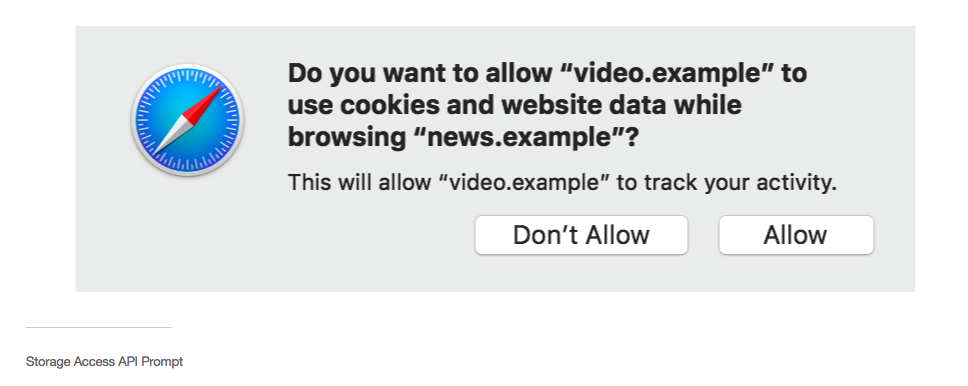
He demoed how Safari will show a pop-up asking users whether or not they want to allow the plugin to track their browsing — letting web browsers “decide to keep your information private”, as he put it.
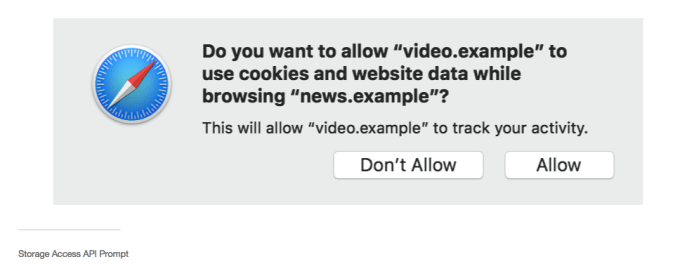
Safari will also immediately partition cookies for domains that Apple has “determined to have tracking abilities” — removing the 24 window after a website interaction that Apple allowed in the first version of IPT.

It has also engineered a feature designed to detect when a domain is solely used as a “first party bounce tracker” — i.e. meaning it is never used as a third party content provider but tracks the user purely through navigational redirects — with Safari also purging website data in such instances.

Another pro-privacy enhancement detailed by Federighi yesterday is intended to counter browser fingerprinting techniques that are also used to track users from site to site — and which can be a way of doing so even when/if tracking cookies are cleared.

“Data companies are clever and relentless,” he said. “It turns out that when you browse the web your device can be identified by a unique set of characteristics like its configuration, its fonts you have installed, and the plugins you might have installed on a device.

“With Mojave we’re making it much harder for trackers to create a unique fingerprint. We’re presenting websites with only a simplified system configuration. We show them only built-in fonts. And legacy plugins are no longer supported so those can’t contribute to a fingerprint. And as a result your Mac will look more like everyone else’s Mac and will it be dramatically more difficult for data companies to uniquely identify your device and track you.”

In a post detailing IPT 2.0 on its WebKit developer blog, Apple security engineer John Wilander writes that Apple researchers found that cross-site trackers “help each other identify the user”.

“This is basically one tracker telling another tracker that ‘I think it’s user ABC’, at which point the second tracker tells a third tracker ‘Hey, Tracker One thinks it’s user ABC and I think it’s user XYZ’. We call this tracker collusion, and ITP 2.0 detects this behavior through a collusion graph and classifies all involved parties as trackers,” he explains, warning developers they should therefore “avoid making unnecessary redirects to domains that are likely to be classified as having tracking ability” — or else risk being mistaken for a tracker and penalized by having website data purged.

ITP 2.0 will also downgrade the referrer header of a webpage that a tracker can receive to “just the page’s origin for third party requests to domains that the system has classified as possible trackers and which have not received user interaction” (Apple specifies this is not just a visit to a site but must include an interaction such as a tap/click).

Apple gives the example of a user visiting ‘https://ift.tt/2sIGso8;, and that page loading a resource from a tracker — which prior to ITP 2.0 would have received a request containing the full referrer (which contains details of the exact product being bought and from which lots of personal information can be inferred about the user).

But under ITP 2.0, the referrer will be reduced to just “https://store.example/”. Which is a very clear privacy win.

Another welcome privacy update for Mac users that Apple announced yesterday — albeit, it’s really just playing catch-up with Windows and iOS — is expanded privacy controls in Mojave around the camera and microphone so it’s protected by default for any app you run. The user has to authorize access, much like with iOS.


from Social – TechCrunch https://ift.tt/2Jb0mmR Apple got even tougher on ad trackers at WWDC Natasha Lomas https://ift.tt/2kPdjnF
via IFTTT

Hotel management platform Mews closes €6m Series A

Before we automate hotels with AI and robots (which will almost certainly happen) the first wave of this revolution will be brought by the software that runs hotels with humans.

Thus it is that
Mews, the hotel property management platform, has closed a €6m Series A funding round. The round was led by Notion.vc Capital, with participation from HenQ and Thayer Ventures.

The funding will be used to accelerate the business and open new offices around the world to support its global customer base.

Mews’ platform automates check-ins and payments as also covering booking management and staff training. It’s designed to be an open platform allowing other tools and apps to connect through its API. So, think ‘Slack for hotels’, perhaps.

Mews was founded in 2012 by entrepreneur and ex-hotelier Richard Valtr. Customers include Different Hotels, Machefert, Clink and Wombats, or 43,000 beds in 350 properties.

Valtr said: “Mews’ mission is to help hotels and hostels automate their operations so they can focus on their guests. We want to build the nervous system for hotels that all apps and tools for both guests and hosts can be plugged into. Until recently hoteliers were forced to rely upon a closed one-stop-shop PMS offered up by incumbent players who have held a luddite attitude towards the hospitality industry for years.”

Jos White, General Partner at Notion commented: “We think the hotel industry is at a tipping point in terms of the way it uses technology to better manage their operations and transform the guest experience.”


https://ift.tt/eA8V8J Hotel management platform Mews closes €6m Series A https://ift.tt/2JhxgOR

Motorway raises £2.75M seed funding to help you sell your car

If you thought price comparison type online marketplaces were a done deal, you’re clearly mistaken. Motorway, a new startup from the team behind Top10 — the mobile and broadband comparison site that exited to uSwitch in 2011 — are back again, and this time they want to make it infinitely easier to sell your used car online.

To help with that mission, the young company, which formally launched in July 2017 after it had tested an MVP, has raised £2.75 million in seed funding led by LocalGlobe, and Marchmont Ventures (the VC fund of Hugo Burge, former CEO of Momondo, which sold to Priceline last year). Zoopla founder Alex Chesterman also participated.

Motorway had previously raised an angel round of £500,000 in the autumn of 2017 after the product had launched and was showing traction. Angel investors in that round included Duncan Jennings (founder of VoucherCodes.co.uk), Shakil Khan (early Spotify investor) and Christian Woolfenden (CEO of Photobox).

Tom Leathes, Motorway co-founder and CEO, says there are more than 8 million used cars sold annually in the U..K — which is more than 3x the number of new cars sold, apparently — but that the process of selling a car has gone largely unchanged for decades. This sees motorists having to visit multiple car dealers to negotiate a sale, or list privately on websites like AutoTrader or eBay. The other option is to use one of a number of online car buyers, such as WeBuyAnyCar, that provide a quick disposal option but in return prices paid are typically low. The London-based startup wants to provide a fourth option.

Namely — in classic price comparison fashion — Motorway makes it simple to compare the market and find the best deal for your car. In return, dealers get connected with motivated sellers instantly. Always be closing, as they say.

“Motorway makes selling a car faster by bringing the options online and enabling easy price comparison,” says Leathes. “Consumers enter their car’s registration number and mileage to instantly see multiple offers from car buying services, specialist dealerships and even vehicle recycling firms. They can then compare headline offers, read buyer reviews, collection criteria, fees and payment methods before choosing their best deal. By comparing offers, consumers can get up to £1,000 more than going directly to one buyer, and sell their car in 24 hours”.

In terms of typical customer, so far Motorway seems to have run the whole gamut of car owner. I’m told customers using the site have sold lots of Fords, Audis, VWs and Vauxhalls of all ages as well as Aston Martin DB9s, Porsche 911s and various Ferraris. “We’re building Motorway to help anyone looking to sell a car they own – no matter how old, its mileage, what brand or where it’s located,” adds the Motorway CEO.

Leathes cites competitors as established brands such as Auto Trader, We Buy Any Car, eBay and Gumtree, which are popular websites in the U.K. to sell your car. He says there are also a couple of early-stage startups in the space, but that none of these services offers a transparent price comparison experience with instant offers to buy your vehicle.

The revenue model is simple, too. The startup is paid a commission by the buyer when a car is purchased from a seller that found their offer through Motorway. “This means we’re aligned squarely with both consumers and car buyers, as we only make money when we successfully connect sellers with buyers and a deal is completed,” Leathes says. “Motorway’s goal is to help everyone find great offers for their car instantly. There’s a real perception that you need to be a car expert to get a good deal, and we think that needs to change”.

With over 25,000 customer sales enquiries per month, Motorway says the new funding will enable the startup to further develop its software platform, expand the network of buyers, and to market the service more widely.

Adds ​Suzanne Ashman, Partner at LocalGlobe: “Creating a compelling experience for people selling their cars is hard. The potential buyers are fragmented with many different online and offline options. Information about the sale process is difficult to find and pricing is often unclear. Motorway’s technology is exceptional and will bring much-needed transparency for car owners”.

Despite having three successful (or at least, moderately successful) exits behind them, the Motorway founders are used to doing hard things. A fourth venture — a hotel comparison site launched after they successfully bought back the Top10 domain name and subsequently backed by Accel and Balderton — shut down in 2015.

“Having had three successful startups before Top10, it was obviously a tough outcome for all of us. We built an amazing product and had decent growth, but it wasn’t 10x better than the competition, which it had to be to win in such an established market,” Leathes tells me. “After that we took almost a year working on ideas before deciding on Motorway. And we were pretty ruthless about launching something ourselves, proving it works and scaling it before raising any funding”.


https://ift.tt/2JdE57W Motorway raises £2.75M seed funding to help you sell your car https://ift.tt/2LYBOuY

This robotic snake can fly into buildings to put out fires

In ancient times, strange and violent wyrms crawled out of caves and gullies to attack and burn unsuspecting townfolk as they slept. Now, researchers at Tohoku University and National Institute of Technology, Hachinohe College, in Japan, have turned the tables on these terrible fire breathers, creating a flying snake robot that flies around spraying water and putting out fires.

The robot, called DragonFireFighter, uses powerful jets of water to maneuver itself in the air and then aim its twin “fangs” of water at fires it finds. It’s far from autonomous – it still needs a gantry and water pump, both of which keep its tail grounded – but the head of the hose can squeeze into tight spaces, turn, and aim.

The current model is only two meters long but the researchers believe they can simply add segments to make it a bigger, badder dragon. Further, the steering system is still not exactly perfect but you can see the benefits of having a long, water-spraying hose that can sneak into small spaces where firefighters can’t go. Unlike the wyrms of old, however, this dragon puts out fires instead of spreading mayhem. How far we’ve come!


https://ift.tt/eA8V8J This robotic snake can fly into buildings to put out fires https://ift.tt/2Hi4Bax

Monday, June 4, 2018

Apple adds camera effects like stickers, filters, and Memoji to messages

{rss:content:encoded} Apple adds camera effects like stickers, filters, and Memoji to messages https://ift.tt/2LUTfwu https://ift.tt/2LlOviC June 04, 2018 at 08:07PM

Apple is invading Snapchat’s territory with new effects that let you embellish what you shoot through the Messages camera. Today at WWDC, Apple announced that iOS 12’s Messages camera will offer a variety of sticker packs, style transfers like a “comic book” filter, drawn shapes, and both Animoji and the new personalized avatar Memoji.

These effects will also be available in FaceTime, which now supports group video conversations with up to 32 people. That could spell trouble for dedicated group video chat apps like Houseparty and Facebook’s Bonfire, as well as bigger apps that offer it like Snapchat.

These effects could make people who want more visual communication choose Apple’s native messaging app rather than third parties like Snapchat, Instagram Direct, or Facebook Messenger. The new features will be available in iOS 12 that launches today.

Stickers were previously only available in message threads where they’d appear on a white background. But now you can overlay them on photos, videos, and FaceTime. That opens opportunities for new fashion stickers that let you add sunglasses, hats, mustaches, clothes, and more that only make sense when stuck to your selfie.

Apple is starting far behind here. Snapchat’s been adding creative features since 2013, and Instagram joined in with its clone of Stories in 2016, followed by Facebook in 2017. They’re all now equipped with GIFs, color filters, augmented reality, and more. Animoji and Memoji are the Messages camera’s biggest differentiators, so Apple may need to aggressively promote the ability to overlay these on imagery if it wants to steal attention from Snap and Facebook.

Apple introduces watchOS 5

{rss:content:encoded} Apple introduces watchOS 5 https://ift.tt/2Jjzw7W https://ift.tt/2JsbHOU June 04, 2018 at 08:22PM

Kevin Lynch from the watchOS team introduced the next version of watchOS at Apple’s WWDC keynote. It’s been a slow and steady rise for the Apple Watch. It’s by far the most popular smart watch, and it’s becoming slightly more useful every year.

This year is no different. There’s a new workout type for yoga, another one for hiking. You can now challenge your friends for a 7-day competition.

But I’m even more excited about automatic workout detection. If you grab your bike and your heart start beating more rapidly, your Apple Watch will track your workout automatically. You’ll also get notifications to end a workout.

As rumored, Apple is introducing a new Walkie-Talkie app for Apple Watch users. You press to record a message, release to send it. Your friend will receive a notification. That could open up interesting professional use cases. Cellular Apple Watches make this feature more useful too.

The Siri watch face is getting more integrations thanks to Siri shortcuts. You can receive a Citymapper suggestion for instance.

When it comes to the actual voice assistant, you won’t need to say “Hey Siri” anymore. You can just raise your wrist and start talking.

Apple has ported WebKit to watchOS, which opens up a lot of possibilities. You can view web content from your watch. Apple is adding native podcast support and background audio on the Apple Watch too.

Overall, Apple tackled a lot of low hanging fruits. But it’s a compelling pitch and makes the Apple Watch more essential than ever.

Apple is adding group FaceTime video calls to iOS 12

{rss:content:encoded} Apple is adding group FaceTime video calls to iOS 12 https://ift.tt/2J91AyZ https://ift.tt/2JskfFd June 04, 2018 at 08:09PM

Apple is adding the ability to FaceTime more people onto a video call, allowing more than a dozen people to be on the call — and tapping an increasing interest in group video calling stemming from apps like Houseparty

The app spreads out each stream as a series of tiles that will move around based on who is engaging on the call at the time. When someone speaks, the tile automatically gets larger automatically as a way to try to highlight whoever is talking to create a more robust experience. The whole goal is to try to make it easier to video call with a lot of different people all at once in a way that still feels pretty social.

As far as features go, this was a pretty natural addition to the FaceTime App. Houseparty exposed a lot of interest in this area, allowing multiple friends to spin up a video chat. But it’s also a technically strenuous proposition, and Apple does seem uniquely positioned to absorb the technical overhead (and costs) of running multiple FaceTime streams all at once.

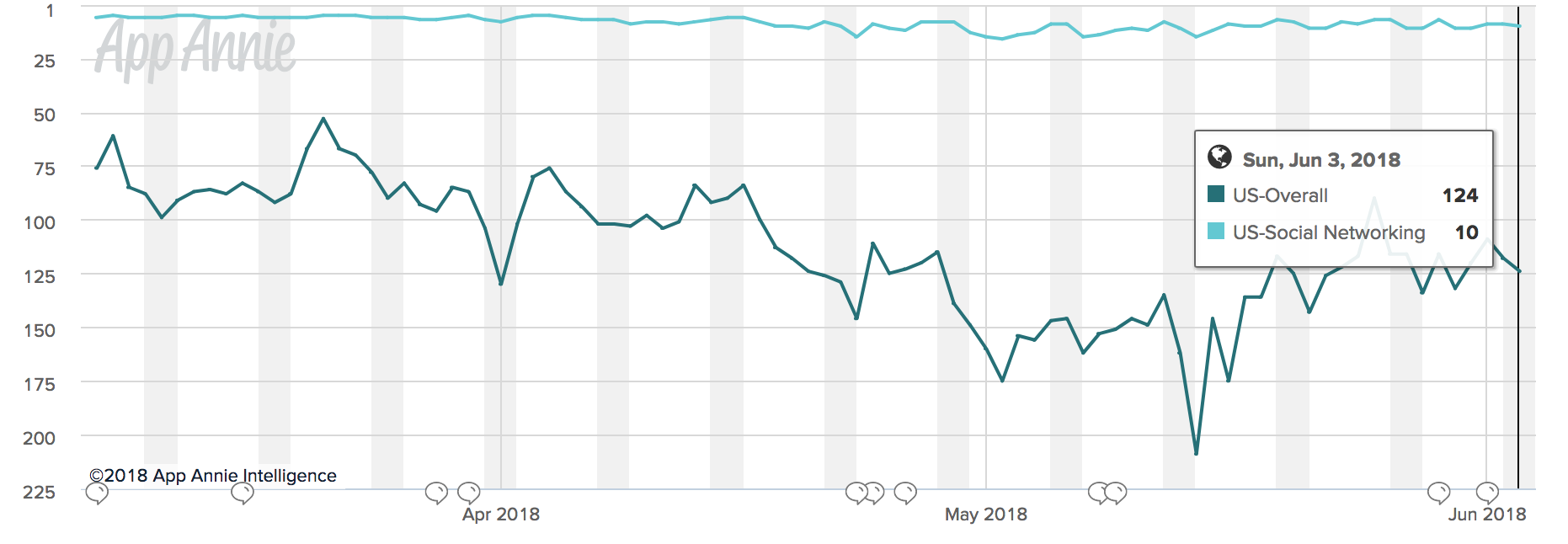
Houseparty, for example, sits at around #10 on the App Store for the social category and still a top-200 app, according to App Annie. It has a 4.4-star rating in the App Store and was last updated at the beginning of June, according to the App Store. So it’s still chugging along, though it does seem like Apple may nullify an app like Houseparty if it hasn’t locked in a huge and engaged fan base.

The next version of iOS tends to come out around the time of the next Apple event, which usually happens around September. Apple announced a stream of updates to iOS in its next version, iOS 12, including FaceTime group chats.


blogger better Headline Animator