l
l
blogger better. Powered by Blogger.

Search

Labels

blogger better

Followers

Blog Archive

Total Pageviews

Labels

Download

Blogroll

Featured 1

Curabitur et lectus vitae purus tincidunt laoreet sit amet ac ipsum. Proin tincidunt mattis nisi a scelerisque. Aliquam placerat dapibus eros non ullamcorper. Integer interdum ullamcorper venenatis. Pellentesque habitant morbi tristique senectus et netus et malesuada fames ac turpis egestas.

Featured 2

Curabitur et lectus vitae purus tincidunt laoreet sit amet ac ipsum. Proin tincidunt mattis nisi a scelerisque. Aliquam placerat dapibus eros non ullamcorper. Integer interdum ullamcorper venenatis. Pellentesque habitant morbi tristique senectus et netus et malesuada fames ac turpis egestas.

Featured 3

Curabitur et lectus vitae purus tincidunt laoreet sit amet ac ipsum. Proin tincidunt mattis nisi a scelerisque. Aliquam placerat dapibus eros non ullamcorper. Integer interdum ullamcorper venenatis. Pellentesque habitant morbi tristique senectus et netus et malesuada fames ac turpis egestas.

Featured 4

Curabitur et lectus vitae purus tincidunt laoreet sit amet ac ipsum. Proin tincidunt mattis nisi a scelerisque. Aliquam placerat dapibus eros non ullamcorper. Integer interdum ullamcorper venenatis. Pellentesque habitant morbi tristique senectus et netus et malesuada fames ac turpis egestas.

Featured 5

Curabitur et lectus vitae purus tincidunt laoreet sit amet ac ipsum. Proin tincidunt mattis nisi a scelerisque. Aliquam placerat dapibus eros non ullamcorper. Integer interdum ullamcorper venenatis. Pellentesque habitant morbi tristique senectus et netus et malesuada fames ac turpis egestas.

Tuesday, November 27, 2018

For a small fee, entrepreneurs can now manage their own fleet of Bird e-scooters

Bird announced today that it will sell its electric scooters to entrepreneurs and small business owners, who can then rent them out as part of a new service called Bird Platform.

The company will provide the independent operators with scooters, which they are given free rein to brand as they please, as well as access to the company’s marketplace of chargers and mechanics, in exchange for 20 percent of the cost of each ride. Bird says fleet managers, which may be independent entrepreneurs or local mom and pop bike rental shops, for example, can also collect and charge the scooters themselves.

There’s no minimum or maximum number of scooters independent operators can purchase, though they have to keep in mind local regulations that, in certain cities, limit the number of scooters permitted on the streets. Bird says the company will initially begin rolling out Bird Platform in December, targeting markets where scooters are already actively used and where regulations are a bit more relaxed. Bird Platform will be irrelevant in San Francisco, for example, where the San Francisco Municipal Transportation Agency has put a cap on the number of e-scooters available and has refused to grant Bird a permit to operate at all.

The company hopes Bird Platform will be a helpful tool as it continues to work its way into new markets around the world.

Bird chief executive officer Travis VanderZanden said they’ve been quietly working on this product for a while and have 300 interested parties waiting to get started with the service.

“In the last year of operating, we kept getting these inbound requests from entrepreneurs that really wanted to take Bird to their cities,” VanderZanden told TechCrunch. “I think there’s been a lot of people passionate about the electric scooter movement and taking cars off the road. There are a lot of entrepreneurs who want to bring Bird to their city.”

Goat, a scooter startup located in Austin, similarly began renting its scooters to micro mobility enthusiasts in the Texas capital. Goat CEO Michael Schramm explained the launch in a company announcement at the time, according to Mashable: “The way we look at it is, why would someone want to be a charger and make $5 a scooter, when they can manage their own fleet and keep all the earnings doing the same task they’re already doing?”

Bird, valued at $2 billion, has raised $415 million in venture capital funding from Greycroft, Sequoia, Accel and others. Since launching about a year ago, it’s clocked in more than 10 million rides and expanded to some 100 cities.


https://ift.tt/eA8V8J For a small fee, entrepreneurs can now manage their own fleet of Bird e-scooters https://ift.tt/2Qq8OS0

Quip raises another $40 million for dental care products and services

Quip, the dental care startup that got its start selling electric toothbrushes directly to consumers, has raised $40 million. The money comes in the form of equity and debt financing, with about half of the funding coming in an equity deal lead by Sherpa Capital and the other half in debt financing from Triplepoint Capital.

“I think the mix of debt and equity is a great thing for us,” Quip CEO Simon Enever told TechCrunch. “It’s more attractive than ever to get alternative types of financing.”

Alternative types of financing, for example, enable founders to potentially avoid terms that are not founder-friendly, as well as raise additional funds that they were unable to secure from traditional investors.

This comes a couple of months after Quip partnered with Target to sell its products, and about six months after Quip raised $10 million from Silicon Valley Bank and acquired Afora, a New York-based startup that offers an alternative to traditional dental insurance.

“It’s been another big year of growth in general for us,” Enever said. “We recently passed a big milestone — our one-millionth brusher.”

With the new funding in hand, Quip has a lot of product and services launches ahead of it, Enever said. He wouldn’t get into details, but Enever said now that the company has executed on phase one — electric toothbrushes and toothpaste — it’s time to expand into additional offerings.

“We’re excited to start offering members more products and services, and in the new year, you’ll see a few new physical products that expand daily at-home care,” he said.

Again, details are limited, but one could envision products like floss, teeth whiteners, mouthwash and chewing gum. Given Quip’s relationships with dental providers, Enever says customers have also asked for cheaper dental visits.

“For patients, we want to help them with everything — that full-service oral hygiene routine,” Enever said. “On the flip side, for providers, the attraction to Quip is we’ve built this large digital platform full of eager patients. We started Quip because people were not invested in their oral health, or were only visiting the dentist when a tooth was falling out or in pain.”

This week, Quip is launching a practice program for dental service providers to offer a low-cost way to offer Quip’s products to their patients. Quip also plans to use the funding to expand its headcount and grow its subscriber base.


https://ift.tt/eA8V8J Quip raises another $40 million for dental care products and services https://ift.tt/2E3s7Lc

WhatsApp’s chief business officer is leaving

Roughly one year after WhatsApp co-founder Brian Acton made his highly publicized exit from Facebook, another executive and early employee of the messaging platform is doing the same. Neeraj Arora, WhatsApp’s chief business officer, announced today that he would be “taking some time off to recharge and spend time with family.”

Facebook acquired WhatsApp for $19 billion in 2014 and pledged to allow the messaging giant to continue to operate independently under Acton and co-founder Jan Koum, who served as its chief executive officer until abruptly quitting over privacy and data concerns in April. Arora, who joined WhatsApp in 2011 from Google, was rumored to be the frontrunner to replace Koum as CEO. With him out the door, it’s unclear who will be tapped to lead WhatsApp.

In today’s announcement, Arora said he was “deeply indebted” to both Acton and Koum, “who entrusted me to be their business companion for so many years.”

Facebook subsidiaries WhatsApp and Instagram are both in periods of flux following the exits of their original founders, which are believed to be caused by quarrels with the social media giant’s CEO Mark Zuckerberg.

In what was one of the largest tech stories of 2018, Instagram co-founders Kevin Systrom and Mike Krieger announced they were leaving Facebook years after the company acquired their photo-sharing app for $1 billion. They shared the news in September, just a few months after Koum stepped down from WhatsApp.

According to The New York Times, Zuckerberg, over the course of the last year, had begun to assert more and more control over Instagram, upsetting its leaders.

Koum, for his part, reportedly wrote in a since-removed WhatsApp blog post that Zuckerberg and Facebook no longer had respect for privacy: “These days companies know literally everything about you, your friends, your interests, and they use it all to sell ads. At every company that sells ads, a significant portion of their engineering team spends they day tuning data mining, writing better code to collect your personal data… remember, when advertising is involved, you the user are the product.”

According to TechCrunch’s Josh Constine, Koum was unhappy “about how Facebook would monetize his app and the impact of that on privacy.” Both Acton and Koum departed Facebook before they fully vested from the multi-billion acquisition, meaning the pair chose to lose hundreds of millions of dollars over continued employment at Facebook.

Arora’s exit is further evidence that Facebook has entered a new era, one in which the company’s acquisition strategy may be in serious danger of long-term damage.

You can read Arora’s full post below.


from Social – TechCrunch https://ift.tt/eA8V8J WhatsApp’s chief business officer is leaving Kate Clark https://ift.tt/2Qp2rhK
via IFTTT

Meet ‘Bitski’, the single sign-on wallet crypto desperately needs

{rss:content:encoded} Meet ‘Bitski’, the single sign-on wallet crypto desperately needs https://ift.tt/2Rp5ZOc https://ift.tt/2PVmeGl November 27, 2018 at 05:54PM

The mainstream will never adopt blockchain-powered decentralized apps (dApps) if it’s a struggle to log in. They’re either forced to manage complex security keys themselves, or rely on a clunky wallet-equipped browser like MetaMask. What users need is for signing in to blockchain apps to be as easy as Login With Facebook. So that’s what Bitski built. The startup emerges from stealth today with exclusive on TechCrunch about the release of the developer beta of its single sign-on cryptocurrency wallet platform.

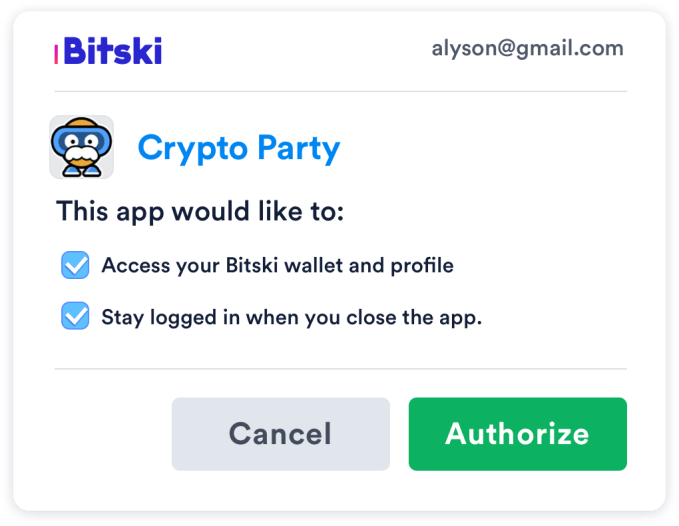
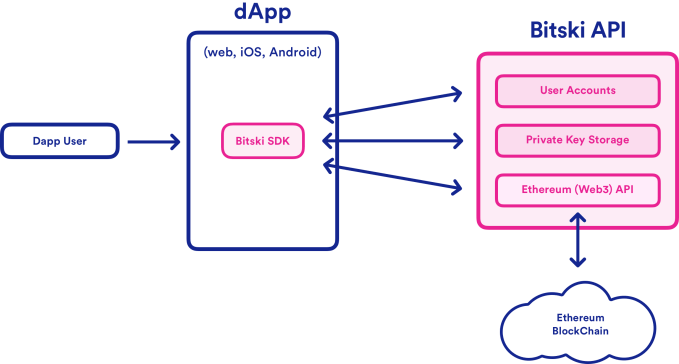
10 projects including 7 game developers are lined up to pay a fee to integrate Bitski’s SDK. Then, whenever they need a user’s identity or to transact a payment, their app pops open a Bitski authorization screen where users can grant permissions to access their ID, send money, or receive items. Users sign up just once with Bitski, and then there’s no more punching in long private keys or other friction. Using blockchain apps becomes simple enough for novices. Given the recent price plunge, the mainstream has been spooked about speculating on cryptocurrencies. But Bitski could unlock the utility of dApps that blockchain developers have been promising but haven’t delivered.

“One of the great challenges for protocol teams and product companies in crypto today is the poor UX in dApps, specifically onboarding, transactions, and sign-in/password recovery” says co-founder and CEO Donnie Dinch. “We interviewed a ton of dApp developers. The minute they used a wallet, there was a huge drop-off of folks. 
Bitski’s vision is to solve user onboarding and wallet usability for developers, so that they can in-turn focus on creating unique and useful dapps.”

The scrappy Bitski team raised $1.5 million in pre-seed capital from Signia, Founders Fund, Village Global, Social Capital, and Steve Jain. They were betting on Dinch, a designer-as-CEO who’d built concert discovery app WillCall that he sold to Ticketfly, which was eventually bought by Pandora. After 18 months of rebranding Ticketfly and overhauling its consumer experience, Dinch left and eventually recruited engineer Julian Tescher to come with him and found Bitski.

Bitski co-founder and CEO Donnie Dinch

After Riff failed to hit scale, the team hung up its social ambitions in late 2017 and “started kicking around ideas for dApps. We mocked up a Venmo one, a remittance app…but found the hurdle to get someone to use one of these products is enormous” Dinch recalls. “Onboarding was a dealbreaker for anyone building dApps. Even if we made the best crypto Venmo, to get normal people on it would be extremely difficult. It’s already hard enough to get people to install apps from the App Store.” They came up with Bitski to let any developer ski jump over that hurdle.

Looking across the crypto industry, the companies like Coinbase and Binance with their own hosted wallets that permitted smooth UX were the ones winning. Bitski would bring that same experience to any app. “Our hosted wallet SDK lets developers drop the Btski wallet into their apps and onboard users with standards web 2.0 users have grown to know and love” Dinch explains.

Imagine an iOS game wants to reward users with a digital sword or token. Users would have to set up a whole new wallet, struggle with their credentials, or use another clumsy soluation. They’d have to own Ethereum already to pay the Ethereium “gas” price to power the transaction, and the developer would have to manually approve sending the gift. With Bitski, users can approve receiving tokens from a developer from then on, and developers can pay the gas on users behalf while triggering transactions programmatically.

Magik is an AR content platform that’s one of Bitski’s first developers. Magik’s founders tell me “We’re building towards reaching millions of mainstream consumers, and Bitski is the only wallet solution that understands what we need to reach users at that scale. They provide a dead-simple, secure, and familiar interface that addresses every pain point along the user-onboarding journey.”

Bitski will offer a free tier, priced tiers based on transaction volume or a monthly fee, and an enterprise version. In the future, the company is considering doubling-down on premium developer services to help them build more on top of the blockchain. “We will never, ever monetize user data. We’ve never had any intent at looking at it” Dinch vows. The startup hopes developers will seize on the network effects of a cross-app wallet, as once someone sets up Bitski to use one product, all future sign-ins just require a few clicks.

In August, Coinbase acquired a startup called Distributed Systems that was building a similar crypto identity platform called the Clear Protocol. A “login with Coinbase” feature could be popular if launched, but the company is focus is spread a ton of blockchain projects. “If [login with Coinbase] launched tomorrow, they wouldn’t be able to support games or anything with a unique token. We’re a lockbox, they’re a bank” Dinch claims.

The spectre of single sign-on’s biggest player Facebook looms as well. In May it announced the formation of a blockchain team we suspect might be working on a crypto login platform or other ways to make the decentralized world more accessible for mom and pop. Dinch suspects that fears about how Facebook uses data would dissuade developers and users from adopting such a product. Still, Bitski’s haste in getting its developer platform into beta just a year after forming shows it’s eager to beat them to market.

Building a centralized wallet in a decentralized ecosystem comes with its own security risks. But Dinch assures me Bitski is using all its own hardware with air-gapped computers that have been stripped of their wifi cards, and it’s taking other secret precautions to prevent anyone from snatching its wallets. He believes cross-app wallets will also deliver a future where users actually own their virtual goods instead of just relying on the good will of developers not to pull them away or shut them down.”The idea of we’ve never been able to provably own unique digital assets is crazy to me” Dinch notes. “Whether it’s a skin in Fortnight or a movie on iTunes that you purchase, you don’t have liquidity to resell those things. We think we’ll look back in 5 to 10 years and think it’s nuts that no one owned their digital items.”

While the crypto prices might be cratering and dApps like Cryptokitties have cooled off, Dinch is convinced the blockchain startups won’t fade away. “There is a thriving developer ecosystem hellbent on bringing the decentralized web to reality; regardless of token price. It’s a safe assumption that prices will dip a bit more, but will eventually rise whenever we see real use cases for a lot of these tokens. Most will die. The ones that success will be outcome oriented, building useful products that people want.” Bitski’s a big step in that direction.

“The problem is Facebook,” lawmakers from nine countries tell Zuckerberg’s accountability stand-in

A grand committee of international parliamentarians empty-chaired Mark Zuckerberg at a hearing earlier today, after the Facebook founder snubbed repeat invitations to face questions about malicious, abusive and improper uses of his social media platform — including the democracy-denting impacts of so-called ‘fake news’.

The UK’s DCMS committee has been leading the charge to hold Facebook to account for data misuse scandals and election interference — now joined in the effort by international lawmakers from around the world. But still not by Zuckerberg himself.

In all parliamentarians from nine countries were in the room to put awkward questions to Zuckerberg’s stand in, policy VP Richard Allan — including asking what Facebook is doing to stop WhatsApp being used as a vector to spread political disinformation in South America; why Facebook refused to remove a piece of highly inflammatory anti-Muslim hate speech in Sri Lanka until the country blocked access to its platform; how Facebook continues to track non-users in Belgium and how it justifies doing so under Europe’s tough new GDPR framework; and, more generally, why anyone should have any trust in anything the company says at this point — with company neck-deep in privacy and trust scandals.

The elected representatives were collectively speaking up for close to 450 million people across the UK, Argentina, Belgium, Brazil, Canada, France, Ireland, Latvia and Singapore. The most oft repeated question on their lips was why wasn’t Zuckerberg there?

Allan looked uncomfortable on his absentee boss’ behalf and spent the best part of three hours running the gamut of placative hand gestures as he talked about wanting to work with regulators to find “the right regulation” to rein in social media’s antisocial, anti-democratic impacts.

Canadian MP Bob Zimmer spoke for the room, cutting into another bit of Allan’s defensive pablum with: “Here we are again hearing another apology from Facebook — ‘look trust us, y’all regulate us etc but we really don’t have that much influence in the global scheme of things’. In this room we regulate over 400M people and to not have your CEO sit in that chair there is an offence to all of us in this room and really our citizens as well.”

“[Blackberry co-founder] Jim Balsille said, when I asked him on our committee, is our democracy at risk if we don’t change the laws in Canada to deal with surveillance capitalism?” Zimmer continued. “He said without a doubt. What do you think?” — which Allan took as a cue to ummm his way into another series of “we need tos”, and talk of “a number of problematic vectors” Facebook is trying to address with a number of “tools”.

The session was largely filled up such frustratingly reframed waffle, as Allan sought to deflect, defang and defuse the committee’s questions — leading it to accuse him more than once of repeating the ‘delay, deny, deflect’ tactics recently reported on by the New York Times.

Allan claimed not — claiming to be there “acknowledging” problems. But that empty chair beside him sure looked awkward.

At the close, Canada’s Charlie Angus sought to sweep Facebook’s hot air away by accusing Allan of distracting with symptoms — to draw the regulatory eye away from the root cause of the problem which he sharply defined as Facebook itself.

“The problem we have with Facebook is there’s never accountability — so I would put it to you when we talk about regulation that perhaps the best regulation would be antitrust,” he said. “Because people who don’t like Facebook — oh they could go to WhatsApp. But oh we have some problems in South America, we have problems in Africa, we have to go back to Mr Zuckerberg who’s not here.

“My daughters could get off Facebook. But they’d go to Instagram. But that’s now controlled by Facebook. Perhaps the simplest form of regulation would be to break Facebook up — or treat it as a utility so that we could all then feel that when we talk about regulation we’re talking about allowing competition, counting metrics that are actually honest and true, and that Facebook has broken so much trust to allow you to simply gobble up every form of competition is probably not in the public interest.

“So when we’re talking about regulation would you be interested in asking your friend Mr Zuckerberg if we could have a discussion about antitrust?”

Allan’s reached for an “it depends upon the problem we’re trying to solve” reply.

“The problem is Facebook,” retorted Angus. “We’re talking about symptoms but the problem is the unprecedented economic control of every form of social discourse and communication. That it’s Facebook. That that is the problem that we need to address.”

Committee chair Damian Collins also gave short shrift to Allan’s attempt to muddily reframe this line of questioning — as regulators advocating “turning off the Internet” (instead of what Angus was actually advocating: A way to get “credible democratic responses from a corporation”) — by interjecting: “I think we would also distinguish between the Internet and Facebook to say they’re not necessarily the same thing.”

The room affirmed its accord with that.

At the start of the session Collins revealed the committee would not — at least for now — be publishing the cache of documents it dramatically seized this weekend from the founder of a startup that’s been suing Facebook since 2015, saying it was “not in a position to do that”.

Although at several points during the session DCMS committee members appeared to tease some new details derived from these documents, asking for example whether Facebook had ever made API decisions for developers contingent on them taking advertising on its platform.

Allan said it had not — and appeared to be attempting to suggest that the emails the committee might have been reading were the result of ‘normal’ internal business discussions about how to evolve Facebook’s original desktop-based business model for the mobile-first era.

Collins did detail one piece of new information that he categorically identified as having been sourced from the seized documents — and specifically from an internal email sent by a Facebook engineer, dating from October 2014 — describing this to be of significant public interest.

“An engineer at Facebook notified the company in October 2014 that entities with Russian IP addresses had been using a Pinterest API key to pull over 3BN data points a day through the ordered friends API,” he revealed, asking Allan whether “that reported to any external body at the time”.

The Facebook VP responded by characterizing the information contained in the seized documents as “partial”, on account of being sourced via a “hostile litigant”.

“I don’t want you to use this opportunity just to attack the litigant,” retorted Collins. “I want you to address the question… what internal process [Facebook] ran when this was reported to the company by an engineer? And did they notify external agencies of this activity? Because if Russian IP addresses were pulling down a huge amount of data from the platform — was that reported or was that just kept, as so often seems to be the case, just kept within the family and not talked about.”

“Any information you have seen that’s contained within that cache of emails is at best partial and at worst potentially misleading,” responded Allan.

“On the specific question of whether or not we believe, based on our subsequent investigations, that there was activity by Russians at that time I will come back to you.”

We reached out to Pinterest to ask whether Facebook ever informed it about such an abuse of its API key. At the time of writing it had not responded to our request for comment.


from Social – TechCrunch https://ift.tt/eA8V8J “The problem is Facebook,” lawmakers from nine countries tell Zuckerberg’s accountability stand-in Natasha Lomas https://ift.tt/2AtrFSk
via IFTTT

Meet ‘Bitski’, the single sign-on wallet crypto desperately needs

The mainstream will never adopt blockchain-powered decentralized apps (dApps) if it’s a struggle to log in. They’re either forced to manage complex security keys themselves, or rely on a clunky wallet-equipped browser like MetaMask. What users need is for signing in to blockchain apps to be as easy as Login With Facebook. So that’s what Bitski built. The startup emerges from stealth today with exclusive on TechCrunch about the release of the developer beta of its single sign-on cryptocurrency wallet platform.

10 projects including 7 game developers are lined up to pay a fee to integrate Bitski’s SDK. Then, whenever they need a user’s identity or to transact a payment, their app pops open a Bitski authorization screen where users can grant permissions to access their ID, send money, or receive items. Users sign up just once with Bitski, and then there’s no more punching in long private keys or other friction. Using blockchain apps becomes simple enough for novices. Given the recent price plunge, the mainstream has been spooked about speculating on cryptocurrencies. But Bitski could unlock the utility of dApps that blockchain developers have been promising but haven’t delivered.

“One of the great challenges for protocol teams and product companies in crypto today is the poor UX in dApps, specifically onboarding, transactions, and sign-in/password recovery” says co-founder and CEO Donnie Dinch. “We interviewed a ton of dApp developers. The minute they used a wallet, there was a huge drop-off of folks. 
Bitski’s vision is to solve user onboarding and wallet usability for developers, so that they can in-turn focus on creating unique and useful dapps.”

The scrappy Bitski team raised $1.5 million in pre-seed capital from Signia, Founders Fund, Village Global, Social Capital, and Steve Jain. They were betting on Dinch, a designer-as-CEO who’d built concert discovery app WillCall that he sold to Ticketfly, which was eventually bought by Pandora. After 18 months of rebranding Ticketfly and overhauling its consumer experience, Dinch left and eventually recruited engineer Julian Tescher to come with him and found Bitski.

Bitski co-founder and CEO Donnie Dinch

After Riff failed to hit scale, the team hung up its social ambitions in late 2017 and “started kicking around ideas for dApps. We mocked up a Venmo one, a remittance app…but found the hurdle to get someone to use one of these products is enormous” Dinch recalls. “Onboarding was a dealbreaker for anyone building dApps. Even if we made the best crypto Venmo, to get normal people on it would be extremely difficult. It’s already hard enough to get people to install apps from the App Store.” They came up with Bitski to let any developer ski jump over that hurdle.

Looking across the crypto industry, the companies like Coinbase and Binance with their own hosted wallets that permitted smooth UX were the ones winning. Bitski would bring that same experience to any app. “Our hosted wallet SDK lets developers drop the Btski wallet into their apps and onboard users with standards web 2.0 users have grown to know and love” Dinch explains.

Imagine an iOS game wants to reward users with a digital sword or token. Users would have to set up a whole new wallet, struggle with their credentials, or use another clumsy soluation. They’d have to own Ethereum already to pay the Ethereium “gas” price to power the transaction, and the developer would have to manually approve sending the gift. With Bitski, users can approve receiving tokens from a developer from then on, and developers can pay the gas on users behalf while triggering transactions programmatically.

Magik is an AR content platform that’s one of Bitski’s first developers. Magik’s founders tell me “We’re building towards reaching millions of mainstream consumers, and Bitski is the only wallet solution that understands what we need to reach users at that scale. They provide a dead-simple, secure, and familiar interface that addresses every pain point along the user-onboarding journey.”

Bitski will offer a free tier, priced tiers based on transaction volume or a monthly fee, and an enterprise version. In the future, the company is considering doubling-down on premium developer services to help them build more on top of the blockchain. “We will never, ever monetize user data. We’ve never had any intent at looking at it” Dinch vows. The startup hopes developers will seize on the network effects of a cross-app wallet, as once someone sets up Bitski to use one product, all future sign-ins just require a few clicks.

In August, Coinbase acquired a startup called Distributed Systems that was building a similar crypto identity platform called the Clear Protocol. A “login with Coinbase” feature could be popular if launched, but the company is focus is spread a ton of blockchain projects. “If [login with Coinbase] launched tomorrow, they wouldn’t be able to support games or anything with a unique token. We’re a lockbox, they’re a bank” Dinch claims.

The spectre of single sign-on’s biggest player Facebook looms as well. In May it announced the formation of a blockchain team we suspect might be working on a crypto login platform or other ways to make the decentralized world more accessible for mom and pop. Dinch suspects that fears about how Facebook uses data would dissuade developers and users from adopting such a product. Still, Bitski’s haste in getting its developer platform into beta just a year after forming shows it’s eager to beat them to market.

Building a centralized wallet in a decentralized ecosystem comes with its own security risks. But Dinch assures me Bitski is using all its own hardware with air-gapped computers that have been stripped of their wifi cards, and it’s taking other secret precautions to prevent anyone from snatching its wallets. He believes cross-app wallets will also deliver a future where users actually own their virtual goods instead of just relying on the good will of developers not to pull them away or shut them down.”The idea of we’ve never been able to provably own unique digital assets is crazy to me” Dinch notes. “Whether it’s a skin in Fortnight or a movie on iTunes that you purchase, you don’t have liquidity to resell those things. We think we’ll look back in 5 to 10 years and think it’s nuts that no one owned their digital items.”

While the crypto prices might be cratering and dApps like Cryptokitties have cooled off, Dinch is convinced the blockchain startups won’t fade away. “There is a thriving developer ecosystem hellbent on bringing the decentralized web to reality; regardless of token price. It’s a safe assumption that prices will dip a bit more, but will eventually rise whenever we see real use cases for a lot of these tokens. Most will die. The ones that success will be outcome oriented, building useful products that people want.” Bitski’s a big step in that direction.


https://ift.tt/2PVmeGl Meet ‘Bitski’, the single sign-on wallet crypto desperately needs https://ift.tt/2Rp5ZOc

Robinhood hires 20-year Amazon veteran to CFO role as high-flying startup eyes IPO

Robinhood, the zero-fee stock trading app and cryptocurrency exchange is bringing on a former Amazon finance exec to help the company prepare for an eventual public debut.

Warnick

The startup has hired Jason Warnick, a former exec at Amazon who was with the company for nearly 20 years, most recently serving as the commerce giant’s VP of Finance. Warnick has worn many hats inside the Seattle company’s finance departments, with positions touching operations, internal audit, investor relations and risk management. In his most recent role, Warnick also served as the Chief of Staff to Amazon CFO Brian Olsavsky.

At TechCrunch Disrupt SF earlier this fall, Robinhood CEO Baiju Bhatt told us that the startup was eying a public offering but wouldn’t be doing so in the “immediate term.” At the event, Bhatt also revealed that the company was searching for a CFO to help the highly-valued startup prep for an IPO.

Warnick’s wide range of financial admin expertise will undoubtedly be helpful to the five-year-old Robinhood which has grown to be one of the most valuable venture-backed startups. The fast-growing startup has raised over a half-billion dollars and earned a $5.6 billion valuation in its latest fundraise.

“We’re incredibly lucky to have Jason join our leadership team,” Robinhood co-CEO Vlad Tenev said in a statement. “We look forward to working with Jason to build out our operational and financial infrastructure and continuing to deliver the best possible financial products to our customers at the best possible prices.”

Warnick is just the latest in a line of Amazon execs fleeing the company for CFO roles at highly-valued startups. Yesterday, Pinterest hired Dave Stephenson as its new chief financial officer. A few weeks ago, Zillow hired Allen Parker — another Amazon finance VP — to its CFO role.


https://ift.tt/2KEdPAY Robinhood hires 20-year Amazon veteran to CFO role as high-flying startup eyes IPO https://ift.tt/2r7l9fy

Red Hat acquires hybrid cloud data management service NooBaa

Red Hat is in the process of being acquired by IBM for a massive $34 billion, but that deal hasn’t closed yet and in the meantime, Red Hat is still running independently and making its own acquisitions, too. As the company today  announced, it has acquired Tel Aviv-based NooBaa, an early state startup that helps enterprises manage their data more easily and access their various data providers through a single API.

NooBaa’s technology makes it a good fit for Red Hat, which has recently emphasized its ability to help enterprise more effectively manage their hybrid and multicloud deployments. At its core, NooBaa is all about bringing together various data silos, which should make it a good fit in Red Hat’s portfolio. With OpenShift and the OpenShift Container Platform, as well as its Ceph Storage service, Red Hat already offers a range of hybrid cloud tools, after all.

“NooBaa’s technologies will augment our portfolio and strengthen our ability to meet the needs of developers in today’s hybrid and multicloud world,” writes Ranga Rangachari, the VP and general manager for storage and hyperconverged infrastructure at Red Hat, in today’s announcement. “We are thrilled to welcome a technical team of nine to the Red Hat family as we work together to further solidify Red Hat as a leading provider of open hybrid cloud technologies.”

While virtually all of Red Hat’s technology is open source, NooBaa’s code is not. The company says that it plans to open source NooBaa’s technology in due time, though the exact timeline has yet to be determined yet.

NooBaa was founded in 2013. The company has raised funding some venture fundingfrom the likes of Jerusalem Venture Partners and OurCrowd, with a strategic investment from Akamai Capital thrown in for good measure. The company never disclosed the size of that round, though, and neither Red Hat nor NooBaa are disclosing the financial terms of the acquisition.


https://ift.tt/2Ar5OLa Red Hat acquires hybrid cloud data management service NooBaa https://ift.tt/2Qs6qdo

Google faces GDPR complaint over “deceptive” location tracking

{rss:content:encoded} Google faces GDPR complaint over “deceptive” location tracking https://ift.tt/2P646Er https://ift.tt/2Si4qSz November 27, 2018 at 04:02PM

A group of European consumer watchdogs has filed a privacy complaint against Google — arguing the company uses manipulative tactics in order to keep tracking web users’ location, for ad-targeting purposes.

The consumer organizations are making the complaint under the EU’s new data protection framework, GDPR, which regulators can use to levy major fines for compliance breaches — of up to 4% of a company’s global annual turnover.

Under GDPR a consent-based legal basis for processing personal data (e.g. person’s location) must be specific, informed and freely given.

In their complaint the groups, which include Norway’s Consumer Council, argue that Google does not have proper legal basis to track users through “Location History” and “Web & App Activity” — settings which are integrated into all Google accounts, and which, for users of Android-based smartphones, they assert are particularly difficult to avoid.

The Google mobile OS remains the dominant smartphone platform globally, as well as across Europe.

“Google is processing incredibly detailed and extensive personal data without proper legal grounds, and the data has been acquired through manipulation techniques,” said Gro Mette Moen, acting head of the Norwegian Consumer Council’s digital services unit in a statement.

“When we carry our phones, Google is recording where we go, down to which floor we are on and how we are moving. This can be combined with other information about us, such as what we search for, and what websites we visit. Such information can in turn be used for things such as targeted advertising meant to affect us when we are receptive or vulnerable.”

Responding to the complaint, a Google spokesperson sent TechCrunch the following statement:

Location History is turned off by default, and you can edit, delete, or pause it at any time. If it’s on, it helps improve services like predicted traffic on your commute. If you pause it, we make clear that — depending on your individual phone and app settings — we might still collect and use location data to improve your Google experience. We enable you to control location data in other ways too, including in a different Google setting called Web & App Activity, and on your device. We’re constantly working to improve our controls, and we’ll be reading this report closely to see if there are things we can take on board.

Earlier this year the Norwegian watchdog produced a damning report calling out dark pattern design tricks being deployed by Google and Facebook meant to manipulate users by nudging them towards “privacy intrusive options”. It also examined Microsoft’s consent flows but judged the company to be leaning less heavily on such unfair tactics.

Among the underhand techniques that the Google-targeted GDPR complaint, which draws on the earlier report, calls out are allegations of deceptive click-flow, with the groups noting that a “location history” setting can be enabled during Android set-up without a user being aware of it; key settings being both buried in menus (hidden) and enabled by default; users being presented at the decision point with insufficient and misleading information; repeat nudges to enable location tracking even after a user has previously turned it off; and the bundling of “invasive location tracking” with other unrelated Google services, such as photo sorting by location.

GDPR remains in the early implementation phrase — just six months since the regulation came into force across Europe. But a large chunk of the first wave of complaints have been focused on consent, according to Europe’s data protection supervisor, who also told us in October that more than 42,000 complaints had been lodged in total since the regulation came into force.

Where Google is concerned, the location complaint is by no means the only GDPR — or GDPR consent-related — complaint it’s facing.

Another complaint, filed back in May also by a consumer-focused organization, took aim at what it dubbed the use of “forced consent” by Google and Facebook — pointing out that the companies were offering users no choice but to have their personal data processed to make use of certain services, yet the GDPR requires consent to be freely given.

Facebook launches Watch Party for all, tests Live PiP commentating

{rss:content:encoded} Facebook launches Watch Party for all, tests Live PiP commentating https://ift.tt/2S9Z4bG https://ift.tt/2BApI8d November 27, 2018 at 03:00PM

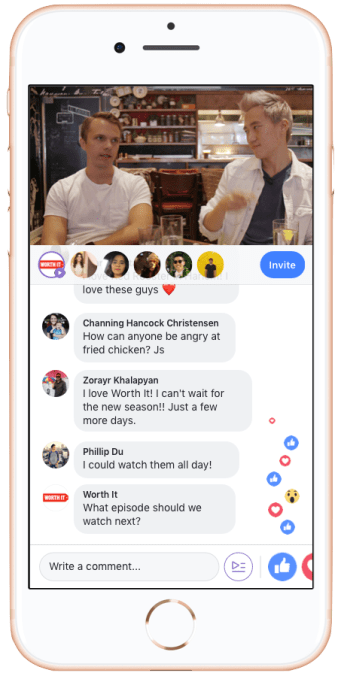
Facebook Watch has failed to capture viewers with its content, so it’s hoping to differentiate through the company’s core strength: social. Today Facebook fully launches Watch Party, its co-viewing feature where users can see and comment on the same video at the same time, to all profiles and Pages around the world.

Watch Party had previously launched in Groups and been in testing with other types of accounts. But now any profile or business can post a Watch party invite to sync up with other users and simultaneously view videos they’ve discovered on Facebook.

Watch’s content lineup is still lackluster compared to YouTube, Netflix, or even Snapchat Discover. CNBC reports Facebook is giving up on younger teens that are already ditching its app, and pivoting the video hub towards an older audience. Facebook is hoping a shared experience with users commenting together on clips could make Watch more appealing, but it’s a genuinely new behavior that may prove difficult to instill.

Facebook is also testing a few other tricks to breathe life into Watch. Pages and Groups will be able to schedule a Watch Party to draw more viewers, maybe by setting up a nightly gathering. Watch Parties with lots of activity will have their comments threaded so it’s easier to follow discussions.

And most interestingly, Facebook will try allowing Watch Party hosts to go Live picture-in-picture so they can commentate in real-time. This could be a hit with celebrities, as it will make users feel like they’re sitting beside them watching TV together. Basketball star Shaq will test out the Live Commentating feature through his Page tomorrow.

Watch Party’s statistics sound impressive, with 12 million started from Groups so far, 7X more daily Watch Parties in Groups per day since its launch in July, and 8X more commenting than on non-Live/synced videos. Pages are using it to let fans binge watch playlists of their old videos, replay their TV content for users in different time zones, and let fans ask each other and the hosts questions about recipes as they cook.

But given Facebook’s 2.2 billion total monthly users, billion-plus Groups users, and the fact that measuring growth in multiples is easy when you start with a low number, the feature clearly hasn’t reached the zeitgeist yet.

Perhaps the best hope for Watch and Watch Party is a feature TechCrunch broke the news on last week. Facebook is now internally testing a Watch Party-like co-viewing feature inside Messenger. Baking the option into chat might be a lot more natural, especially in group texts. 

Facebook has been desperately trying to shift video consumption behavior from passive zombie viewing to interactive and social engagement with fellow viewers. But that only works if the content is compelling.

Beyond a reboot of MTV’s The Real World, nothing on Watch truly stands out. Facebook may need to open up its wallet and pay big for more tent pole shows to pull in users and hope they get lost commenting on clips with friends and like-minds.

Facebook launches Watch Party for all, tests Live PiP commentating

Facebook Watch has failed to capture viewers with its content, so it’s hoping to differentiate through the company’s core strength: social. Today Facebook fully launches Watch Party, its co-viewing feature where users can see and comment on the same video at the same time, to all profiles and Pages around the world.

Watch Party had previously launched in Groups and been in testing with other types of accounts. But now any profile or business can post a Watch party invite to sync up with other users and simultaneously view videos they’ve discovered on Facebook.

Watch’s content lineup is still lackluster compared to YouTube, Netflix, or even Snapchat Discover. CNBC reports Facebook is giving up on younger teens that are already ditching its app, and pivoting the video hub towards an older audience. Facebook is hoping a shared experience with users commenting together on clips could make Watch more appealing, but it’s a genuinely new behavior that may prove difficult to instill.

Facebook is also testing a few other tricks to breathe life into Watch. Pages and Groups will be able to schedule a Watch Party to draw more viewers, maybe by setting up a nightly gathering. Watch Parties with lots of activity will have their comments threaded so it’s easier to follow discussions.

And most interestingly, Facebook will try allowing Watch Party hosts to go Live picture-in-picture so they can commentate in real-time. This could be a hit with celebrities, as it will make users feel like they’re sitting beside them watching TV together. Basketball star Shaq will test out the Live Commentating feature through his Page tomorrow.

Watch Party’s statistics sound impressive, with 12 million started from Groups so far, 7X more daily Watch Parties in Groups per day since its launch in July, and 8X more commenting than on non-Live/synced videos. Pages are using it to let fans binge watch playlists of their old videos, replay their TV content for users in different time zones, and let fans ask each other and the hosts questions about recipes as they cook.

But given Facebook’s 2.2 billion total monthly users, billion-plus Groups users, and the fact that measuring growth in multiples is easy when you start with a low number, the feature clearly hasn’t reached the zeitgeist yet.

Perhaps the best hope for Watch and Watch Party is a feature TechCrunch broke the news on last week. Facebook is now internally testing a Watch Party-like co-viewing feature inside Messenger. Baking the option into chat might be a lot more natural, especially in group texts. 

Facebook has been desperately trying to shift video consumption behavior from passive zombie viewing to interactive and social engagement with fellow viewers. But that only works if the content is compelling.

Beyond a reboot of MTV’s The Real World, nothing on Watch truly stands out. Facebook may need to open up its wallet and pay big for more tent pole shows to pull in users and hope they get lost commenting on clips with friends and like-minds.


from Social – TechCrunch https://ift.tt/2BApI8d Facebook launches Watch Party for all, tests Live PiP commentating Josh Constine https://ift.tt/2S9Z4bG
via IFTTT

Monday, November 26, 2018

Lime launches electric-assist bikes in its first UK city

Lime launched in the United Kingdom today, starting with a group of dockless electric-assist bikes in a Milton Keynes shopping center. The San Francisco-based startup says it plans to expand into more UK cities over the next few weeks.

As in other markets, users in Milton Keynes find and unlock Lime’s bikes, which use battery-powered motors to reduce pedaling and travel further distances, through a mobile app. Bike rides cost £1 (about $1.28) to unlock and an additional 15 pence per minute of riding time and will be available first at intu Milton Keynes Shopping Centre.

Backed by investors like Uber, GV, and Andreessen Horowitz with $467 million in funding so far, Lime recently said it had hit a milestone of 11.5 million rides, only 14 months after its bikes first became available to riders. The company already operates in 100 markets through the United States and Europe and plans to launch in 50 new cities by the end of this year.

But LIme’s rapid growth hasn’t come without bumps. Along with competitors Bird and Spin, Lime was one of the companies involved in San Francisco’s war on electric scooters when they ran afoul of the city’s Municipal Transportation Agency (SFMTA). The SFMTA said e-scooters created obstacles and potentially safety hazards. This ultimately resulted in Lime being denied an e-scooter permit in August, a decision it appealed.

By choosing Milton Keynes as its first UK city, however, Lime intent on preventing conflicts by working with a city that is more receptive to transportation startups. Milton Keynes was the site of an initiative called MK: Smart to integrate more Internet of Things hardware. The project was followed by CityLABS, a program that supports data and IoT startups. In its announcement, Lime said it “will be working closely with city leaders and stakeholders to ensure the fair and respectful distribution of the service across the area.”


https://ift.tt/eA8V8J Lime launches electric-assist bikes in its first UK city https://ift.tt/2ByGlkC

blogger better Headline Animator