l
l
blogger better. Powered by Blogger.

Search

Labels

blogger better

Followers

Blog Archive

Total Pageviews

Labels

Download

Blogroll

Featured 1

Curabitur et lectus vitae purus tincidunt laoreet sit amet ac ipsum. Proin tincidunt mattis nisi a scelerisque. Aliquam placerat dapibus eros non ullamcorper. Integer interdum ullamcorper venenatis. Pellentesque habitant morbi tristique senectus et netus et malesuada fames ac turpis egestas.

Featured 2

Curabitur et lectus vitae purus tincidunt laoreet sit amet ac ipsum. Proin tincidunt mattis nisi a scelerisque. Aliquam placerat dapibus eros non ullamcorper. Integer interdum ullamcorper venenatis. Pellentesque habitant morbi tristique senectus et netus et malesuada fames ac turpis egestas.

Featured 3

Curabitur et lectus vitae purus tincidunt laoreet sit amet ac ipsum. Proin tincidunt mattis nisi a scelerisque. Aliquam placerat dapibus eros non ullamcorper. Integer interdum ullamcorper venenatis. Pellentesque habitant morbi tristique senectus et netus et malesuada fames ac turpis egestas.

Featured 4

Curabitur et lectus vitae purus tincidunt laoreet sit amet ac ipsum. Proin tincidunt mattis nisi a scelerisque. Aliquam placerat dapibus eros non ullamcorper. Integer interdum ullamcorper venenatis. Pellentesque habitant morbi tristique senectus et netus et malesuada fames ac turpis egestas.

Featured 5

Curabitur et lectus vitae purus tincidunt laoreet sit amet ac ipsum. Proin tincidunt mattis nisi a scelerisque. Aliquam placerat dapibus eros non ullamcorper. Integer interdum ullamcorper venenatis. Pellentesque habitant morbi tristique senectus et netus et malesuada fames ac turpis egestas.

Tuesday, February 11, 2020

Randori introduces “Red Team” attack platform as a service

Companies spend a lot of money and time testing their security defenses (or at least they should). Sometimes they hire a set of consultants called a “red team” to attack their systems and see where vulnerabilities are in a safe way. Today, Randori, a Boston-based security startup, introduced Randori Attack Platform, which effectively packages the Red Team concept as a service.

The company emerged last fall with a tool called Randori Recon, which helps find vulnerabilities in your network. As co-founder and CEO Brian Hazzard put it, the first product enabled customers to see their environment through the lens of an attacker.

The next logical step is today’s announcement around Randori Attack Platform. “This enables them to launch real attacks, real exploits against their production assets with real attack tooling to find out what really matters and what doesn’t,” Hazzard told TechCrunch. What Randori Attack essentially does is give customers a safe adversary to play with, what he calls “a legitimate sparring partner to ultimately touch and strengthen their defenses.”

CTO and co-founder David Wolpoff used to run a consulting firm that ran Red Team attacks for clients. He says while this was a reasonable approach at the time, it took a tremendous number of people and tooling to pull off, and that meant it was expensive. The idea behind Randori Attack is to provide that kind of safe battleground for companies to test their defenses, but to package it in a way that puts it in reach of many more companies than the consulting approach.

“We’re still capturing human innovations, and we’re still letting our customers control authorization. We’re still building professional grade tools that aren’t intended to harm, but are intended to progress the attacker environment. And so you can have this sparring experience where you can also benefit from the economic economies of scale of our platform,” Wolpoff explained.

The economies of scale come into play because as Randori learns about different attack techniques, it can build these into the platform and everyone who uses the platform will benefit. “If we encounter something new in one customer environment that gets flagged by our research team, then they can develop a new technique and quickly automate that in a way that the new attack or  vulnerability is leveraged against all of our customers,”he said.

Randori Attack is available starting today.


https://ift.tt/eA8V8J Randori introduces “Red Team” attack platform as a service https://ift.tt/2w8I7ZG

Meet 500 Startups’ 26th batch of startups

Following TechCrunch’s coverage of 500 Startups’ 25th batch (and numbers 24, 23, 22, and 21, in case you wanted to go back in time), today we’re saying hello to  the accelerator’s 26th cohort.

500 Startups, in case you weren’t aware, is a seed-stage accelerator and a collection of venture funds. The group, now with a few dozen accelerator batches under its belt, has several thousand companies in its universe. 500’s 26th cohort contains 29 companies, including a handful that we’d already heard of (Juked.gg, to pick one).

Data, diversity

Before we get to the startups themselves, a few notes. To get a handle on the companies included in the batch, TechCrunch spoke with Aaron Blumenthal, a venture partner at the firm. After sharing a number of batch metrics with TechCrunch, we pressed for a bit more detail on the makeup of the startups in the group.

Here’s a hybrid of our notes, and his details (condensed and edited for clarity), on the batch that the venture partner called “another rung on the ladder of our diversity and inclusion state of mind”:

  • 37% of the startups are international. According to Blumenthal, “this particular batch from the ‘outside United States perspective’ is a little bit smaller — we usually see north of 50% outside the United States.”
  • 30% of the companies’ founding teams include a woman. TechCrunch asked Blumenthal if that number was up, flat or down, to which he responded that 500’s “average is usually in the mid 30s or so. Our last batch, for example, was 26% female. And this one is more [in] that direction which, of course, we are a fan of.”
  • 70% of the founding teams of the batch “have one or more founders who identify as a racial minority,” according to the firm.

It would be interesting to see a more granular breakdown for future cohorts, but the information provided was more than I expected, and the numbers a bit better. And on the subject of numbers, Crunchbase has recorded 215 exits for 500 Startups. From its accelerator, 500 cites TalkDesk and Shippo as highlights.

Turning to mechanics, 500 Startups invests $150,000 apiece into its accelerator companies for 6% of their equity, and charges a $37,500 for the program itself. So, in effect, it’s a bit less capital for the same ownership percentage.

What else? Just that we’re walking into demo day season. 500 Startups will host the showcase for its 26th batch on March 19. Y Combinator will hold its own on March 23 and 24. The Techstars website defeated my hunt for its next demo day, but in the name of fairness, it’s probably hosting one around the same time somewhere in the world.

Here’s the list of companies in batch 26, with small notes from 500 on what they do:

  • Acadium: Connects business owners and marketing professionals with aspiring digital marketers.

  • Alloy Card: Offers a consumer credit card with automation that gives people more control over their finances while saving time.

  • Amixr: Incident management software that helps engineering teams around the world optimize their workflow while minimizing hassles.

  • AppBind: Lets partners buy and resell online software subscriptions as easily as licensed software, by bringing B2B SaaS into the global reseller market of implementation consultants, system integrators and distributors.

  • Bliinx: Offers an easy and fast way to find information on business relationships by aggregating all interactions with contacts into Office 365.

  • Briza: Provides an insurance-as-a-service API that enables instant quoting, binding and issuance of commercial insurance policies.

  • Butlr: Through sensor networks and AI, Butlr helps retail stores increase in-store sales by applying real-time customer behavior analytics.

  • CENOS: Easy-to-use simulation software that allows engineers to iterate designs faster than physical prototypes for induction heating and antenna design, among others.

  • Connected Analytics: Nigeria-based company helping businesses and banks integrate data analytics and rewards in order to retain customers and increase revenue.

  • Fakespot: Eliminates misinformation and deceptive content on e-commerce sites for consumers, brands and platforms.

  • GamerzClass: Offers exclusive esports masterclasses with professionals to shape the future of gaming.

  • Get on Board: Recruitment platform that connects global companies with the best Latin American tech talent.

  • Juked: Aggregates information on esports games, including live streams, player profiles, scores and calendars to make esports easier to watch and to promote engagement.

  • Kyndoo: Helps advertisers weed out fraudulent social media influencers, and provides data around their authenticity and performance.

  • Mero Technologies: Retrofits commercial buildings with sensors to analyze in real time traffic and consumables, such as toilet paper and soap, to inform cleaning routes.

  • Omnitron Sensors: Enables full autonomy of self-driving cars and drones with novel silicon photonics processes for sensors in safety-critical systems.

  • Pilota:  Applies machine learning to predict flight disruptions for passengers and automatically re-books a traveler’s flight for free.

  • Plant an App: Gives IT teams the speed of low-code development without compromising flexibility.

  • Pluto: Customizes sleep pillows at scale based on the user’s body stats, such as height, neck-to-shoulder ratio and sleep preferences in order to optimize sleep.

  • Predina: Applies AI to predict the risk of vehicle crashes for insurance and safety purposes, by analyzing more than 14 million historical crashes and other factors, such as street intersections, weather conditions and time.

  • Renetec: Enables the creation of GUIs for embedded systems with HTML, CSS and JavaScript, which reduces development time and costs.

  • ShardSecure: Enables enterprises to securely move and store sensitive information to the cloud.

  • Shiplyst: India-based ocean freight procurement marketplace that reduces costs for exporters and importers and gives them greater visibility into their shipments.

  • Silk + Sonder: Provides a women’s mental wellness subscription service that makes daily self-help more personalized through journaling and peer-to-peer support.

  • Sira Medical: Helps clinicians plan surgeries more efficiently through augmented reality, by providing them with high-fidelity 3D holograms of CT scans and MRIs.

  • The Atlas: An online community of city officials crowdsourcing ideas that is modernizing the $1.6 trillion local government market.

  • Thematic: Matches content creators who need great songs for their videos with music artists who need influencer marketing.

  • Trash Warrior: Offers on-demand junk removal services for businesses. Customers can book services online for affordable pricing and reliable quality.

  • Userpilot: Helps software product managers personalize the in-app experience across the user journey at scale.

Living in the unicorn era as we have now for some time, it’s easy to lose track of the earliest-stages of startup investment. But accelerators do have a history of helping birth some impressive companies. So it’s worth paying attention. More when we get to the various demo days.


https://ift.tt/eA8V8J Meet 500 Startups’ 26th batch of startups https://ift.tt/2tM3YFm

A list of MWC coronavirus cancellations so far

{rss:content:encoded} A list of MWC coronavirus cancellations so far https://ift.tt/2OHZua2 https://ift.tt/2vZQIh5 February 11, 2020 at 10:56AM

The world’s biggest mobile tradeshow, Mobile World Congress (MWC), is due to take place in Barcelona just under two weeks’ time, on February 24-27.

The annual international telco industry event typically attracts more than 100,000 delegates from around 200 countries across the conference’s four days — with every major telco and tech giant exhibiting (with the exception of Apple which prefers its own events).

But with international concern now focused on the novel coronavirus outbreak, which was declared a global emergency by the World Health Organization late last month, a growing number of companies have announced they are pulling out of attending. Others, such as Telenor, TCL and ZTE, have cancelled press events or said they will scale back their presence though are still planning to attend.

MWC’s organizer, the GSMA, has announced a series of restrictions intended to reduce the risk of the coronavirus infections at the conference, including a ban on travellers coming from the province in China where the virus was first identified. It has also said it will implement temperature screening of attendees; require conference-goers self-certify they have not come into contact with an infected person; and is suggesting delegates adopt a ‘no hand shake’ policy in a bid to limit contact.

See below for a list of companies that have cancelled their attendance at the conference — we’ll update with any additions as we get them. Per the GSMA, more than 2,400 companies are exhibiting at MWC this year.

Companies that have cancelled their attendance at MWC 2020

Accedian

Amazon

Amdocs

CommScope

Ericsson

iconectiv

Intel

LG

Mediatek

NTT Docomo

Nvidia

Sony

Vivo

MoEngage lands $25M for its mobile-first customer engagement platform

{rss:content:encoded} MoEngage lands $25M for its mobile-first customer engagement platform https://ift.tt/31KlPJB https://ift.tt/2Hfes38 February 11, 2020 at 10:30AM

MoEngage, a San Francisco and Bangalore-based startup that helps firms better understand their customers and improve their engagement, has raised $25 million in a new financing round as it looks to grow its network in Asian markets.

The new financing round, Series C, was led by Eight Roads Ventures. F-Prime Capital, Matrix Partners India, and Ventureast also participated in the round. The six-year-old startup, which is an Alchemist alum, has raised about $40 million to date.

MoEngage offers a product that allows clients to get deeper insight about the way their customers — or users — are engaging with their apps and websites. “We can, for instance, tell at what time a customer is using the app,” said Raviteja Dodda, founder and chief executive of MoEngage, in an interview with TechCrunch.

These insights, all displayed on one dashboard, could be very useful for firms to retain their existing customers or find optimized ways to attempt to sell more to them.

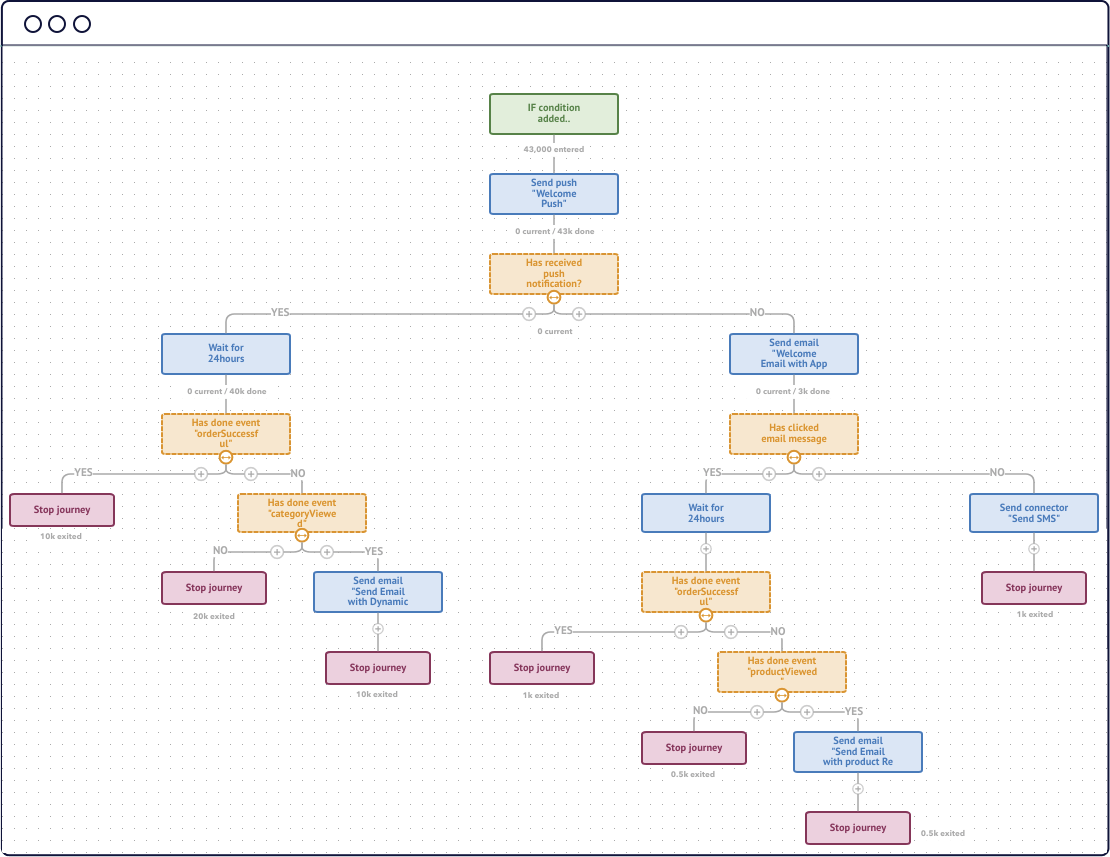
“Based on your understanding about the customer, you can send them personalized notifications. Say you’re using a ride-hailing app. The firm would now know how often you use their app and at what time you tend to avail their service. Based on these learnings, they can offer you deals or reminders that could help them improve their conversion rate,” he said.

MoEngage today works with a number of major firms in North America, Europe, and Asia. Some of its clients include Deutsche Telekom, CIMB Bank, Travelodge, Samsung, McAfee, Vodafone, retail chain Future Retail, ride-hailing service Ola, budget-hotel operator OYO, grocery delivery startup Bigbasket, and music streaming service Gaana.

In total, Dodda said his startup has amassed “hundreds of clients” in over 35 countries and is serving more than 400 million active users for them each day.

“MoEngage, with its differentiated offering, scalable platform and a customer-first approach, will play an important role in enabling us to deliver contextual and relevant communications to our customers and drive higher customer lifetime value,” said Arun Srinivas, chief operating officer at Indian ride-hailing startup Ola, in a statement.

MoEngage, which competes with a handful of startups including India-based Clevertap, will infuse the fresh capital to find more customers in Asia, and scale its product operations in the U.S. and Europe, said Dodda.

“What differentiates MoEngage from other engagement platforms is the combination of their ever-evolving AI-enabled customer journey capabilities, industry-best channel reachability and top-notch customer support. We are thrilled to partner with Raviteja and his team as they look to expand globally,” said Shweta Bhatia, Partner at Eight Roads Ventures.

MoEngage lands $25M for its mobile-first customer engagement platform

MoEngage, a San Francisco and Bangalore-based startup that helps firms better understand their customers and improve their engagement, has raised $25 million in a new financing round as it looks to grow its network in Asian markets.

The new financing round, Series C, was led by Eight Roads Ventures. F-Prime Capital, Matrix Partners India, and Ventureast also participated in the round. The six-year-old startup, which is an Alchemist alum, has raised about $40 million to date.

MoEngage offers a product that allows clients to get deeper insight about the way their customers — or users — are engaging with their apps and websites. “We can, for instance, tell at what time a customer is using the app,” said Raviteja Dodda, founder and chief executive of MoEngage, in an interview with TechCrunch.

These insights, all displayed on one dashboard, could be very useful for firms to retain their existing customers or find optimized ways to attempt to sell more to them.

“Based on your understanding about the customer, you can send them personalized notifications. Say you’re using a ride-hailing app. The firm would now know how often you use their app and at what time you tend to avail their service. Based on these learnings, they can offer you deals or reminders that could help them improve their conversion rate,” he said.

MoEngage today works with a number of major firms in North America, Europe, and Asia. Some of its clients include Deutsche Telekom, CIMB Bank, Travelodge, Samsung, McAfee, Vodafone, retail chain Future Retail, ride-hailing service Ola, budget-hotel operator OYO, grocery delivery startup Bigbasket, and music streaming service Gaana.

In total, Dodda said his startup has amassed “hundreds of clients” in over 35 countries and is serving more than 400 million active users for them each day.

“MoEngage, with its differentiated offering, scalable platform and a customer-first approach, will play an important role in enabling us to deliver contextual and relevant communications to our customers and drive higher customer lifetime value,” said Arun Srinivas, chief operating officer at Indian ride-hailing startup Ola, in a statement.

MoEngage, which competes with a handful of startups including India-based Clevertap, will infuse the fresh capital to find more customers in Asia, and scale its product operations in the U.S. and Europe, said Dodda.

“What differentiates MoEngage from other engagement platforms is the combination of their ever-evolving AI-enabled customer journey capabilities, industry-best channel reachability and top-notch customer support. We are thrilled to partner with Raviteja and his team as they look to expand globally,” said Shweta Bhatia, Partner at Eight Roads Ventures.


https://ift.tt/2Hfes38 MoEngage lands $25M for its mobile-first customer engagement platform https://ift.tt/31KlPJB

Revolut uses ‘open banking’ to let you aggregate other bank account data within its app

Revolut, the European banking and money transfer app that now claims over 10 million customers, has partnered with open banking API provider TrueLayer to add bank account aggregation features to its app.

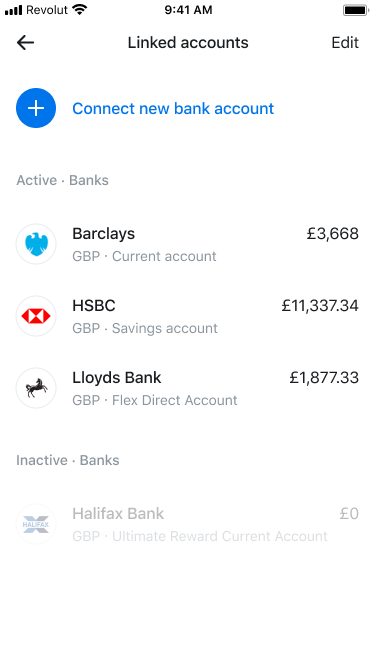
The new functionality means that Revolut’s U.K. customers — both consumer and business — can now connect their external U.K. bank accounts to Revolut, enabling them to see all of their bank balances and transactions, regardless of which of their U.K. bank accounts the data resides in. Known as account aggregation, the feature is designed provide a more complete view of your spending and other transactions, and was one of the early promises of open banking.

However, despite being adopted by legacy banking apps, such as Barclays, along with a plethora of money management apps, the aggregation use case hasn’t exactly seeped into the consciousness of most consumers. Revolut’s move to roll out aggregation features has the potential to help change that. Or so says TrueLayer co-founder and CEO Francesco Simoneschi.

“I think this is the moment Open Banking will go mainstream,” he tells me, perhaps a little over optimistically. “Revolut is putting this feature at the very core of their customer journey and will set the standard for the next phase – not just in the U.K. but everywhere”.

“With the launch of our new Open Banking feature, U.K, customers can now view and manage multiple external bank accounts, enabling them to interpret their day to day spending across all of their accounts,” adds Joshua Fernandes, Product Owner for Open Banking at Revolut. “We’re delighted to see that new legislation such as Open Banking is changing our financial landscape for the better, and I’m proud that Revolut and TrueLayer are at the forefront of this experience”.

From a regulatory point of view, Revolut is authorised as an “Account Information Service Provider” (AISP) by the U.K. regulator, the Financial Conduct Authority. This permits it to access official U.K. Open Banking APIs for information purposes on behalf of customers.

What it doesn’t allow is Revolut to transfer funds and make payments via third party bank accounts, which would require a different Open Banking license. Were this to happen it would make it even more convenient to add and withdraw funds from Revolut and use the app’s budgeting and money transfer features, so I wouldn’t be surprised to see that come next.


https://ift.tt/3bvj9Uk Revolut uses ‘open banking’ to let you aggregate other bank account data within its app https://ift.tt/31TuGJ3

Monday, February 10, 2020

Jam lets you safely share streaming app passwords

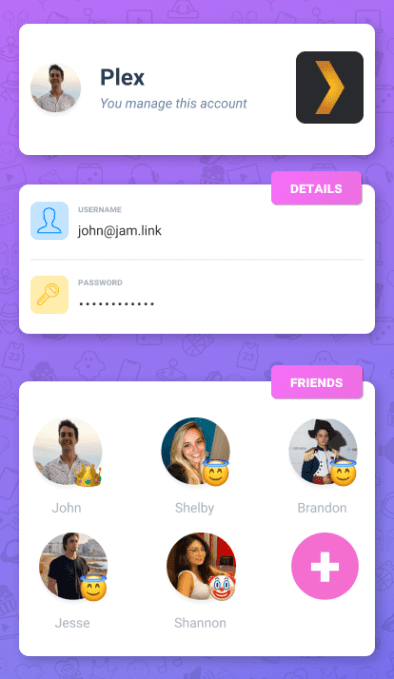
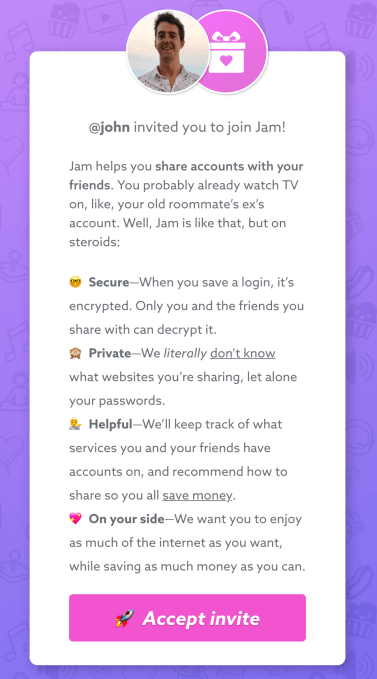
Can’t afford Netflix and HBO and Spotify and Disney+…? Now there’s an app specially built for giving pals your passwords while claiming to keep your credentials safe. It’s called Jam, and the questionably legal service launched in private beta this morning. Founder John Backus tells TechCrunch in his first interview about Jam that it will let users save login details with local encryption, add friends you can then authorize to access your password for a chosen service, and broadcast to friends which of your subscriptions have room for people to piggyback on.

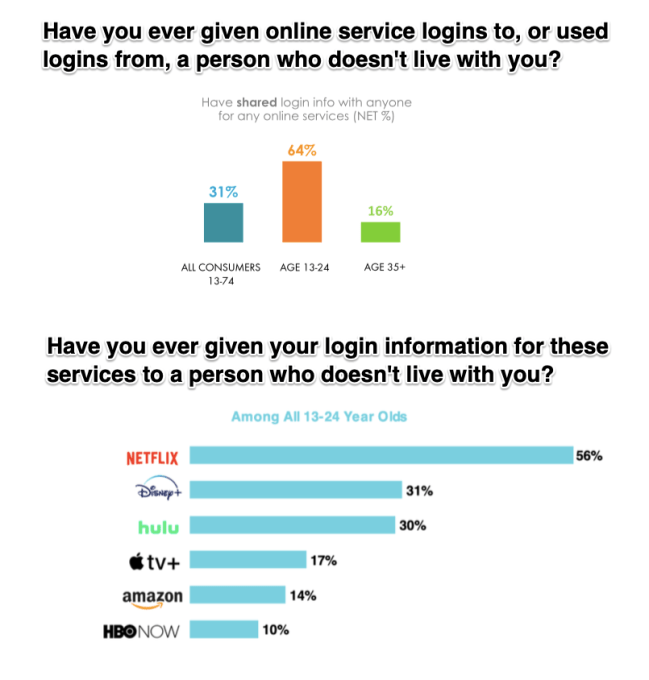
Jam is just starting to add users off its rapidly growing waitlist that you can join here, but when users get access, it’s designed to stay free to use. In the future, Jam could build a business by helping friends split the costs of subscriptions. There’s clearly demand. Over 80% of 13-24 year olds have given out or used someone else’s online TV password, according a study by Hub of over 2000 US consumers.

“The need for Jam was obvious. I don’t want to find out my ex-girlfriend’s roommate has been using my account again. Everyone shares passwords, but for consumers there isn’t a secure way to do that. Why?” Backus asks. “In the enterprise world, team password managers reflect the reality that multiple people need to access the same account, regularly. Consumers don’t have the same kind of system, and that’s bad for security and coordination.”

Thankfully, Backus isn’t some amateur when it comes to security. The Stanford computer science dropout and Thiel Fellow founded identity verification startup Cognito and decentralized credit scoring app Bloom. “Working in crypto at Bloom and with sensitive data at Cognito, I have a lot of experience building secure products with cryptography at the core.

He also tells me since everything saved in Jam is locally encrypted, even he can’t see it and nothing would be exposed if the company was hacked. It uses similar protocols to 1Password, “Plaintext login information is never sent to our server, nor is your master password” and “we use pretty straightforward public key cryptography.” Remember, your friend could always try to hijack and lock you out, though. And while those protocols may be hardened, TechCrunch can’t verify they’re perfectly implemented and fully secure within Jam.

Whether facilitating password sharing is legal, and whether Netflix and its peers will send an army of lawyers to destroy Jam, remain open questions. We’ve reached out to several streaming companies for comment. When asked on Twitter about Jam helping users run afoul of their terms of service, Backus claims that “plenty of websites give you permission to share your account with others (with vary degrees of constraints) but users often don’t know these rules.” 

However, sharing is typically supposed to be amongst a customer’s own devices or within their household, or they’re supposed to pay for a family plan. We asked Netflix, Hulu, CBS, Disney, and Spotify for comment, and did not receive any on the record comments. However, Spotify’s terms of service specifically prohibit providing your password to any other person or using any other person’s username and password”. Netflix’s terms insist that “the Account Owner should maintain control over the Netflix ready devices that are used to access the service and not reveal the password or details of the Payment Method associated to the account to anyone.”

Some might see Jam as ripping off the original content creators, though Backus claims that “Jam isn’t trying to take money out of anyone’s pocket. Spotify offers [family plan sharing for people under the same roof]. Many other companies offer similar bundled plans. I think people just underutilize things like this and it’s totally fair game.”

Netflix’s Chief Product Officer said in October that the company is monitoring password sharing and it’s looking at “consumer-friendly ways to push on the edges of that.” Meanwhile, The Alliance For Creativity and Entertainment that includes Netflix, Disney, Amazon, Comcast, and major film studios announced that its members will collaborate to address “piracy” including “what facilitates unauthorized access, including improper password sharing and inadequate encryption.”

That could lead to expensive legal trouble for Jam. “My past startups have done well, so I’ve had the pleasure of self-funding Jam so far” Backus says. But if lawsuits emerge or the app gets popular, he might need to find outside investors. “I only launched about 5 hours ago, but I’ll just say that I’m already in the process of upgrading my database tier due to signup growth.”

Eventually, the goal is not to monetize not through a monthly subscription like Backus expects competitors including password-sharing browser extensions might charge. Instead “Jam will make money by helping users save money. We want to make it easy fo users to track what they’re sharing and with whom so that they can settle up the difference at the end of each month” Backus explains. It could charge “either a small fee in exchange for automatically settling debts between users and/or charging a percentage of the money we save users by recommending more efficient sharing setups.” Later, he sees a chance to provide recommendations for optimizing account management across networks of people while building native mobile apps.

“I think Jam is timed perfectly to line up with multiple different booming trends in how people are using the internet”, particularly younger people says Backus. Hub says 42% of all US consumers have used someone else’s online TV service password, while amongst 13 to 24 year olds, 69% have watched Netflix on someone else’s password. “When popularity and exclusivity are combined with often ambiguous, even sometimes nonexistent, rules about legitimate use, it’s almost an invitation to subscribers to share the enjoyment with friends and family” says Peter Fondulas, the principal at Hub and co-author of the study. “Wall Street has already made its displeasure clear, but in spite of that, password sharing is still very much alive and well.”

From that perspective, you could liken Jam to sex education. Password sharing abstinence has clearly failed. At least people should learn how to do it safely.


from Social – TechCrunch https://ift.tt/2vm4wCt Jam lets you safely share streaming app passwords Josh Constine https://ift.tt/2HaSE8V
via IFTTT

Impala raises $20 million to build the API of the hotel industry

Impala has raised another round of funding just a few months after raising an $11 million Series A round. This time, the startup is raising a $20 million Series B round led by Lakestar. Latitude Ventures is also participating in the round.

The company is building a service that works pretty much like Plaid, but for hotel rooms. The hotel industry relies on old-school “property management systems” to manage rooms, room types, pricing, extras, taxes, etc.

Instead of asking hotels to switch to an entirely different property management system, the company is upgrading those systems with a modern API. This way, you can build applications that query hotel data directly with a few lines of code. You get a standardized JSON response from the API.

Impala is currently compatible with a handful of property management systems. The company is still adding more systems in order to cover a wider range of hotels.

Three hundred hotels are currently working with Impala, such as Accor hotels (Mercure) and Hyatt-branded hotels. The company currently has a backlog of 3,500 hotels. It really shows that the industry has been waiting for a product like this.

While Impala is still focused on surfacing data in an easy-to-code manner, the company is already thinking beyond read-only data. The startup wants to let developers book rooms directly using the Impala API.

It could open up hotel bookings to many other services. For instance, you could imagine being able to book rooms on Lonely Planet’s website. Services selling train tickets and flights could upsell you with hotel rooms.

In order to offer rooms on the usual hotel booking services from Booking Holdings websites (Booking.com, Priceline, Agoda, Kayak…) and Expedia Group websites (Expedia, Hotels.com, HomeAway, Trivago…), many hotels currently work with channel managers to send out information to multiple services at once. In the future, Impala could replace those channel managers with its API.


https://ift.tt/eA8V8J Impala raises $20 million to build the API of the hotel industry https://ift.tt/2OILJb3

What happened to Slack today

You’ve been busy. I’ve been busy. But people are talking about Slack all over Twitter, so let me catch us both up.

All the ruckus concerning Slack and its publicly traded stock appeared to kick off with a Business Insider story, which had the following headline:

Slack just scored its biggest customer deal ever, as IBM moves all 350,000 of its employees to the chat app

Given the context of the simmering Slack versus Teams battle, having Slack win what appeared to be a huge, new contract was big news. Slack’s shares shot higher, and the news engendered all sorts of headlines that now look a bit silly.

Like this one:

Slack may survive after all, after IBM choose [sic] them as exclusive supplier for 350,000 employees 

Slack shares traded up sharply all day. They were worth 15.4% more than yesterday, and then, all of a sudden this fine afternoon, trading of Slack’s equity was halted, pending news.

This led to general chaos, with everyone trying to figure out what had happened. Had Google bought Slack? Had Slack bought a small poodle? Was IBM not a Slack customer? It wasn’t clear.

Halting a stock, to be clear, is a big deal, and instantly brings attention to the company in question. Public firms don’t hold for news much, as it’s no good and no fun. It’s also why earnings come after hours.

Later, Slack released an SEC filing, which included the fact that IBM was already one of its customers. This meant that IBM was not a new customer, and that the headline 350,000 employee figure would not manifest itself in that many novel seats of Slack sold.

The company itself put a final bit of ironmongery in the human plasticware, saying the following in the filing to tamp down the market’s enthusiasm:

IBM has been Slack’s largest customer for several years and has expanded its usage of Slack over that time. Slack is not updating its financial guidance for the fourth quarter of the fiscal year ended January 31, 2020 or for the fiscal year ended January 31, 2020.

Womp womp, I believe is the phrase.

Also this happened, but the day’s events appear to be mostly a lot of whatnot that wound up being not what we thought.

When Slack finally did begin to float in after-hours trading, it quickly gave back about half of its gains. Slack shares are currently worth $24.56 in after-hours trading. They started the day worth around $23, and traded as high as the mid $27s.

Now you know.


https://ift.tt/eA8V8J What happened to Slack today https://ift.tt/3buuF2g

CurieMD is using telehealth to plug the menopause support gap

U.S. femtech startup CurieMD is offering menopause diagnosis and treatment prescription via a telehealth platform — beginning in California, where it launched late last year.

Founder Dr Leslie Meserve says the goal is to widen access to treatment and support services for mid-life women, spying a business opportunity in offering an auxiliary digital service targeting an area of women’s health which she says is often overlooked within standard health service provision and suffers from a lack of trained physicians.

She also suggests there is a “unique fear” in the U.S. around the use of hormone therapy for treating the menopause that’s left an access gap in support services — blaming concerns sparked by misleading publicity attached to the 2003 Women’s Health Initiative study which implied a link with breast cancer.

“The authors of the study released a press release prematurely that then became an overnight sensationalized story about hormone therapy causing breast cancer,” she explains. “What they didn’t say was that in the estrogen-only arm of the trial there was actually a lower incidence of breast cancer. So that was never stated anywhere. The other thing they failed to state was that the slight increased risk was not statistically significant… They did women a huge disservice by releasing this press release prematurely.”

More than fifteen years on, Meserve believes the time is right for telehealth services to help plug the information and support gap that still orbits the menopause, in part as a consequence of “deeply rooted” but misplaced fear of hormone therapy.

Investment in products targeted women’s health and wellness has also been jumping up in recent years as VCs cotton on to an underinvested opportunity which more founders are also focusing on — led by female entrepreneurs driving attention toward women’s issues.

There are now a number of femtech startups specifically focused on the menopause. Asked about competitors Meserve points to several other U.S. startups — including Gennev and Elektra Health.

“There is a lot more interest in telehealth and I believe the time is absolutely right for more information to be given to the world… to make sure that women know that going through menopause is not the end of anything — it’s the beginning of a wonderful second half of life,” she suggests, arguing that the regular healthcare services women are accessing often don’t have the time to dedicate to discussing menopausal symptoms and potential treatments with their patients.

“Telehealth is not going to be appropriate for every single medical issue that’s for sure of but the diagnosis and treatment of menopausal symptoms is really based on a discussion,” she says. “We do let patients know that we are an adjunct to the regular care that they need to be receiving from their gynecologist and primary care physicians. But menopausal treatment requires a lot of discussion, a lot of talk therapy — it’s a very cognitive diagnosis and treatment. And many OB-GYNs and primary care doctors really don’t have the time needed to explain the pros and cons of hormone therapy to their patients.

“They do the physical. They address immediate, urgent needs but they may not have the time to address something that doesn’t feel as urgent. Menopausal symptoms — from insomnia to hot flushes — they don’t feel as urgent to practitioners so I don’t think that they’re always given the time needed. And we know that physicians and other practitioners are very rushed. The way our insurance models go they have to see patients every nine to 15 minutes and sometimes a 15 minute office visit just isn’t enough to perform both a pap smear, a physical and answer all of these questions. So we’re an adjunct. We’re not in place of their regular physical exams — we’re an addition to those.”

Meserve practiced in primary care for close to two decades before moving into specializing in menopause services herself — a shift that led to the idea of setting up a company to address mid-life women’s health issues via a web-based telehealth platform.

“I’ve kind of grown up with my patients and a few years ago I was noticing that my patients were having lots of menopausal symptoms so I self-trained in the treatment of menopause and then became a certified menopause practitioner,” she tells TechCrunch, explaining her own transition from practicing in primary care to focusing on menopause care. 

“I realized obviously I was only going to be able to see a very small number of patients and patients in my community. And I know that women across the country are suffering with these symptoms and they’re not able to find physicians that are comfortable talking about menopause and treating menopause. And so, through friends of friends, I was connected to another physician in our community, along with his friend who has expertise in startups and we had the idea [for the company].”

“We know that there’s a lack of trained physicians in this area, we know that women want this relief — they want symptom relief, they want to live wonderful lives,” she adds, saying the key idea is to use telehealth consultations and algorithmic triage to reach “as many women as are wanting the treatment”.

CurieMD patients fill in an online quiz about themselves and their symptoms to get treatment suggestions — which can include a prescription for an oral contraceptive or, in cases where there may be a risk associated with taking estrogen, an antidepressant for perimenopausal symptom relief; and a plant-based hormone therapy for menopausal women — with the startup using an algorithm to help the telehealth practitioners offer the right treatment suggestions.

“Based on the way that patients answer questions in our questionnaire they’re driven down a certain path to help our practitioners choose the right therapy,” she explains, noting that they’re not using AI to drive recommendations. Rather patients’ responses are used to determine which additional questions they get asked to get pull out other relevant information — in a classic decision tree algorithm.

“The first thing we have to determine is whether they’re in perimenopause or menopause,” she says, discussing the decision flow. “So in perimenopause their cycles are fluctuating, their ovaries are coming in and out of retirement. That happens in their 40s. And women start to have perimenopausal and menopausal symptoms at that time — many of them do. So they”ll be having hot flushes, night sweats, irritability, mood symptoms. But the treatment for perimenopause is different from menopause. Perimenopausal patients can be treated very effectively with low dose oral contraceptive pills — so one of the algorithm’s branches is, first of all, are you in menopause or perimenopause?

“And then for menopausal patients they have the option of choosing bioidentical hormone therapy. And if they have had a hysterectomy they only need estrogen — and so they would go down the pathway asking about their estrogen needs. And then if they still have a uterus they will need both estrogen and progesterone. So then they have the choice of what type of estrogen they want to choose — whether they want oral estrogen or estrogen delivered through the skin, which is a patch.”

In cases where a woman is having vasomotor symptoms such as insomnia and hot flushes but has had breast cancer or where there’s another contra-indication to estrogen (such as having previously had a blood clot) CurieMD’s platform may prescribe an antidepressant to treat her symptoms.

“They are candidates for an antidepressant called Venlafaxine [that’s] very effective for treating vasomotor symptoms in all patients — but we use it mostly for women who are unable to take estrogen,” says Meserve.

For now the platform has just three doctors performing remote consultations for the “dozens” of early sign ups it’s seen so far — with a third party company supplying the trained physicians that are conducting the remote consultations.

“We’re working with a large, national company that hires physicians who have chosen to provide telehealth,” she says. “They’re board certified and we provide additional training in women’s health for them — especially in the medications… that we offer.”

Per Meserve CurieMD applies “narrower” prescribing guidelines than an in-person physician might use — exactly “because it is a telehealth company”.

She gives the example of a patient who has had a blood clot in the past — where an in-person physician might be able to discuss with a patient’s haematologist and come up with a plan for them to be on a very low dose estrogen patch. In this case CurieMD’s remote service would not be able to offer such a joined-up approach to prescribing a treatment.

“In telehealth we don’t know all the physicians in each patient’s community so we’re not going to be able to do co-ordinated care as well with specialist, outside of the box patients,” she says. “So if they have any risk factors, such as a history of clotting, or of course if they have a history of breast cancer we’re not going to be able to treat those patients with hormone therapy. So if they really want hormone therapy that’s going to be an in-person visit with a physician.”

Another exception would be patients who have migraines and who may want to be on an oral birth control pill. “It depends on the type of migraines they have,” she says. “So that’s beyond the scope of what we’re going to prescribe.”

As part of the questionnaire process patients are also asked to rate the severity of their symptoms. Meserve says she’s confident this will enable it to not only demonstrate to individual patients the efficacy of the prescribed treatment but also enable it to present findings to the wider medical community — with the aim of demonstrating “the safety and efficacy of telehealth” for this particular use-case.

“One of the things that I’d like to make sure that we’re doing is really convincing the medical community at large about the safety of telehealth in certain medical conditions,” she says. “It’s not appropriate for every medical condition… There are certain things that need to have an in person visit. But the medical community is starting to understand and adapt and trust telehealth — but I think the more data that we have the more we’re going to be able to convince them that this is a nice adjunct to in person visits.”

“Patients are more accepting of [telehealth] than physicians are. Physicians are very conservative and very slow to change and so I feel that one of our missions is to present the data to physicians and help them understand that this is not a substitute for good in-person care, it’s just an addition,” she adds.

The business model for the service is direct to patient — which means CurieMD is not plugging into the US insurance healthcare market. Rather there’s a sign up fee (currently waived), a per consultation fee and recurring subscription (taken via credit card) for any ongoing prescriptions which are shipped to patients by a mail-order pharmacy contracted for that piece of the service. (In an FAQ on its website startup claims its consultation fees “are lower than that of most copays and our medication pricing is competitive with that of most pharmacies”.)

The team has raised around $1M in angel and VC investment to fund development of the business so far.

Meserve says the plan is to scale nationwide, taking a state by state approach to building out coverage in order to get the necessary contracts and physician licences in place.

“I would like to be in another 20 states by the end of this year,” she adds.

In terms of differentiation vs the growing number of femtech startups that have also supported an opportunity to offer menopause-related treatment support she says: “We believe we’re the only one that contracts with a pharmacy and has the prescription delivered through a mail order service.”

She also flags that the hormone therapy CurieMD’s service prescribes — and delivers “right to the door in discreet packaging” — is a bioidentical plant-based “FDA-approved” treatment, suggesting that’s another point of differentiation for its approach.


https://ift.tt/eA8V8J CurieMD is using telehealth to plug the menopause support gap https://ift.tt/2UG2GXr

Facebook quietly acquired another UK AI startup and almost no one noticed

Over the last few years, Facebook has been busy building out AI capabilities in areas like computer vision, natural language processing (NLP) and ‘deep learning,’ in part by acquiring promising startups in the space.

Understandably, this has seen the U.S. social networking giant look to the U.K. for AI talent, including an acqui-hire of NLP startup Bloosbury AI in 2018, and most recently, acquiring Scape Technologies, a British company using computer vision to offer more accurate location positioning for augmented reality.

Now TechCrunch has learned that a third U.K. acquisition quietly took place this December, seeing Facebook acquire Deeptide Ltd., the company behind Atlas ML, which is also the custodian of “Papers With Code,” the free and open resource for machine learning papers and code.

A regulatory filing for Deeptide reveals that Facebook became a majority owner on 13th December 2019. The same day, Atlas ML co-founder Robert Stojnic published a Medium post titled “Papers with Code is joining Facebook AI,” which went largely unnoticed outside of the machine learning research community.

Terms of the deal — or even that the acquisition took place — weren’t announced by Facebook at the time, beyond Stojnic’s sanctioned post. However, according to my sources within London’s tech community, the ballpark price is thought to have been around $40 million or thereabouts.

Founded in 2018 by Stojnic and Ross Taylor, Atlast ML wanted to “make it easier to discover and apply deep learning research”. The young startup was an alumni of Entrepreneur First (EF) — along with Bloomsbury and Scape — and raised subsequent seed funding from Episode1 and Kindred Capital.

I’ve contacted Facebook for comment and will update this post if and when I hear back.


https://ift.tt/eA8V8J Facebook quietly acquired another UK AI startup and almost no one noticed https://ift.tt/3bqWxoa

Daily Crunch: MWC faces coronavirus concerns

{rss:content:encoded} Daily Crunch: MWC faces coronavirus concerns https://ift.tt/2voD7Q1 https://ift.tt/2CoAoqu February 10, 2020 at 07:08PM

The Daily Crunch is TechCrunch’s roundup of our biggest and most important stories. If you’d like to get this delivered to your inbox every day at around 9am Pacific, you can subscribe here.

1. As top exhibitors pull out of MWC, organizers implement stringent safeguards

A couple of weeks before the event, the organizers of Mobile World Congress have issued some fairly sweeping safeguards over growing concerns around the coronavirus. After a number of high-profile back-outs, the organizers announced a ban of visitors originating from the Hubei province, whose capital Wuhan is believed to be the origin of the epidemic.

Following this news on Sunday, Sony and Amazon also pulled out of MWC.

2. NASA and ESA’s Solar Orbiter begins its nearly two-year journey to the Sun

After years of development, an exciting new scientific research spacecraft has launched on its journey to study our solar system’s central player: the Sun.

3. Netflix’s movies only won two Oscars this year

Two Oscars — Best Actress in a Supporting Role for Laura Dern’s performance in “Marriage Story” and Best Documentary Feature for “American Factory” — are a respectable showing for a studio that only started making movies a few years ago. Yet it still feels like a disappointment, given Netflix’s 24 nominations and its aggressive Oscar campaigns.

4. Starling Bank raises another £60M from existing backers

Starling Bank, the U.K.-based challenger bank founded by banking veteran Anne Boden, has raised another £60 million from its existing investors, Merian Global Investors and Harry McPike’s JTC. Starling is also disclosing that customers have opened 1.25 million consumer and business accounts since its banking app launched in May 2017.

5. The team behind Apple’s ‘Mythic Quest’ says video games aren’t the punch line

When video game publisher Ubisoft first approached “It’s Always Sunny in Philadelphia” stars Rob McElhenney and Charlie Day about creating a new show set in the game industry, McElhenney said they weren’t interested — at least not initially. But a visit to Ubisoft’s Montreal office changed his mind.

6. Index Fund’s portfolio is driving long-overdue innovation in femcare

We chatted with Index principal Hannah Seal about the fund’s investment in tampon startup Daye and her broader thoughts on a new generation of female-focused startups. (Extra Crunch membership required.)

7. This week’s TechCrunch podcasts

The Equity team has some thoughts about Casper’s IPO, as well as the strong post-IPO performance of One Medical. And over on Original Content, we review Netflix’s Taylor Swift documentary “Miss Americana” — even if you’re not a Swiftie, I think we had a fun conversation about celebrity culture.

blogger better Headline Animator