l
l
blogger better. Powered by Blogger.

Search

Labels

blogger better

Followers

Blog Archive

Total Pageviews

Labels

Download

Blogroll

Featured 1

Curabitur et lectus vitae purus tincidunt laoreet sit amet ac ipsum. Proin tincidunt mattis nisi a scelerisque. Aliquam placerat dapibus eros non ullamcorper. Integer interdum ullamcorper venenatis. Pellentesque habitant morbi tristique senectus et netus et malesuada fames ac turpis egestas.

Featured 2

Curabitur et lectus vitae purus tincidunt laoreet sit amet ac ipsum. Proin tincidunt mattis nisi a scelerisque. Aliquam placerat dapibus eros non ullamcorper. Integer interdum ullamcorper venenatis. Pellentesque habitant morbi tristique senectus et netus et malesuada fames ac turpis egestas.

Featured 3

Curabitur et lectus vitae purus tincidunt laoreet sit amet ac ipsum. Proin tincidunt mattis nisi a scelerisque. Aliquam placerat dapibus eros non ullamcorper. Integer interdum ullamcorper venenatis. Pellentesque habitant morbi tristique senectus et netus et malesuada fames ac turpis egestas.

Featured 4

Curabitur et lectus vitae purus tincidunt laoreet sit amet ac ipsum. Proin tincidunt mattis nisi a scelerisque. Aliquam placerat dapibus eros non ullamcorper. Integer interdum ullamcorper venenatis. Pellentesque habitant morbi tristique senectus et netus et malesuada fames ac turpis egestas.

Featured 5

Curabitur et lectus vitae purus tincidunt laoreet sit amet ac ipsum. Proin tincidunt mattis nisi a scelerisque. Aliquam placerat dapibus eros non ullamcorper. Integer interdum ullamcorper venenatis. Pellentesque habitant morbi tristique senectus et netus et malesuada fames ac turpis egestas.

Monday, December 21, 2020

Silicon Valley should reward zebras, not unicorns

Silicon Valley has a unicorn problem.

While no one is calling for startups with high valuations to go extinct, there ought to be a lot fewer of them. At least that’s what many young founders have concluded after looking at the trials and travails of billion-plus-dollar private companies.

A unicorn is a mythical animal, so investors expect magical results: Lightning growth, near-monopolies and a record-setter IPO yielding 100x or 1,000x returns. A “zebra” company is different. Zebras are real animals that have evolved to fill and thrive in a particular niche. Unlike unicorn companies, zebras are lean, efficient and consistent.

Exponential growth is neither the best nor the only way for businesses to operate.

Too often, a company’s name or perceived cachet — rather than its actual product or realistic business prospects — becomes the thing it is selling. For the most recent, and maybe most damning, example of this trend, look at WeWork.

The company’s 2019 failed IPO was the corporate debacle of the decade; few businesses since Enron have fallen so far so quickly. When the market got a chance to examine the unicorn, they discovered it was really a one-trick pony with a cardboard horn. Adam Neumann built his company for net worth, not actual value, and his employees and supporters paid the price. Then again, imagine if the IPO had been a success: How much of the company’s worth would have evaporated when COVID-19 rolled around in March?

Although most tech innovation requires venture capital in today’s economy, unicorns sometimes become case studies in taking too much of a good thing. Round after round of funding can, as in the case of WeWork, disguise rickety foundations and unsound business plans.

Earlier this month, the mobile video unicorn Quibi folded less than a year after its launch. Film and TV critics weren’t surprised, and neither were those few consumers who’d heard of the company.

Well before its ill-timed launch in early April, most observers knew it was a bad idea. So why did Quibi receive so much funding? The big names attached to the company, including Dreamworks co-founder Jeffrey Katzenberg and one-time HP CEO Meg Whitman, attracted investors who somehow didn’t realize that everything about the product, from its name to its pricing, was wrong.

What a unicorn offers isn’t as important as the fact that it’s a unicorn. The opposite of a unicorn company, to my mind, is a zebra company. They may be a little odd, they may not get the front-page headlines or breathless news coverage, but they’re built to last and built to do something.

Unicorns thrive so long as they remain in the enchanted forest of endless venture rounds; zebras tough it out in the savannas of the free market. A zebra company won’t become the next behemoth like Facebook or Amazon, but neither will it become the next Quibi or WeWork.

The emergence of zebra companies like Handshake and Turo, and to some extent corporations like Ben and Jerry’s and Patagonia, speaks to a broader change in our business and economic understanding. Even before the coronavirus shut down much of the world, endless growth was looking less and less attractive.

Instead of extracting ever more value from the economy, companies like Patreon realize that the same dollar can be earned multiple times as it circulates through the economy. One-way extraction of value is replaced with a circular flow of value. Exponential growth is neither the best nor the only way for businesses to operate.

For most of us, the new year will be a relief: 2020, over at last. But we shouldn’t neglect the opportunity to reflect on the past and plan for the future that a new year offers. The mistakes of WeWork and Quibi are all too easy to repeat; chances are that somewhere in Silicon Valley, a venture capitalist is giving too much money to a doomed business. We’ve been too focused on the unicorns. It’s time to give the zebras the attention they deserve.


https://ift.tt/eA8V8J Silicon Valley should reward zebras, not unicorns https://ift.tt/3pgES8y

How Zoox turned a failed Series C into the future

I often begin calls with founders by asking why they’re willing to bet their livelihoods on an idea that will most likely fail. It’s a small hack that lets me see how vulnerable a founder is, and how much conviction they have behind their ideas. Sometimes, if they answer, it’s the lede of my story. And sometimes, if they don’t answer, it’s the reason I don’t write the story.

As blunt as the question sounds, it can spark the best answers — especially when the founder is working on an idea that is a moonshot in and of itself.

Speaking of wild bets, our own Kirsten Korosec caught up with Zoox co-founder and CTO Jesse Levinson about his electric robotaxi, a six-year effort that was unveiled this week, outpacing competitors. Levinson was heads-down on an idea that wasn’t just likely to fail, it almost did: Zoox’s Series C fell apart in March due to the pandemic:

Korosec: What was your trick or how did you remain focused for six years on something that is futuristic, expensive and possibly could fail? What did you personally do to keep that focus?

Levinson: Well, doing something like this is definitely challenging and it requires patience. I think the advice I would give is first to convince yourself that what you’re doing makes sense and is important and worth doing. If you’re starting a company because your goal is to make as much money as possible, if it turns out to be hard it’s going to be really difficult to convince yourself and your team and investors to stick with the idea.

One of the great things about Zoox is that the idea itself just makes a lot of sense. From first principles, there’s really a compelling reason to solve the problem the way we’ve been solving it and the market opportunity is unquestionably enormous. So armed with those facts and a team of wonderful employees and investors who strongly believed in that, we were able to weather some of the ups and downs of the industry, even though it’s not always been an easy ride.

It didn’t hurt that Amazon saved Zoox after its failed Series C, considering deep pockets and futuristic technology go well together. Still, Zoox’s ability to turn failure into focus is impressive, and part of what makes startups successful.

Before we jump into the rest of the newsletter, I want to formally introduce myself as your new Startups Weekly author. Thanks in advance for reading along and trusting me to bring you startup-relevant news each week. This should be fun, and the absolute expected dose of existential. Want it in your inbox every Saturday morning? Sign up here.

And from now on, you are invited to send me tips and thoughts to natasha.mascarenhas@techcrunch.com or tweet me @Nmasc_. TechCrunch also launched a secure and anonymous way to submit tips to our staff, where you can submit information using SecureDrop.

The Palantir ‘Diaspora’

Everyone wants to invest in the next big tech mafia. This year, given the number of successful IPOs on the market, newly minted and cash-rich thinkers are entering the startup landscape, including legendary companies Snowflake, Airbnb and Palantir. Stripe engineers, even pre-IPO, seem to be the hottest commodity out there.

So, investors are hoping to bet on exiting talent — and one has had the upper edge for a while now. Ross Fubin of XYZ Ventures introduced Palantir’s first business hire to its first engineer, which he describes as “the highest-value thing” he’s ever done. Now, after helping Palantir scale up its senior talent (and pocketing some advisor shares for himself) he invests in the Palantir diaspora out of his fund.

Connie Loizos, TechCrunch’s Silicon Valley editor, has the story, including where XYZ is looking for startups outside of the once-secretive public company’s staff.

Loizos also profiled Lux Capital’s Deena Shakir, who sees space and frontier tech going mainstream right now. Anyone else feel a moonshot theme arising in 2021?

Further reading:

Image Credits: Bryce Durbin

Why Singapore might become Asia’s Silicon Valley

In this Extra Crunch story, Catherine Shu argues that Singapore might become Asia’s next Silicon Valley. The long-time global financial hub will expect hundreds of new jobs in the next few years as ByteDance and Alibaba reportedly plan regional offices in the city-state. The interest comes as Google, Facebook and Twilio already have operations in Singapore.

The spotlight comes with pressure on companies to find the best tech talent in Singapore, which has a population of 5.6 million.

Kuo-Yi Lim, co-founder and managing partner at early-stage investment firm Monk’s Hill Ventures, detailed the talent dynamics:

“My view is that there will always be the need to bring in folks who are not from Singapore because we’re just not big enough,” he said.

“The competition is more on a global basis, because even local startups will always be looking at global talent, from the region, Australia, India, China or beyond,” he added. “I think it actually cultivates the instinct for startups to really compete for talent in a thoughtful way. I think startups will have to become more creative and sharper in terms of how they position themselves as an attractive employer to spend time with, as opposed to the big companies.”

Singapore Skyline Business District Panorama at Night

Singapore Skyline Business District Panorama at Night. Image Credits: Mlenny / Getty Images

Quick IPO update

After Roblox and Affirm pushed their IPOs because market conditions were too hot, the delay proved to be an opportunity for others. Bumble, UiPath and Coinbase filed to go public confidentially, meaning that the intent is now known but there are no numbers for us to go through. Finally, Poshmark filed its S-1 and StockX raised a round that Alex Wilhelm thinks could be pre-IPO money.

Image Credits: Bumble

Around TechCrunch

Gift the gift of Extra Crunch this season with an exclusive 25% off deal

Extra Crunch memberships are now available in Switzerland, Croatia and Czech Republic.

Across the week

Seen on TechCrunch

Seen on Extra Crunch

@EquityPod

There have to be some users that want to use Bitcoin for their OnlyFans, right?

In this week’s rare Danny-less Equity episode, Alex and I teamed up to chat about Public’s latest raise, Substack’s newest tool and Bitcoin’s busiest week. The conversation devolved, as it usually does, into books, snow and startups that prepare you for life before and after death.

Take a listen here, and leave us a review on Apple Podcasts if you’d like to support the show!

Equity drops every Friday at 6:00 am PT, so subscribe to us on Apple Podcasts, Overcast, Spotify and all the casts.


https://ift.tt/3asRPIA How Zoox turned a failed Series C into the future https://ift.tt/2KjSWiY

Fintech startups are increasingly focusing on profitability

Fintech startups have been massively successful over the past few years. The biggest consumer startups managed to attract millions — sometimes even tens of millions — of users and have raised some of the biggest funding rounds in late-stage venture capital. That’s why they’ve also reached incredible valuations.

After a few wild years of growth, fintech startups are starting to act more like traditional finance companies.

And yet, this year’s economic downturn has been a challenge for the current class of fintech startups: Some have grown nicely, while others have struggled, but the vast majority of them have changed their focus.

Instead of focusing on growth at all costs, fintech startups have been drawing a path to profitability. It doesn’t mean that they’ll have a positive bottom line at the end of 2020. But they’ve laid out the core products that will secure those startups over the long term.

Consumer fintech startups are focusing on product first, growth second

Usage of consumer products vary greatly with its users. And when you’re growing rapidly, supporting growth and opening new markets require a ton of effort. You have to onboard new employees constantly and your focus is split between product and corporate organization.

Lydia is the leading peer-to-peer payments app in France. It has four million users in Europe with most of them in its home country. For the past few years, the startup has been growing rapidly; engagement drives user signups, which drives engagement.

But what do you do when users stop using your product? “In April, the number of transactions was down 70%,” said Lydia co-founder and CEO Cyril Chiche in a phone interview.

“As for usage, it was obviously very quiet during some months and euphoric during other months,” he said. Overall, Lydia grew its user base by 50% in 2020 compared to 2019. When France wasn’t experiencing a lockdown or a curfew, the company beat its all-time high records across various metrics.

“In 2019, we grew all year long. In 2020, we’ve had very good growth numbers overall — but it should have been amazingly good during a normal year, without the month of March, April, May, November.” Chiche said.

In March and early April, Chiche didn’t know whether users would come back and send money using Lydia. Back in January, the company raised money from Tencent, the company behind WeChat Pay. “Tencent was ahead of us in China when it comes to lockdown,” Chiche said.

On April 30, during a board meeting, Tencent listed Lydia’s priorities for the rest of the year: Ship as many product updates as possible, keep an eye on their burn rate without firing people and prioritize product updates to reflect what people want.

“We’ve worked hard and shipped everything related to card payments, contactless mobile payments and virtual cards. It reflected the huge boost in contactless and e-commerce transactions,” Chiche said.

And it also repositioned the company’s trajectory to reach profitability more quickly. “The next step is bringing Lydia to profitability and it’s something that has always been important for us,” Chiche said.

Let’s list the most frequent revenue sources for consumer fintech startups such as challenger banks, peer-to-peer payment apps and stock-trading apps can be divided into three cohorts:

Debit cards

First, many companies hand customers a debit card when they create an account. Sometimes, it’s just a virtual card that they can use with Apple Pay or Google Pay. While there are some fees involved with card issuance, it also represents a revenue stream.

When people pay with their card, Visa or Mastercard takes a cut of each transaction. They return a portion to the financial company that issued the card. Those interchange fees are ridiculously small and often represent a few cents. But they can add up when you have millions of users actively using your cards to transfer money out of their accounts.

Paid financial products

Many fintech companies, such as Revolut and Ant Group’s Alipay, are developing superapps to serve as financial hubs that cover all your needs. Popular superapps include Grab, Gojek and WeChat.

In some cases, they have their own paid products. But in most cases, they partner with specialized fintech companies to provide additional services. Sometimes, they are perfectly integrated in the app. For instance, this year, PayPal has partnered with Paxos so that you can buy and sell cryptocurrencies from their apps. PayPal doesn’t run a cryptocurrency exchange, it takes a cut on fees.


https://ift.tt/eA8V8J Fintech startups are increasingly focusing on profitability https://ift.tt/3aEDZma

3 VCs discuss space junk and what else they’re betting on right now

Space may be the final frontier, but in terms of investment, VCs are just getting started. With that in mind during TC Sessions: Space 2020 last week, we spoke to three investors who’ve been actively funding what could become tomorrow’s biggest companies to learn where they might focus next.

Sustainability is a major issue for all of their portfolio companies.

Our guests — Tess Hatch of Bessemer Venture Partners, who has long focused on the commercialization of space; Mike Collett of Promus Ventures, a venture firm that invests in deep tech software and hardware companies; and Chris Boshuizen of the venture firm DCVC and a cofounder of Planet Labs — had a lot of intriguing observations on topics, including the dangers of orbital debris, space manufacturing, and how they’d rate the U.S. government when it comes to fostering space-related innovations.

For those who missed the event, we’ve posted a video of our conversation below.

Space junk could affect long-term sustainability

Hatch, who recently co-authored an informative piece on the topic, said there’s little consensus about whether space junk is a critical matter that deserves more regulatory attention or an issue that will resolve itself through tech advancements, even while startups like Astroscale and D-Orbit are focused on the issue. The commercial industry’s expectation seems to be that space companies can regulate themselves and launch constellations without leaving pieces of launch vehicles or rocket stages in space, she said.

For her part, Hatch said it’s something to potentially invest in within a “handful of years.” At the moment, she added, “it’s not at the top of my list just due to looking for a shorter return on my investment for my LPs in the fund.”

Collett and the others stressed that in the meantime, sustainability is a major issue for all of their portfolio companies. “Everybody wants to do their job as a corporate citizen to make sure they’re not leaving anything else up there that doesn’t need to be there. Indeed, Boshuizen noted that at Planet Labs, best practices were taken very seriously.

Still, Boshuizen noted concerns about newer capital sources that might be less focused on the issue of space debris. “I don’t think everyone necessarily has the same space background,” he said, explaining that “we’re seeing a lot of outside investment from new people joining the industry, which is exciting, but also they don’t really know how important this is [and] it’s important for people to realize that they’ve got to pay attention to this.”


https://ift.tt/eA8V8J 3 VCs discuss space junk and what else they’re betting on right now https://ift.tt/3mBBseZ

The US wants startups to get a piece of the $16 billion spent on space tech

The U.S. government is one of the biggest spenders in the nascent space industry, and the man who handles the money for the Air Force’s $16 billion checkbook wants startups to know that his door is open for them.

In all, Will Roper, the Assistant Secretary of the Air Force for Acquisition, Technology and Logistics, handles about $60 billion worth of budget for the Air Force — a mandate that includes spending money on the new tech initiatives the Air Force deems important.

Historically, the Department of Defense hasn’t been the greatest at working with startups — and many tech companies have been loath to work with the DoD. However, since much of modern civilian infrastructure is based on global positioning systems and other satellite technologies that fall under the Defense Department’s purview, those views on cooperation are changing on both sides.

“Space isn’t a quiet domain of communication and navigation and exploration anymore,” Roper told the audience at TechCrunch’s latest Sessions event, TC Sessions: Space 2020. “It’s increasingly becoming a hostile place… So we’re gearing up a new kind of competition on the military side that could extend to space and that’s creating a lot of new space programs.”

Roper emphasized that the interest from the Air Force and the government more broadly extends well beyond offensive capabilities and military priorities. As space becomes an economic opportunity, Roper sees the Air Force as an engine for driving technology development forward in ways that have commercial benefits.

“It’s a great, great time for innovation in new technologies that could help the military, but we want to do more than just help the military. That’s the old thinking in the Pentagon. That’s all that would help us win the Cold War in the 20th Century, but it’s not going to help us in the 21st, where technology is globalized and accelerating,” Roper said.

“We want to find ways where our military mission and our funding can help accelerate commercial markets too, so it’s competing on a much bigger stage. But we think it’s where we need to aspire to be, so that we’re playing the right catalyst role in this nation and with our partners around the world,” Roper said.

There are several programs that startups can tap to get those federal dollars. Two of the easiest points of entry are through the AFWERX and its recently announced SpaceWERX arm focused entirely on space technology.

“These look like any tech company,” Roper told the audience at the TechCrunch event. “They’re outside our fence lines. They’re easy to walk into… Now you don’t have to know the mission, we will help you find the mission and the customer — the warfighter associated with it. It’s a great model because it keeps the company focused on what they know best, which is their tech.”

Over the last three years, Roper estimated that the AFWERX program had brought 2,300 companies into the Air Force and Space Force programs, and most of them had never worked with the military before, he said.

Within AFWERX there are three programs that particularly relate to integrating startups into the procurement process, Roper said. One is the Spark program, which pairs military with private industry; one is the AFVentures program, which is designed to finance new innovations coming from private industry; and finally there’s the Prime program, which helps commercialize and certify technologies.

Roper pointed to the recent certification the Air Force gave to Joby Aviation for its flying cars. “So there’s a new military market that will hopefully generate a new commercial market,” Roper said.

In 2021, the Prime program will expand to space technologies, according to Roper.

As the demand for new tech grows, there’s no shortage of innovations Roper would like to see from private industry. From new autonomous innovations that could help co-pilot spacecraft to technology for refueling and in-space maneuverability, and reusable equipment from boosters to other components that can bring costs down.

Roper also acknowledged that the Pentagon has a long way to go to “hack the acquisition system” when it comes to dual-use technologies.

Entrepreneurs have pointed out that one of the biggest obstacles to the growth of the commercial space industry has been the inability of the U.S. government to open up the technology for use by private industry.

Roper hopes to change that. “We want to use our military dollars, our mission, and potentially our certifications to help get you there without changing your core product,” he said. “If you succeed as a commercial success, then we succeed as well, because now we’ve got a great tech partner, that hopefully we can continue to come to to solve problems in future. The thing that we’ll want to understand early on is how our military market and all those benefits I just mentioned, how can they help you get to commercial success? And what is it that we not need to do to pull you off that trajectory?”

Contracts with AFWERX are fixed-price and progress as companies hit certain milestones on the product roadmap. These orders increase incrementally as the technology proves itself, so a contract could start with the delivery of a prototype, then experimental usage, then a commercial contract, then broad adoption. “What we’re looking to do is see if you can move the ball forward on your technology, and if you do, then we do another contract. We step you up our process,” Roper said.

Roper sees the project as nothing less than the evolution of the aerospace and defense industry.

“We have a lot of amazing companies today that helped build stealth bombers and space planes and all sorts of awesome stuff. They’re defense companies and we still need them,” Roper said. “What we’re hoping to help build in this century is a set of new companies that are just tech companies. They’re not defense, purely, and they’re not commercial purely. They’re just technology companies and they do a bit of business on both sides.”


https://ift.tt/eA8V8J The US wants startups to get a piece of the $16 billion spent on space tech https://ift.tt/37AI09x

Bolt adds $75M to its Series C, as the battle to rule online checkout continues

Bolt, a startup that offers online checkout technology to retailers, announced this morning that it has added $75 million to its Series C round, bringing the financing to a total of $125 million.

WestCap and General Atlantic led the new tranche, which Bolt CEO Ryan Breslow told TechCrunch was raised at around twice its Series C valuation. PitchBook pegs the company’s Series C at a post-money valuation of $500 million, implying that the Series C1 values Bolt at around $1 billion.

The company is calling the latest check its “Series C1.’ Why not just call it a Series D? According to Breslow, Bolt’s future Series D will be much larger.

While Bolt’s creatively demarcated Series C1 is interesting, the capital event is in line with how the checkout space is growing in aggregate right now. There’s a lot of money being put to work on solving a particular e-commerce pain point.

Fast, a competing online checkout software provider, raised $20 million in March. And this June, Checkout.com, which is based in England but has a global stable of offices, raised $150 million at a $5.5 billion valuation.

Bolt, meanwhile, announced the first $50 million of its Series C in July. The company’s C1 event, therefore, represents not only the fourth major investment into checkout tech this year, but it also fits into a now-regular trend of fast-growing startups raising two checks in 2020 — companies like Welcome, Skyflow, AgentSync and Bestow also completed the feat this year.

But enough talking about its market. Let’s dig into what Bolt is building and why it just took on another truckload of cash.

Series C1

Bolt offers four connected services: checkout, payments, user accounts and fraud protection.

The company’s core offering is its checkout product, which it claims is both faster than comparable industry averages and has higher conversion rates. The startup’s payments and fraud services fits into its checkout universe by ensuring that transactions are real and that payments can be accepted. Finally, Bolt’s user accounts (shoppers are prompted to save their credentials when they first execute a purchase with the startup’s tech) boost the chance that someone who has checked out online using its tech will do so again in the future, helping Bolt to sell its service and ensure customers benefit from it.

The more shoppers that Bolt can attract, the more accounts it will have in the market feeding more data into its anti-fraud tool and checkout personalization technology.

And Bolt is reaching more online buyers, with the company claiming a roughly 10x gain of the number of people who have made accounts with its service this year. According to Breslow, the number was around 450,000 last December. It’s around 4.5 million now, he said, and Bolt expects the figure to reach 30 million next year.

Given the huge scale of its expected account creation, TechCrunch asked Breslow about his confidence interval in the number. He said 90%, thanks to Authentic Brands Group (ABG) linking up with Bolt, a deal that his company announced last month. Breslow said that ABG has 50 million shoppers; perhaps the 30 million figure is possible.

(Distribution for checkout tech is like oxygen, so competing companies in the space love to chat about their availability gains. Here’s Fast talking about being supported by WooCommerce from last week, for example. Fast declined to share processing growth metrics with TechCrunch after that announcement.)

Bolt’s historical shopper growth has paid dividends for its total transaction volume. The company told TechCrunch that it processed around $1 billion in transactions this year, up around 3.5x from its 2019 gross merchandise volume (GMV). That approximate pace of growth implies a roughly $286 million GMV result for Bolt last year; how far the company can scale that figure in 2021 will be our chief measuring stick for how well its ABG deal performs.

Breslow told TechCrunch that Bolt expects to 3x its GMV in 2021, which we read as implying a roughly $3 billion number.

But don’t just take that figure, apply a payment processing percentage, and walk away with a revenue guess for Bolt. The company does make money from payments, but also from charging for its other services — like fraud protection — on a SaaS basis. So Bolt is a hybrid payments-and-software company, an increasingly popular model, though one that certain categories of software are slow to pick up on.

Underpinning Bolt’s plans to treble GMV and greatly expand its shopper network is its new capital. The $75 million cache of new dollars is going into handling market demand, moving upmarket and engineering, the company said. In short there’s a lot of in-market demand for better checkout tech — hence all the venture activity — and larger customers need more customizations and sales support. Bolt is going to spend on that.

Given that Bolt just reloaded, it would not be a surprise to see Fast or Checkout.com raise more capital in Q1 or Q2 of 2021. More when that happens.


https://ift.tt/eA8V8J Bolt adds $75M to its Series C, as the battle to rule online checkout continues https://ift.tt/3rhQOJf

After lockdowns boost gaming marketplace Eneba, it raises $8M from Practica and InReach

Eneba, a marketplace for gamers that sells games and other products, has raised an $8 million round of funding from Practica Capital and InReach Ventures. The funding is described as a “combination” of a seed and Series A round. Also participating in the funding for the Lithuanian startup was FJ Labs and a group of angel investors, including Mantas Mikuckas, COO of Vinted. The investment highlights once again the strength of the Baltics region as a tech ecosystem, after Lithuania produced its first Unicorn in the shape of Vinted, and Estonia added Pipedrive to its unicorns list.

With the increased shift to digital entertainment during the pandemic, the startup has managed to garner much more U.S. traffic. Launched in 2018 by two Lithuanian school friends, Vytis Uogintas and Žygimantas MikÅ¡ta, Eneba says it has attracted 26 million unique users because of its security features, “one-click to buy” gamer experience and fingerprinting technology. The site also optimizes its localized gaming experiences to show locally trending gaming products. Eneba’s platform is designed to reduce risky transactions, simplify the refunding process and deal with fraud threats.

Co-founder and CMO Žygimantas MikÅ¡ta said: “We had a lot of new users coming to Eneba during these uncertain times. While it was extremely satisfying to see our numbers increasing tenfold, there was a challenge to meet the demand. To better reflect our user numbers, we had to quickly expand our team to 130.”

Security has risen up the agenda in online gaming as virtual goods and services connected to games can be highly susceptible to fraud or theft. Although it competes with outlets like Amazon, eBay and retailers like GameStop and Game.co.uk, Eneba thinks it has found a better, tailored online pre/post-buying experience for gamers, while addressing the risk problems for sellers and buyers in the gaming world.

Donatas Keras, partner at Practica Capital said: “We are thrilled to be backing Vytis and Žygimantas. We’ve been impressed by their ability to execute at such speed as their company quickly scales, and to drive an incredible product with a unique value proposition for gamers.”

Co-founder of InReach Ventures, Roberto Bonanzinga, said: “In Europe we have a tradition of building successful companies in the gaming space. We are very excited to have discovered Eneba thanks to our AI platform when the company was unknown and under the radar. We have been extremely impressed by what the founders have been able to build in such a short amount of time.”


https://ift.tt/eA8V8J After lockdowns boost gaming marketplace Eneba, it raises $8M from Practica and InReach https://ift.tt/37AC0xo

TikTok launches its first personalized annual recap feature, ‘Year on TikTok’

Spotify users have Wrapped and Instagram users have their Top 9. And now TikTok users will have their own year-in-review feature, too. The company today announced the launch of its first personalized annual recap feature with the launch of “Year on TikTok,” a video highlight reel that showcases individual users’ own top TikTok moments. This includes things like how long you’ve been on TikTok, what sort of videos you watched most, your favorite tracks and creative effects, metrics on how often you commented and shared videos, and more.

The feature will also identify your favorite “vibes” — meaning, the sort of videos you like best, such as crafts, cooking, animals, travel, cottagecore, or any of the now numerous communities that have sprung up on the social video platform.

If users haven’t been on TikTok long enough to have developed their own “vibe,” TikTok says their “Year on TikTok” will include other top videos from its “Year on TikTok: Top 100” list instead.

Image Credits: TikTok

The content for the recap is presented in a familiar way. You’ll vertically scroll down through a video that details your 2020 interests and activities. You then have the chance to share that video directly to your own TikTok profile in order to receive a special profile badge that puts a “2020” on top of your profile photo.

The app’s “Year on TikTok” page also includes other TikTok highlights to browse through, including top memes, top creators, top viral videos, most impactful creators, top celebs, top songs, and other year-end trends.

TikTok users can access their “Year on TikTok” by tapping the icon on their For You feed — a prominent placement — or by scrolling to the banner at the top of the app’s Discover page.

The accuracy of TikTok’s recap is debatable. For example, even though every other video in my For You feed is related to politics and news (go figure!), TikTok informed me my top “vibes” were things like home, travel, and animal videos. That’s true too, but it’s an incomplete list and doesn’t match up with the majority of my past “likes.” It seems that TikTok may be curating the experience to focus on more positive “vibes” — and political videos and themes didn’t make the cut.

Regardless of its attempts at spin, social features that offer users a personalized retrospective of how they engaged with an app through the year have proven to be fairly popular — and a good marketing mechanism, as well.

Spotify’s Wrapped, for instance, has been so well-received that people began to complain that people’s Wrapped shares were dominating and overwhelming their social feeds at year-end. Spotify this year partially addressed this problem by offering new customization options for its 2020 Wrapped that let users adjust the color of their Wrapped card before sharing. This way, the flood of Wrapped shares wouldn’t look quite as homogenous as in prior years, and may be perceived as less of an annoyance.

The “Year on TikTok” feature will likely do well, too, though it’s hard to track. The hashtag #YearOnTikTok is up to 5.4 billion views, thanks to users who are adopting the tag in hopes of propelling their videos to a wider audience or getting on the For You page. The real test will be how many creators end up with the 2020 badge stuck on their profile in the days to come.

While TikTok’s feature is fun, if you find it somewhat lacking there are third-party alternatives.

One app, Retroplay, launched its own 2020 TikTok Year in Review this month. The app does more than just round-up your own stats and metrics. Users can also vote for their favorite creators and videos through Retroplay’s “Superlatives” awards, collect cards from favorite creators, and customize their own highlight reel. But the app is brand-new and struggling with bugs — the highlight reel is currently down while it’s being fixed, for instance, and the app couldn’t resolve a username that began with a period instead of a letter, we found.

Image Credits: Retroplay

But the app’s design is catchy and the interactive features are engaging, so hopefully the developer can address the other issues soon — and before year-end!


from Social – TechCrunch https://ift.tt/3nGnxpc TikTok launches its first personalized annual recap feature, ‘Year on TikTok’ Sarah Perez https://ift.tt/3h5tEBf
via IFTTT

Equity Monday: Billion-dollar deals, JetBrain’s epic profitability, and our favorite new VC rounds

Hello and welcome back to Equity, TechCrunch’s venture capital-focused podcast where we unpack the numbers behind the headlines.

This is Equity Monday, our weekly kickoff that tracks the latest private market news, talks about the coming week, digs into some recent funding rounds, and mulls over a larger theme or narrative from the private markets. You can follow the show on Twitter here and myself here — and don’t forget to check out our latest main episode, which spent a good bit of time talking about OnlyFans.

The weekend was busy, as always, so there was a lot of chew over this morning. Here’s a partial list:

Closing, here’s the Owen Thomas piece that I mentioned at the very end of the show.

Equity drops every Monday at 7:00 a.m. PST and Thursday afternoon as fast as we can get it out, so subscribe to us on Apple PodcastsOvercastSpotify and all the casts.


https://ift.tt/eA8V8J Equity Monday: Billion-dollar deals, JetBrain’s epic profitability, and our favorite new VC rounds https://ift.tt/2LYaWzZ

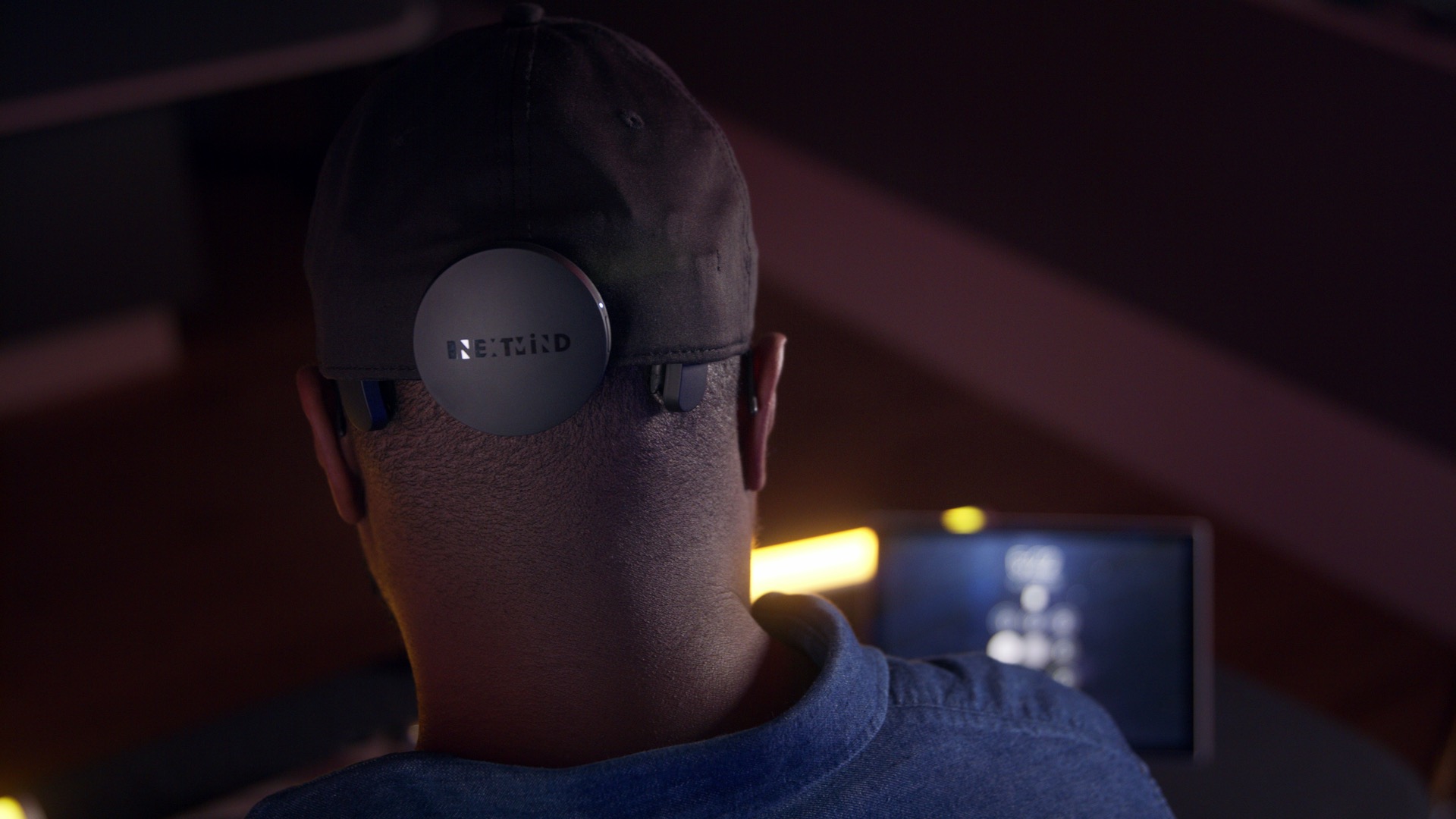
NextMind’s Dev Kit for mind controlled-computing offers a rare ‘wow’ factor in tech

NextMind debuted its Dev Kit hardware at CES last year, but the hardware is now actually shipping out, and the startup shared with me the production version to take a test drive. The NextMind controller is a sensor that reads electrical signals from your brain’s visual cortex, and translates those into input signals for a connected PC. A lot of companies have developed novel input solutions that use either eye-tracking or electrical impulse input from the body, but NextMind’s is the first I’ve tried that worked instantly and wonderfully, providing a truly amazing experience of a kind that’s hard to find in the current world of relatively mature computing paradigms.

The basics

NextMind’s developer kit is just that – a product aimed at developers that’s meant to give them everything they need to get building software that works with NextMind’s hardware and APIs. It includes the NextMind sensor which works with a range of headgear including simple straps, Oculus VR headsets, and even baseball hats, along with the software and SDK required to make it work on your PC.

Image Credits: NextMind

The package that NextMind provided me included the sensor, a fabric headband, a Surface PC with the engine pre-installed, and a USB gamepad for use with one of the company’s pre-build software demos.

The sensor itself is lightweight, and can operate for up to eight hours continuously on a single charge. It can charge via USB-C, and its software is compatible with both Mac and PC, along with Oculus, HTC Vive and also Microsoft’s HoloLens.

Design and features

The NextMind sensor itself is surprisingly small and light – it fits in the palm of your hand, with two arms that extend slightly beyond that. It features an integrated clip mount that can be used to attach it to just about anything to secure it to your head. In terms of fit, you just need to ensure that the 9 sets of two-pronged electrode sensors make contact with your skin, which NextMind provides instructions on doing by essentially making sure it straps snugly to your head, and then ‘combing’ the device slightly (moving it up and down to get your hair out of the way).

It wears comfortably, though you will notice the electrodes pressing into your skin, especially over longer use periods. The ability to use a standard baseball cap with the clip makes it super convenient to install and wear, and it worked with the Oculus Rift and Oculus Quest headstraps easily and instantly, too.

Image Credits: NextMind

Setup was a breeze. I was guided by NextMind’s co-creators, but the app provides clear instructions as well. There’s a calibration process during which you look at an animation being displayed on the host PC, which helps the sensor identify the specific signals that your occipital lobe is emitting when performing the target behaviour that you’ll later use to actually interact with NextMind-optimized software.

Here’s where it’s worth pausing to explain how NextMind is actually ‘reading your thoughts’: The sensor basically learns what it looks like when your brain is engaged in what the company calls “active, visual focus.” It does this using a common signal that it overlays on controllable elements of a software’s graphical user interface. That way, when you focus on a specific item, it can translate that into a ‘press’ action, or a ‘hold and move,’ or any other number of potential output results.

NextMind’s system is elegantly simple in conception, which is probably why it feels so powerful and rich in use. After the calibration process, I immediately jumped into the demos and was performing a range of actions effectively with my brain. First was media playback and window management on a desktop, and from there I moved on to composing music, entering a pin on a number pad, and playing multiple games, including a platformer where my mind control was supplementing my physical input on a USB gamepad to create a whole new level of fun and complex gameplay that wouldn’t be possible otherwise.

This is a Dev Kit, so the included software is just a small sampling of what could be possible with NextMind eventually, now that developers are able to build their own. What’s amazing is that the included samples are breathtaking on their own, providing an overall experience that is mind-bending in all the best possible ways. Imagining a future where NextMind hardware is even smaller and a seamless part of an overall computing experience that also includes traditional input is tantalizing, indeed.

Bottom line

NextMind’s Dev Kit is definitely just that – a Dev Kit. It’s intended for developers who are going to use it to write their own software that will take advantage of this unique, safe and convenient form of brain-computer interface (BCI). The kit retails for 399.00 € (around $487 USD), and is now shipping. NextMind has plans to eventually consumerise the product, and to work with other OEMs as well on implementations, but for now, even in this state, it’s an awe-inspiring glimpse into what could well be the next major shift in our daily computing paradigm.


https://ift.tt/3rh6JHA NextMind’s Dev Kit for mind controlled-computing offers a rare ‘wow’ factor in tech https://ift.tt/34u8Wpq

OneTrust nabs $300M Series C on $5.1B valuation to expand privacy platform

OneTrust, the 4-year old privacy platform startup from the folks who brought you AirWatch (which was acquired by VMWare for $1.5B in 2014), announced a $300 million Series C on an impressive $5.1 billion valuation today.

The company has attracted considerable attention from investors in a remarkably short time. It came out of the box with a $200 million Series A on a $1.3 billion valuation in July 2019. Those are not typical A round numbers, but this has never been a typical startup. The Series B was more of the same — $210 million on a $2.7 billion valuation this past February.

That brings us to today’s Series C. Consider that the company has almost doubled its valuation again, and has raised $710 million in a mere 18 months, some of it during a pandemic. TCV led today’s round joining existing investors Insight Partners and Coatue.

So what are they doing to attract all this cash? In a world where privacy laws like GDPR and CCPA are already in play with others are in the works in the U.S. and around the world, companies need to be sure they are compliant with local laws wherever they operate. That’s where OneTrust comes in.

“We help companies ensure that they can be trusted, and that they make sure that they’re compliant to all laws around privacy, trust and risk,” OneTrust Chairman Alan Dabbiere told me.

That involves a suite of products that the company has already built or acquired, moving very quickly to offer a privacy platform to cover all aspects of a customer’s privacy requirements including privacy management, discovery, third-party risk assessment, risk management, ethics and compliance and consent management.

The company has already attracted 7500 customers to the platform — and is adding1000 additional customers per quarter. Dabbiere says that the products are helping them be compliant without adding a lot of friction to the building or buying process. “The goal is that we don’t slow the process down, we speed it up. And there’s a new philosophy called privacy by design,” he said. That means building privacy transparency into products, while making sure they are compliant with all of the legal and regulatory requirements.

The startup hasn’t been shy about using its investments to buy pieces of the platform, having made five acquisitions already in just four years since it was founded. It already has 1500 employees and plans to add around 900 more in 2021.

As they build this workforce, Dabbiere says being based in a highly diverse city like Atlanta has helped in terms of building a diverse group of employees. “By finding the best employees and doing it in an area like Atlanta, we are finding the diversity comes naturally,” he said, adding, “We are thoughtful about it.” CEO Kabir Barday, also launched a diversity, equity and inclusion council internally this past summer in response to the Black Lives Matter movement happening in the Atlanta community and around the country.

OneTrust had relied heavily on trade shows before the pandemic hit. In fact, Dabbiere says that they attended as many as 700 a year. When that avenue closed as the pandemic hit, they initially lowered their revenue guidance, but as they moved to digital channels along with their customers, they found that revenue didn’t drop as they expected.

He says that OneTrust has money in the bank from its prior investments, but they had reasons for taking on more cash now anyway. “The number one reason for doing this was the currency of our stock. We needed to revalue it for employees, for acquisitions, and the next steps of our growth,” he said.


https://ift.tt/eA8V8J OneTrust nabs $300M Series C on $5.1B valuation to expand privacy platform https://ift.tt/34z3Vff

OnePlus’ latest concept phone changes color to ‘breathe’ with the user

{rss:content:encoded} OnePlus’ latest concept phone changes color to ‘breathe’ with the user https://ift.tt/3rbyD85 https://ift.tt/38maSkY December 21, 2020 at 02:00PM

Back in January, OnePlus showed off its first concept phone. The aptly (if plainly) named Concept One sported color-shifting glass, giving the effect of an “invisible camera” on the rear of the device. The concept wasn’t particularly useful — if anything it was a fun diversion from boring old phone updates.

From that standpoint, the OnePlus 8T Concept is more of the same. It’s not particularly useful as far as smartphone updates go — and more to the point, there’s absolutely zero guarantee this technology will ever make it onto an actual phone. Once again, the headlining technology has more to do with how the phone looks than how it actually functions.

The big thing here is something called ECMF, or Electronic Color, Material and Finish. Basically it’s a color-changing film that coats the phone. It has metal oxide, which activates when voltage is applied, changing the glass from dark blue to light silver.

Image Credits: OnePlus

OnePlus says, “Our designers took inspiration for these colors from the multi-hued flowing water in the hot springs of Pamukkale, Turkey. Nature has perfected many designs, and by drawing inspiration from Pamukkale and other natural elements, we can craft new interaction experiences that are more natural, intuitive, and effortless.”

As for the utility of such technologies, OnePlus suggests a coat that changes color to notify the user of incoming calls. Weirder still is a future that uses mmWave technology to capture a user’s breathing pattern, “enabling the color to change in sync and effectively making the phone a biofeedback device.”

As far as new phone features, this one is firmly in the “why not” column.

blogger better Headline Animator