l
l
blogger better. Powered by Blogger.

Search

Labels

blogger better

Followers

Blog Archive

Total Pageviews

Labels

Download

Blogroll

Featured 1

Curabitur et lectus vitae purus tincidunt laoreet sit amet ac ipsum. Proin tincidunt mattis nisi a scelerisque. Aliquam placerat dapibus eros non ullamcorper. Integer interdum ullamcorper venenatis. Pellentesque habitant morbi tristique senectus et netus et malesuada fames ac turpis egestas.

Featured 2

Curabitur et lectus vitae purus tincidunt laoreet sit amet ac ipsum. Proin tincidunt mattis nisi a scelerisque. Aliquam placerat dapibus eros non ullamcorper. Integer interdum ullamcorper venenatis. Pellentesque habitant morbi tristique senectus et netus et malesuada fames ac turpis egestas.

Featured 3

Curabitur et lectus vitae purus tincidunt laoreet sit amet ac ipsum. Proin tincidunt mattis nisi a scelerisque. Aliquam placerat dapibus eros non ullamcorper. Integer interdum ullamcorper venenatis. Pellentesque habitant morbi tristique senectus et netus et malesuada fames ac turpis egestas.

Featured 4

Curabitur et lectus vitae purus tincidunt laoreet sit amet ac ipsum. Proin tincidunt mattis nisi a scelerisque. Aliquam placerat dapibus eros non ullamcorper. Integer interdum ullamcorper venenatis. Pellentesque habitant morbi tristique senectus et netus et malesuada fames ac turpis egestas.

Featured 5

Curabitur et lectus vitae purus tincidunt laoreet sit amet ac ipsum. Proin tincidunt mattis nisi a scelerisque. Aliquam placerat dapibus eros non ullamcorper. Integer interdum ullamcorper venenatis. Pellentesque habitant morbi tristique senectus et netus et malesuada fames ac turpis egestas.

Monday, January 4, 2021

How to convert customers with subscription pricing

The lure of subscription pricing is the guarantee of recurring revenue for your business. Once a customer flips the switch to turn on your subscription, it’s easy money:

  • Easy to recognize your revenue.
  • Easy to determine your margins and profits.
  • Easy to enhance your product and extend that revenue out for months, even years.

While that’s true, converting a subscription customer isn’t as simple as flipping a switch. You can build a platform, launch with fanfare, offer all sorts of incentives and trials to attract potential customers — and watch as they disengage and lapse into limbo.

Contrary to popular belief, subscription pricing doesn’t work because of the lower price point that a monthly installment allows.

That’s the actual guarantee that comes with subscription pricing, which will happen unless you cultivate a funnel that catches potential subscribers as soon as they learn about your product and follows them until their very last sign-in.

I built my first subscription-model product in 1999. I’m currently in early-access on my latest, and I’ve launched a bunch more along the way.

While the customer dynamic has changed over the last 20 years, the conversion process has not. In fact, it’s actually gotten easier to convert and retain customers through the subscription funnel.

Here’s what I’ve learned.

Why subscription pricing works

Subscription pricing is a hot trend in just about every business in every industry. Pay-as-you-go is the new normal from software to retail to service.

In my mind, the major shift occurred when mobile phones started pricing unlimited usage per period instead of fixed or cost per minute. Once usage limits were removed, use cases exploded and the promise of a truly mobile computer was finally realized.

Makers of all stripes learned that lesson: From razors to video streaming to accounting software, pricing models have emerged that focus on time periods instead of units.

But contrary to popular belief, subscription pricing doesn’t work because of the lower price point that a monthly installment allows. It’s effective because a subscription reorients each customer’s mind from product function to value proposition.

I don’t care what kind of German engineering went into my razor blades, as long as I have working blades when I need them.

As an entrepreneur, you probably use at least one digital subscription service to build your own product and company, if not several. In fact, just to get to the MVP of my new project, I subscribed to AWS, MailChimp, Zapier and Bubble. I’m still on the free tier of a few more services for some lower-priority features. There’s a few more I quit or never tried.

Thus, you know that value prop plays a big part of whether the customer will pay and stay. So reinforcing your value proposition should play a big part in every level of your customer funnel.

You must catch and track customers to be effective

A subscription-pricing model without an ability to track the steps in the conversion funnel will result in all the headaches of subscription pricing without any of the benefits.


https://ift.tt/eA8V8J How to convert customers with subscription pricing https://ift.tt/3ncx4U3

The big question on every startup’s mind for 2021

My big question for 2021, and the one that is on every startup’s mind, is how will a cataclysmic event such as a global pandemic show up in post-pandemic innovation? I think we’re in the early innings of seeing what “aha moments” have materialized into companies. And we won’t know the pandemic’s true impact on our psyches until the dust settles and we have an opportunity to reflect.

We do know it will be fascinating to watch. In 2020, innovators and investors were forced to stand still, and witness cracks, fractures and rubble in society in a way like never before. It was a humbling year that, for much of the tech community, was mostly spent inside, away and alone.

One reaction I’ve noticed so far — that isn’t necessarily new but comes with new weight — is a rush of innovation that focuses on reducing friction. Take trends like the rise of building in public or the unbundling of venture capital. Or remote work’s shift from enabling communication to now needing to enable passive and active collaboration. Apply the same idea to mental health, education and fitness. Heck, we’re even seeing people take the Y Combinator format and apply it to anything that makes sense, from helping operators turn into investors to helping employees try to turn their side gig into a full-time company.

While these movements didn’t begin because of the coronavirus, they all seem to have a huge, pandemic-sized asterisk next to it.

It would be easy to dismiss these movements as small and inconsequential. But, as my colleague and fellow Equity co-host Danny Crichton pointed out this week, “sometimes the most important changes in venture and startups more generally have come from lowering that last bit of friction to action.”

Lowering friction feels like the mantra with which we all need to enter 2021.

I already have hope that innovation will come from a more diverse set of people, whether it’s in a hacker house for undergraduate women or a student-founded service that matches undergraduate students to nonprofits. So, as we enter the new year — and bear with me here — I urge you to be optimistic.

The last year in tech hasn’t left people exhausted and hopeless, it’s left them energized and ready.

Maze, computer artwork. (Image Credits: Pasieka / Getty Images)

Will the second time be the charm for Qualtrics?

When SAP announced that Qualtrics was getting spun out in July, the full-circle moment made the Equity podcast crew jump to our mics with guesses around why. Now, months later, there’s a new S-1 filing, and more to color in. Alex Wilhelm broke down the Utah-based unicorn’s numbers, noting that it’s the second time Qualtrics has filed.

Will the second time be the charm that Qualtrics needs to actually go public this time around? I’ll let you make the call yourself once you sift through Alex’s analysis of the valuation and financials.

Blackboard Business Strategy Concept. (Image Credits: hanibaram / Getty Images)

Miami, Substack and Clubhouse

If those three words in a single subhed elicit a certain reaction from you, Danny Crichton has a bone to pick with you. He wrote a piece this week about tech’s cynicism around anything new, underscoring how Miami’s future as a tech hub, Substack’s future as a replacement for traditional journalism and Clubhouse’s future as a social media disruptor have come under fire as expected:

The cynicism of immediate perfection is one of the strange dynamics of startups in 2020. There is this expectation that a startup, with one or a few founders and a couple of employees, is somehow going to build a perfect product on day one that mitigates any potential problem even before it becomes one. Maybe these startups are just getting popularized too early, and the people who understand early product are getting subsumed by the wider masses who don’t understand the evolution of products?

Danny’s argument is to give these companies a little more grace to execute on a vision they themselves are not even close to scratching the surface of. When it comes to holding specific decision-makers and businesses to a certain standard, I prefer a more fluid conversation. But I do agree that writing off a business because it hasn’t done everything correctly from the start can hurt progress. It’s easy to be grumpy, but why not choose to be an optimist? Tell me your optimistic bets by responding to this newsletter or tweeting me @nmasc_.

Skyline of downtown Miami, Florida looking toward the Brickell neighborhood on Biscayne Bay. Brickell is one of the largest financial districts in the United States and also has many high-rise residential condominium and apartment towers. (Image Credits: John Coletti / Getty Images)

And some good news

Speaking of humbling moments and optimism, our own Sarah Perez wrote a piece this week about EarlyBird, an app that lets families and friends gift investments to children. While Acorns and Stash have similar offerings, EarlyBird is bringing a fresh UX play to financial literacy, freedom and education. There’s a ton of work left to be done, hurdles to deal with, and giant unicorns to compete with. EarlyBird, however, is only weeks old, so there’s much to watch out for.

VP Caleb Frankel, now EarlyBird COO, explained the early inspiration:

“This all started with a problem I experienced years ago when my beautiful baby niece was born. I found myself head over heels and spending hundreds and hundreds of dollars on just the most ridiculous stuff — pretty much just junk gifts,” he says. “I wanted to have a larger impact in her life and something that she could really use when she grew up.”

Crowdfunding Concept Investment into Idea or Business Startup

Image Credits: oxygen (opens in a new window) / Getty Images

Around TechCrunch

Attending CES 2021? TechCrunch wants to meet your startup

Gift Guide: Last-minute subscriptions to keep the gifts going all year

Across the week

Seen on Extra Crunch

How artificial intelligence will be used in 2021

On the diversity front, 2020 may prove a tipping point

The 2020 boom in climate tech SPACs

2021 will be a calmer year for semiconductors and chips (except for Intel)

Understanding Europe’s big push to rewrite the digital rulebook

Seen on TechCrunch

China lays out ‘rectification’ plan for Jack Ma’s fintech empire Ant

NSO used real people’s location data to pitch its contact-tracing tech, researchers say

India’s slow 2020 told through dollars and cents

An earnest review of a robotic cat pillow

@EquityPod

The Equity pod put together a 2021 predictions episode (with Chris Gates, our producer, making a guest appearance on the mic as well!). We talk about IPO candidates, San Francisco and the future of drugs.

2020 brought several million downloads to the podcast, and we’re super thankful to all of y’ all for tuning in. This year will be even bigger, better and, hey, maybe we’ll even get to make fun of each other in person too.

Till next week,

Natasha Mascarenhas


https://ift.tt/3pJqHsY The big question on every startup’s mind for 2021 https://ift.tt/2X3xSQx

5 questions about 2021’s startup market

Welcome to 2021, a year that could extend 2020’s startup market disruptions and excesses — or change patterns that previously performed well for early-stage tech companies and their investors.


The Exchange explores startups, markets and money. Read it every morning on Extra Crunch, or get The Exchange newsletter every Saturday.


As we turn the page, I have a number of questions worth raising as we muck into 2021.

Each relates to a 2020 change that is expected to persist, by either the general market or those bullish on startups. I want to know what would need to change to shake up what became the new normal last year. After all, it’s precisely when it feels like nothing could shake up a downturn (or a boom) that things often do.

Today, let’s discuss seed deals, venture investing cadence, the resulting valuation pressures from rapid-fire bets, current IPO expectations and what happens to software sales when remote work begins to fade.

1. How long can seed deal-making stay hot?

As 2020 came to a close, Natasha Mascarenhas and I reported on seed investing’s strong year and its especially strong second half. How long can that pace keep up?

Nearly all our questions today deal with the endurance of certain conditions, namely: how long the market can keep parts of startup land red-hot.

When it comes to seed deal-making, Q1 and Q2 2020 saw similar levels of investment in the United States. But Q3 proved explosive, with money invested into domestic seed deals rising from around $1.5 to $1.6 billion during the first two quarters to $2.2 billion in the July-September period.

Q4 numbers are yet to fully come in, but it’s clear that private investors were incredibly bullish on early-stage startups in the second half of 2020. How long can that keep up? I think the answer is for a while yet, as investors have shown scant enthusiasm for slowing down their dealmaking cadence.

While cadence remains hot generally, seed deals should stay heated as the number of investors who are willing to invest early has increased.

Which brings us to our second question:

2. How long can investors keep writing such quick checks?

A theme that cropped up in the second half of 2020 was the pace at which investors were conducting venture capital deals. This was for a few reasons. To start, venture capitalists have raised larger funds in recent years, meaning that they need larger returns to make the math work out. This led to many investors putting money to work in younger and younger companies, hoping to get in early on a big win. That setup led to more deal competition and faster deal-making.

How? Two things. Investors who were already on a startup’s cap table — already part-owners, in other words — led preemptive rounds, in part to get ahead of other investors who might want to poach the succeeding deal. Other investors, knowing this, seemed to do the same math and move even faster, and earlier, to get around the defense.

So how long can the trend keep up? Given that many big VC firms raised in 2020, many startups picked up some tailwinds from the COVID-19 economy and exits have been strong, forever? Until something stops things? Think of it as Newton’s First Law of startup investing.

What could be the sudden impact to shake up the current set of conditions boosting the pace at which seed and later deals occur? An asteroid strike is probably too extreme, but inertia is one hell of a drug and markets love to stay happy.

Moving along, all the competition to get money to work in hot startups now has had another effect than the mere speed of deal-making; it has also pushed prices higher.


https://ift.tt/37CXSXp 5 questions about 2021’s startup market https://ift.tt/3odKr7R

Google and Snap in talks to invest in India’s ShareChat

ShareChat, an Indian social network that added Twitter as an investor in 2019, may soon receive the backing of two more American firms.

The Bangalore-based startup is in advanced stages of talks to raise money from Google and Snap, as well as several existing investors, including Twitter, three sources familiar with the matter told TechCrunch.

The new financing round — a Series E — is slated to be larger than $200 million, with Google alone financing more than $100 million of it, four sources said, requesting anonymity as the talks are private. The round values ShareChat at more than $1 billion, two of the sources said.

ShareChat, Google and Snap did not immediately respond to a request for comment. ShareChat has raised about $264 million to date and was valued at nearly $700 million last year.

The terms of the deal could change and the talks may not materialize into an investment, the sources cautioned. Local TV channel ET Now reported last year that Google was in talks to acquire ShareChat.

ShareChat’s marquee and eponymous app caters to users in 15 Indian languages and has a large following in small Indian cities and towns. Twitter and Snap, on the other hand, are struggling to gain users beyond urban cities in the world’s second-largest internet market. Both Twitter and Snapchat have about 50 million monthly active users in India, according to a popular mobile insight firm.

In an interview with TechCrunch last year, Ankush Sachdeva, co-founder and chief executive of ShareChat, said the app was growing “exponentially” and that users were spending, on average, more than 30 minutes on the app each day.

If the deal goes through, it would be the first investment from Snapchat’s parent company into an Indian startup. Google, on the other hand, has been on a spree of late. The Android-maker last month invested in DailyHunt and InMobi’s Glance, both of which operate short-video apps.

Like the two, ShareChat also operates a short-video app. Its app, called Moj, had amassed more than 80 million monthly active users as of September last year, the startup said at the time. Several of these short videos apps, as well as Times Internet’s MX TakaTak (operated by MX Player), have witnessed an accelerated growth in recent quarters thanks in part to New Delhi banning ByteDance’s TikTok and hundreds of other Chinese apps mid-last year.

Last year, Google announced that it plans to invest $10 billion in India over the course of five to seven years. Days later, the company invested $4.5 billion in Indian telecom giant Jio Platforms. Google and Facebook, which invested $5.7 billion in Jio Platforms last year, reach more than 400 million users in the country.

Google, Facebook, ShareChat, DailyHunt and Glance generate most of their revenue through ads. About 85% of the ad market in India is currently commanded by Facebook and Google, analysts at Bank of America wrote in a report to clients last year. “We estimate this market to be $10 billion by 2024 and see room for Facebook to increase its market-share by 4 percentage points in 4 years led by partnership with Jio. We estimate Facebook may have $4.7 billion revenues by 2024,” they wrote in the equity research report, obtained by TechCrunch.


https://ift.tt/eA8V8J Google and Snap in talks to invest in India’s ShareChat https://ift.tt/3naM6K8

Google and Snap in talks to invest in India’s ShareChat

ShareChat, an Indian social network that added Twitter as an investor in 2019, may soon receive the backing of two more American firms.

The Bangalore-based startup is in advanced stages of talks to raise money from Google and Snap and several existing investors, including Twitter, three sources familiar with the matter told TechCrunch.

The new financing round — a Series E — is slated to be larger than $200 million, with Google alone financing more than $100 million of it, four sources said, requesting anonymity as the talks are private. The round values ShareChat at more than $1 billion, two of the sources said.

ShareChat, Google and Snap did not immediately respond to a request for comment. ShareChat has raised about $264 million to date and was valued at nearly $700 million last year.

The terms of the deal could change and the talks may not materialize into an investment, the sources cautioned. Local TV channel ET Now reported last year that Google was in talks to acquire ShareChat.

ShareChat’s marquee and eponymous app caters to users in 15 Indian languages and has a large following in small Indian cities and towns. Twitter and Snap, on the other hand, are struggling to gain users beyond urban cities in the world’s second-largest internet market. Both Twitter and Snapchat have about 50 million monthly active users in India, according to a popular mobile insight firm.

In an interview with TechCrunch last year, Ankush Sachdeva, co-founder and chief executive of ShareChat, said the app was growing “exponentially” and that users were spending, on average, more than 30 minutes on the app each day.

If the deal goes through, it would be the first investment from Snapchat’s parent company into an Indian startup. Google, on the other hand, has been on a spree of late. The Android-maker last month invested in DailyHunt and InMobi’s Glance, both of which operate short-video apps.

Like the two, ShareChat also operates a short-video app. Its app, called Moj, had amassed more than 80 million monthly active users as of September last year, the startup said at the time. Several of these short videos apps, as well as Times Internet’s MX TakaTak (operated by MX Player), have witnessed an accelerated growth in recent quarters thanks in part to New Delhi banning ByteDance’s TikTok and hundreds of other Chinese apps mid-last year.

Last year, Google announced that it plans to invest $10 billion in India over the course of five to seven years. Days later, the company invested $4.5 billion in Indian telecom giant Jio Platforms. Google and Facebook, which invested $5.7 billion in Jio Platforms last year, reach more than 400 million users in the country.

Google, Facebook, ShareChat, DailyHunt and Glance generate most of their revenue through ads. About 85% of the ad market in India is currently commanded by Facebook and Google, analysts at Bank of America wrote in a report to clients last year. “We estimate this market to be $10 billion by 2024 and see room for Facebook to increase its market-share by 4 percentage points in 4 years led by partnership with Jio. We estimate Facebook may have $4.7 billion revenues by 2024,” they wrote in the equity research report, obtained by TechCrunch.


from Social – TechCrunch https://ift.tt/eA8V8J Google and Snap in talks to invest in India’s ShareChat Manish Singh https://ift.tt/3naM6K8
via IFTTT

Color raises $167 million funding at $1.5 billion valuation to expand ‘last mile’ of U.S. health infrastructure

Healthcare startup Color has raised a sizeable $167 million in Series D funding round, at a valuation of $1.5 billion post-money, the company announced today. This brings the total raised by Color to $278 million, with its latest large round intended to help it build on a record year of growth in 2020 with even more expansion to help put in place key health infrastructure systems across the U.S. – including those related to the “last mile” delivery of COVID-19 vaccines.

This latest investment into Color was led by General Catalyst, and by funds invested by T. Rowe Price, along with participation from Viking Global investors as well as others. Alongside the funding, the company is also bringing on a number of key senior executives, including Claire Vo (formerly of Optimizely) as Chief Product Officer, Emily Reuter (formerly of Uber, where she played a key role in its IPO process) as VP of Strategy and Operations, and Ashley Chandler (formerly of Stripe) as VP of Marketing.

“I think with the [COVID-19] crisis, it’s really shone the light on that lack of infrastructure. We saw it multiple times, with lab testing, with antigen testing, and now with vaccines,” Color CEO and co-founder Othman Laraki told me in an interview. “The model that we’ve been developing, that’s been working really well, and we feel like this is the opportunity to really scale it in a very major way. I think literally what’s happening is the building of the public health infrastructure for the country that’s starting off from a technology-first model, as opposed to, what ends up happening in a lot of industries, which is you start off taking your existing logistics and assets, and add technology to them.”

Color’s 2020 was a record year for the company, thanks in part to partnerships like the one it formed with the the City of San Francisco to establish testing for health care workers and residents. Laraki told me they did about five-fold their prior year’s business, and while the company is already set up to grow on its own sustainably based on the revenue it pulls in from customers, its ambitions and plans for 2021 and beyond made this the right time to help it accelerate further with the addition of more capital.

Laraki described Color’s approach as one that is both cost-efficient for the company, and also significant cost-saving for the healthcare providers it works with. He likens their approach to the shift that happened in retail with the move to online sales – and the contribution of one industry heavyweight in particular.

“At some point, you build Amazon – a technology-first stack that’s optimized around access and scale,” Laraki said. “I think that’s literally what we’re seeing now with healthcare. What’s kind of getting catalyzed right now is we’ve been realizing it applies to the COVID crisis, but also, we started actually working on that for prevention and I think actually it’s going to be applying to a huge surface area in healthcare; basically all the aspects of health that are not acute care where you don’t need to show up in hospital.”

Ultimately, Color’s approach is to re-think healthcare delivery in order to “make it accessible at the edge directly in people’s lives,” with “low transaction costs,” in a way that’s “scalable, [and] doesn’t use a lot of clinical resourcing,” Laraki says. He notes that this is actually very possible once you re-asses the problem without relying on a lot of accepted knowledge about the way things are done today, which result in a “heavy stack” vs. what you actually need to deliver the desired outcomes.

Laraki doesn’t think the problem is easy to solve – on the contrary, he acknowledges that 2021 is likely to be even more difficult and challenging than 2020 in many ways for the healthcare industry, and we’ve already begun to see evidence of that in the many challenges already faced by vaccine distribution and delivery in its initial rollout. But he’s optimistic about Color’s ability to help address those challenges, and to build out a ‘last mile’ delivery system for crucial care that expands accessibility, while also making sure things are done right.

“When you take a step back, doing COVID testing, or COVID vaccinations is actually those are not complex procedures at all – they’re extremely simple procedures,” he said. “What’s hard is doing them massive scale, and with a very low transaction cost to the individual and to the system. And that’s a very different tooling.”


https://ift.tt/eA8V8J Color raises $167 million funding at $1.5 billion valuation to expand ‘last mile’ of U.S. health infrastructure https://ift.tt/2My5wvO

India’s CRED raises $81 million, buys back shares worth $1.2 million from employees

Bangalore-based CRED is kickstarting the new year on a high note.

The two-year-old startup, led by high-profile entrepreneur Kunal Shah, said on Monday it has raised $81 million in a new financing round and bought shares worth $1.2 million (about 90 million Indian rupees) from employees.

The Series C financing round, as first reported by TechCrunch in late November, was led by DST Global. Existing investors Sequoia Capital, Ribbit Capital, Tiger Global and General Catalyst also participated in the round, and so did a few new names, including Satyan Gajwani of Indian conglomerate Times Internet, Sofina and Coatue.

The round gave CRED — which operates an eponymous app to reward customers for paying their credit card bill on time and offers deals from interesting online brands — a post-money valuation of $806 million.

In an interview with TechCrunch, Shah said that about 10% of CRED’s cap table is currently allocated to employees, and those who held vested stocks were eligible to sell up to 50% of their shares back to the startup in its first ESOP liquidity program. “We believe that startups should think about creating wealth for every shareholder, including employees.”

CRED has nearly doubled its customer base to about 5.9 million in the past year, or about 20% of the credit card holder base in India. The startup said that the median credit score of its customer was about 830, and about 30% of its customer base today holds a premium credit card. (On a side note, more than 50% of CRED customers pay their bills using UPI.)

CRED is one of the most talked-about startups in India, in part because of the scale at which its valuation has soared and the amount of capital it has been able to raise in such a short period.

One of the biggest questions surrounding CRED is just how it makes money, given how most fintech startups in the country — and there are many of them — are struggling to find a business model.

Shah said CRED makes money by cross-selling financing products — for which it has a revenue-sharing arrangement with banks and other financial institutions — and levies a similar cut from merchants who are on the platform today. More than 1,300 brands — including big names Starbucks, TAGG, Eat.Fit, Nykaa and emerging premium direct-to-consumer brands such as The Man Company, Sleepy Cat and Crossbeats –have joined the platform in recent years.

Direct-to-consumer market in India is still in its nascent stage, though some estimates say it could be worth $100 billion by 2025.

“I don’t think we were very deliberate to make D2C happen. It just so happened that in the early days when we offered rewards for D2C brands, they started to see huge traction,” he said, adding that CRED drove more than 30% sales for some brands.

“We realized that we were able to solve the discovery problem for customers. We are approaching this with themes — work-from-home and coffee — and it’s working out well. We are now playing matchmaking role between customers and brands that otherwise had to spend a lot of money in marketing.”

One of the biggest propositions of CRED is that it has been able to court some of the most sought-after customers in India. Unlike many other startups and giants such as Google and Facebook, CRED is not going after the next billion users.

“About 20 million customers account for 90% of all online consumption in India. These are the customers we are focusing on,” said Shah, who previously ran financial services firm Freecharge and delivered one of the rare successful exits in the country. The core challenge in chasing customers in smaller cities and towns in India is that very few people have the financial capacity to buy things, Shah said.

For that model to work, the GDP of India — where the average annual income of an individual is about $2,000 — needs to grow. And for that, we need more participation from females, said Shah. Less than 10% of the female population in India are currently part of the workforce, compared to over 90% in China.

An interesting use case for CRED today is that it could potentially license to venture firms data about the traction D2C brands are seeing on its platform, which could use it as a signal to inform their investment decisions.

Shah cautioned that the startup is “extraordinarily sensitive about data” but said the team is thinking about ways to help venture firms discover these firms. “We are planning to create a newsletter to showcase many of these brands to the investor world,” he said.

And finally, will CRED launch a credit card or other banking products? “Can we partner with banks to cross-sell every product that they today offer? The answer is yes,” said Shah, though he cautioned that the startup is in no hurry to supercharge its offerings.


https://ift.tt/eA8V8J India’s CRED raises $81 million, buys back shares worth $1.2 million from employees https://ift.tt/3hRmdOx

It’s not just you, Slack is struggling this morning

Slack did its best to ease the working world back into their jobs this morning by breaking, ensuring that everyone’s return to the grind would be as chaotic and unproductive as possible.

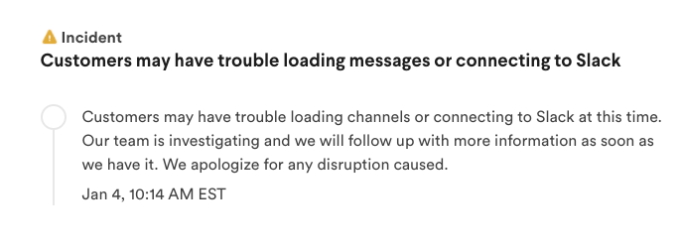
Precisely when the downtime began is not clear, though problems amongst the TechCrunch staff began a little after ten o’clock in the morning. Slack itself posted at 10:14 am Eastern Time that there was a problem:

Downtime issues are not new for the workplace chat application that went public in mid-2019, before announcing a deal to sell itself to Salesforce towards the end of 2020. TechCrunch covered the service’s uptime issues in 2020, 2019, 2018, 2017, and so forth.

The downtime is embarrassing as Slack is in the midst of selling itself for a hefty check. For a service designed to help folks work, falling apart precisely when the users — customers! — you serve are trying to gear back up for a working year is simply awful.

I suppose we can call one another until Slack is back up.

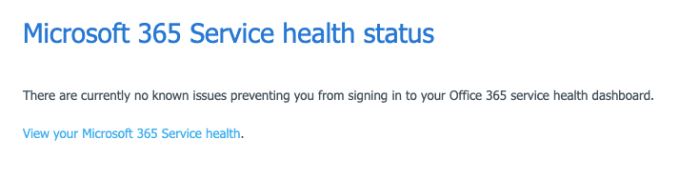
To close, here’s the view from Redmond, with its competing Teams product:


https://ift.tt/3ocqfmU It’s not just you, Slack is struggling this morning https://ift.tt/3pOgJGR

Equity Monday: Unionization at Alphabet, Tesla’s delivery achievement, and CRED raises $81M

Hello and welcome back to Equity, TechCrunch’s venture capital-focused podcast where we unpack the numbers behind the headlines.

This is Equity Monday, our weekly kickoff that tracks the latest private market news, talks about the coming week, digs into some recent funding rounds and mulls over a larger theme or narrative from the private markets. You can follow the show on Twitter here and myself here — and don’t forget to check out the second of our two holiday eps, the most recent looking at what we think might happen this year.

What did we get into today? A great question. Here’s the rundown:

Mostly we’re still making sure that our brains still work and that the return of work really is here. Taking a break was nice. Now the news is coming back, so we are as well. Hugs, and chat Thursday.

Equity drops every Monday at 7:00 a.m. PST and Thursday afternoon as fast as we can get it out, so subscribe to us on Apple Podcasts, Overcast, Spotify and all the casts.


https://ift.tt/eA8V8J Equity Monday: Unionization at Alphabet, Tesla’s delivery achievement, and CRED raises $81M https://ift.tt/2KRHlrT

Known for 5G mmWave testing solutions, Taiwan’s TMYTEK sets its sights on base stations

TMYTEK recently raised a Series A+ round of about $10 million for products that make it easier to test 5G millimeter wave equipment. So far, the company’s clients include KDDI, NTT DoCoMo and research institutions. But the Taiwanese startup has aspirations to sell its own base stations, too, competing with well-established players like Nokia, Ericsson, Samsung and Huawei. TMYTEK plans to use its expertise, gleaned from helping other researchers develop 5G infrastructure, to create what its chief executive officer describes as a “complete 5G industrial chain.”

Its latest funding round was led by TMYTEK’s manufacturing partner Inventec, one of the largest OEMs in Taiwan, and brings the startup’s total funding so far to $13.3 million. Other investors included Taisic Materials, ITEQ, Tamagawa Electronics, and Taiwan’s National Development Fund. TMYTEK also recently took part in SparkLabs Taipei’s accelerator program.

Co-founder and chief executive officer Su-Wei Chang told TechCrunch that it plans to raise a Series B next to develop and commercialize its base stations. To get ready for its base station business, TMYTEK recently joined the O-RAN Alliance, founded by some of the world’s biggest telecoms to create more interoperable mobile networks, in a bid to encourage the development of new technology and faster deployment.

Chang said TMYTEK’s base in Taiwan gives it a strategic advantage. 5G manufacturing is an important part of Taiwan’s economy, with exports reaching record highs during the second half of 2020, thanks in part to demand for 5G-related equipment and technology for smartphones, autonomous vehicles and smart devices.

Chang studied at University of Massachusetts Amherst and when TMYTEK was founded six years ago, he was often asked why he didn’t stay in the United States, where it would have been easier to secure startup funding. But being in Taiwan puts the company closer to many important markets, including Japan, where 30% of its current business comes from, and gives TMYTEK a good foundation to expand into the U.S. and European market, he said.

It has also given the company a supply chain advantage. TMYTEK has manufacturing partners across Asia, including Inventec in Taiwan, and factories in Vietnam and Thailand, in addition to China. Chang said this means TMYTEK was not limited by the COVID-19 pandemic or the U.S-China trade war.

Before launching TMYTEK in 2014, Chang and co-founder Ethan Lin both worked at Academia Sinica, one of the top research institutions in Taiwan, where they focused on millimeter waves even though at the time most researchers were more interested in the mid-band spectrum.

But as more devices and applications began to crowd the 4G spectrum, mmWave became less niche. With Qualcomm’s launch of next-generation 5G mmWave hardware and chips, and more carriers launching mmWave coverage, mmWave is poised to become mainstream.

Millimeter waves offer powerful signals with wide bandwidth and low latency, but drawbacks include difficulty traveling through obstacles like buildings. It also has a limited range, which is why millimeter waves need more base stations. Beamforming, which directs signals toward a specific device, and antenna array, or multiple antennas that work like a single antenna, are used to extend its coverage.

Making mmWave development faster

One of the main challenges for the millimeter wave market, however, is the lack of R&D tools to speed up their development and time to market, resulting in higher costs and slower deployment.

To keep up with market opportunities, TMYTEK transitioned from design and manufacturing projects for clients to offering 5G-focused solutions like the BBox, which stands for “beamforming box.” The BBox was created after a professor at National Taiwan University told Chang that his team was working on antenna design, but didn’t have the resources to work on beamforming technology, too. It lets researchers create 16 beams and control the signal’s amplitude and phase with software, so they can test how it works with antennas and other hardware more quickly. TMYTEK claims the BBox can save researchers and engineers up to 80% in time and cost.

Chang said TMYTEK realized that if researchers at NTU, one of Taiwan’s largest research universities, needed a solution, then other labs did, too. So far, it has delivered 30 sets to companies including KDDI, NTT DoCoMo, Fujitsu, several Fortune 500 companies and research institutions.

While the BBox was created for antenna designers, the company also began exploring solutions to help other designers, including algorithm developers who want to test beam tracking, communicate with base stations and collect data.

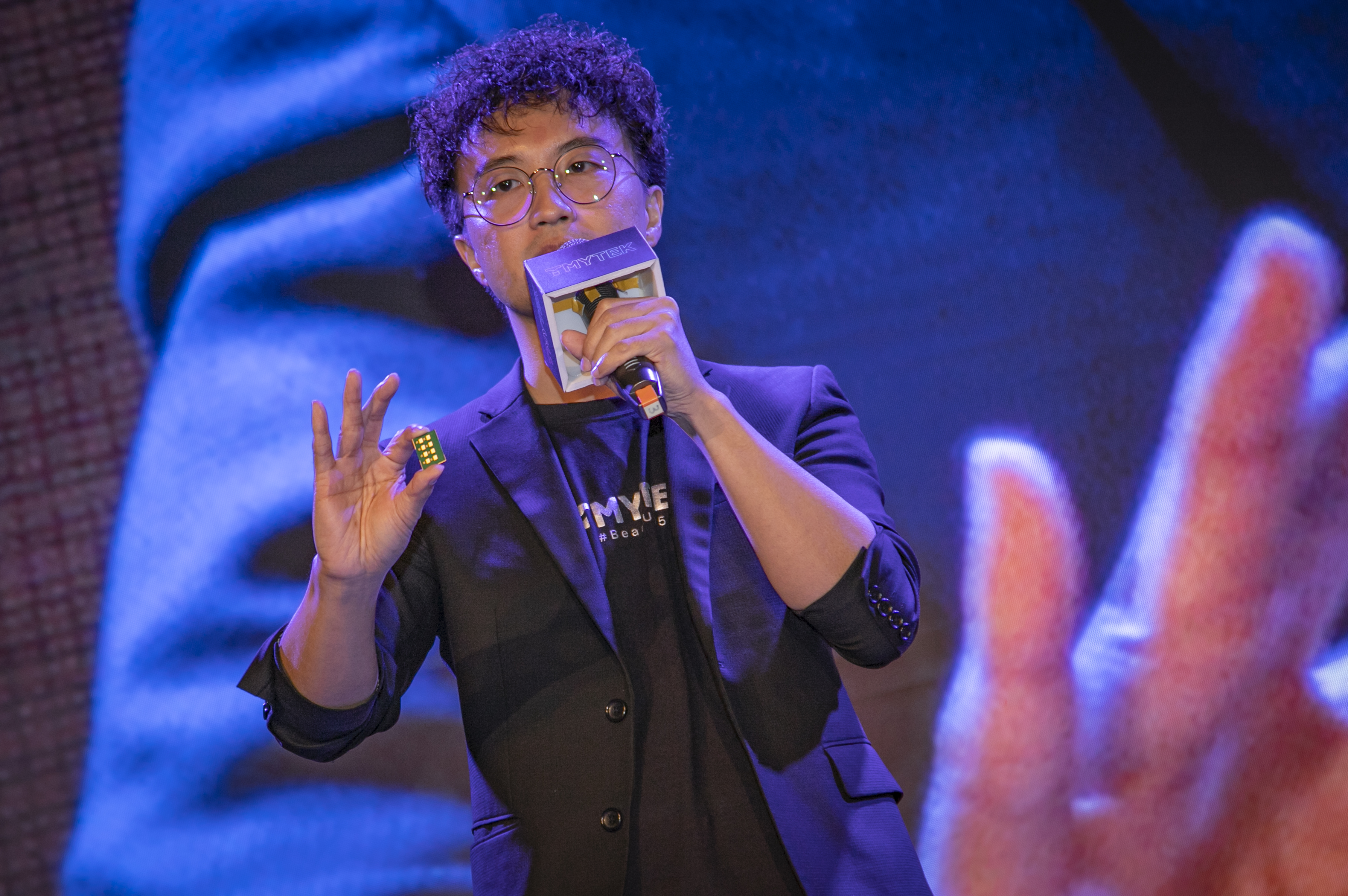
TMYTEK vice president Ethan Lin holds the antenna-in-package for its XBeam millimeter wave testing solution

TMYTEK vice president Ethan Lin holds the antenna-in-package for its XBeam millimeter wave testing solution

For that scenario, TMYTEK created the XBeam, which is describes as a “total solution,” and is meant for the mass production phase, testing modules, smartphones and base stations before they are shipped. Traditional solutions to test modules rely on mechanical rotators, but Chang said this is more suited to the research and development process. The XBeam, which is based on the BBox, electronically scans beams instead. The company claims the XBeam is up to 20 times faster than other testing solutions.

TMYTEK created the XBeam’s prototype in 2019 and launched the commercialized version in November 2020.

The BBox and XBeam will help TMYTEK build its own base station business in two ways, Chang said. First, having its own solutions will allow TMYTEK to test base stations and bring them to market faster. Second, the startup hopes building a reputation on effective research and development tools will help it market its base stations to private and public networks. This is especially important to TMYTEK’s ambitions since their base stations will be up against products from major players like Nokia, Ericsson, Samsung and Huawei.

“Our advantage at TMYTEK is that we’re doing the design and we have good partners for manufacturing. Inventec, our investor, is a top five manufacturer in Taiwan,” he said. “And TMYTEK also builds our own testing solution, so our value is that we can provide a total solution to our customers.”


https://ift.tt/388NyIG Known for 5G mmWave testing solutions, Taiwan’s TMYTEK sets its sights on base stations https://ift.tt/2KXqbcc

Sunday, January 3, 2021

Samsung’s next Unpacked event is January 14

{rss:content:encoded} Samsung’s next Unpacked event is January 14 https://ift.tt/2KWzkSl https://ift.tt/3pKKRCV January 04, 2021 at 12:04AM

Stop me if you’ve heard this one before. Samsung’s next flagship is set to debut January 14. The company just confirmed earlier rumors surrounding the date for its next Unpacked event (virtually, of course). This one sports the name, “Welcome to the Everyday Epic.”

“Over the past year, mobile technology has taken center stage in everyday life as people are working remotely and spending more time at home,” the company writes. “The accelerated transition to a mobile-first world brings with it the need for devices that can transform everyday life into an extraordinary experience.”

The event’s timing is an interesting artifact of 2021’s wacky show scheduling, with the COVID-19 pandemic still very much being front of mind. Past Unpackeds were generally timed around Mobile World Congress. That show has been delayed until the summer, however, in hopes of returning to an in-person event. So Samsung has opted to kickstart sales a month or so earlier this year.

In fact, the event is a mere days after CES. Gone are the days a gadget journalist could take a few days to decompress after the year’s biggest hardware show. It also, perhaps, doesn’t bode well for Samsung’s announcements during CES itself (though the electronics giant has more than enough divisions to keep its presence at the show interesting).

Another odd change this year is the fact that you can already reserve the S21, sight unseen. There’s little doubt it will be a solid phone, though there are plenty of questions around how the company will up the ante in the era of flagging smartphone sales. The leaks so far have been kind of underwhelming, though Samsung’s usually got a couple of fun surprises up its sleeve.

We’ve already seen enough of the Galaxy Buds Pro that they don’t qualify as a surprise, exactly. But the company has a solid enough track record with earbuds that there’s reason to be excited. The AirPods Pro competitors are are said to be priced at a reasonable $199.

T-Mobile says hackers accessed some customer call records in data breach

{rss:content:encoded} T-Mobile says hackers accessed some customer call records in data breach https://ift.tt/3n4Wzqk https://ift.tt/2JEuCb9 January 03, 2021 at 09:04PM

T-Mobile, the third largest cell carrier in the U.S. after completing its recent $26 billion merger with Sprint, ended 2020 by announcing its second data breach of the year.

The cell giant said in a notice buried on its website that it recently discovered unauthorized access to some customers’ account information, including the data that T-Mobile makes and collects on its customers in order to provide cell service.

From the notice: “Our cybersecurity team recently discovered and shut down malicious, unauthorized access to some information related to your T-Mobile account. We immediately started an investigation, with assistance from leading cybersecurity forensics experts, to determine what happened and what information was involved. We also immediately reported this matter to federal law enforcement and are now in the process of notifying impacted customers.”

Known as customer proprietary network information (CPNI), this data can include call records — such as when a call was made, for how long, the caller’s phone number and the destination phone numbers for each call, and other information that might be found on the customer’s bill.

But the company said that the hackers did not access names, home or email addresses, financial data, and account passwords (or PINs).

The notice didn’t say when T-Mobile detected the breach, only that it was now notifying affected customers.

A spokesperson for T-Mobile did not respond to requests for comment, but told one news site that the breach affects about 0.2% of all T-Mobile customers — or approximately 200,000 customers.

It’s the latest security incident to hit the cell giant in recent years.

In 2018, T-Mobile said as many as two million customers may have had their personal information scraped. A year later, the company confirmed hackers accessed records on another million prepaid customers. Just months into 2020, T-Mobile admitted a breach on its email systems that saw hackers access some T-Mobile employee email accounts, exposing some customer data.

blogger better Headline Animator