l
l
blogger better. Powered by Blogger.

Search

Labels

blogger better

Followers

Blog Archive

Total Pageviews

Labels

Download

Blogroll

Featured 1

Curabitur et lectus vitae purus tincidunt laoreet sit amet ac ipsum. Proin tincidunt mattis nisi a scelerisque. Aliquam placerat dapibus eros non ullamcorper. Integer interdum ullamcorper venenatis. Pellentesque habitant morbi tristique senectus et netus et malesuada fames ac turpis egestas.

Featured 2

Curabitur et lectus vitae purus tincidunt laoreet sit amet ac ipsum. Proin tincidunt mattis nisi a scelerisque. Aliquam placerat dapibus eros non ullamcorper. Integer interdum ullamcorper venenatis. Pellentesque habitant morbi tristique senectus et netus et malesuada fames ac turpis egestas.

Featured 3

Curabitur et lectus vitae purus tincidunt laoreet sit amet ac ipsum. Proin tincidunt mattis nisi a scelerisque. Aliquam placerat dapibus eros non ullamcorper. Integer interdum ullamcorper venenatis. Pellentesque habitant morbi tristique senectus et netus et malesuada fames ac turpis egestas.

Featured 4

Curabitur et lectus vitae purus tincidunt laoreet sit amet ac ipsum. Proin tincidunt mattis nisi a scelerisque. Aliquam placerat dapibus eros non ullamcorper. Integer interdum ullamcorper venenatis. Pellentesque habitant morbi tristique senectus et netus et malesuada fames ac turpis egestas.

Featured 5

Curabitur et lectus vitae purus tincidunt laoreet sit amet ac ipsum. Proin tincidunt mattis nisi a scelerisque. Aliquam placerat dapibus eros non ullamcorper. Integer interdum ullamcorper venenatis. Pellentesque habitant morbi tristique senectus et netus et malesuada fames ac turpis egestas.

Thursday, July 19, 2018

Carbyne wants to replace outdated 911 systems

Israel-based Carbyne has developed an emergency call-handling platform, supported by an ecosystem that integrates live video streaming, location services and texting capabilities.

After Amir Elichai, founder and CEO, was robbed on Tel Aviv beach in 2013, he called the police and had to trudge through a tedious, long-winded conversation with the dispatcher (“Where are you, what happened, etc.”) before help was finally sent. Out of frustration, he started Carbyne. “If Uber and the pizza delivery guy can determine where we are, why can’t 911?”

The company is currently focused on what they call, “time to dispatch” — the duration from when the call is placed to the moment services are sent to the field. To minimize this length, two crucial pieces of information need to be delivered: exact location and an understanding of the situation. They’ve achieved this by utilizing device-based location technology, but stepped up the game with an indoor positioning solution where first responders can pinpoint a caller’s location within a one-meter accuracy, within a matter of seconds. To assess the situation, they’ve implemented live video streaming, which is accessed through the caller’s permission. “When you combine the two, it cuts the dispatch time by 60-65 percent. In terms of saving lives, that’s huge, Elichai explained.”

The biggest challenge

Emergency response systems are based on landline technology. They’re unable to take advantage of smartphone capabilities such as chat, video or GPS. Rather than trying to integrate their platform into these legacy infrastructures, Carbyne plans to replace them all. They’ve already deployed systems in Israel, Asia, Europe and Latin America, and recently signed their first deal in the United States with Fayette County, Georgia.

Despite the platform’s clear benefits, the challenge lies within strict government regulations, varying from country to country, municipality to municipality. “First you have to convince the authorities,” said Elichai. “Some of them are curious, some of them have fears with new technologies, such as cybersecurity threats. You’re changing and disrupting the way they work so you have to educate them and show them how this system can help them.”

Though they’re currently focused on dispatch times, the next phase will be the ability to deliver medical information to hospitals so the appropriate equipment can be prepared for ambulances. “This entire ecosystem is very huge and complex around the world, and we have a lot of work to do,” Elichai said in closing.


https://ift.tt/eA8V8J Carbyne wants to replace outdated 911 systems https://ift.tt/2NtzQmj

Malta paves the way for a decentralized stock exchange

Malta AKA “Blockchain Island” has been making waves lately in the world of cryptocurrency and governance. Their latest move involves the crypto exchange Binance and the ICO builders at Neufund.

The plan is simple: Neufund will help MSX, the Malta Stock Exchange’s skunkworks, create tokenized securities. Binance has agreed to carry these securities on its own exchange, essentially creating a straight path to regulated tokens via the already regulated Malta Stock Exchange. In short, this enables Malta to become the first country to be able to offer tokens alongside traditional equities as well as an easy way to go public in multiple ways including via ICO.

The plan is still in the pilot stage. This year they will begin “the public offering of tokenized equity on Neufund’s primary market which may later be tradable on Binance and other crypto exchanges pending regulatory and listing approvals” said Neufund CEO Zoe Adamovicz.

“We are thrilled to announce the partnerships with Malta Stock Exchange and Binance, that will ensure high liquidity to equity tokens issued on Neufund. It is the first time in history, that security tokens can be offered and traded in a legally binding way. The upcoming pilot project will allow us to test the market’s reaction and realize the overall project idea in an environment with minimized risk.” said Adamovicz.

“We are delighted to welcome Neufund as our key partner in building a Blockchain-based exchange that is fully integrated with established financial markets. With the upcoming pilot project we become a worldwide pioneer in digital finance,” said Joseph Portelli, chairman of the Malta Stock Exchange.

This move is interesting in that it offers a parallel track to companies wishing to go public via token sales. While even the terminology isn’t completely hashed out in regards to the future of these systems, having a spot like Malta lead in the matter of token sales selling alongside equities is a solid decision. Malta is increasingly becoming the testbed for these sorts of experiments and, even if this is not yet a real project, it could create a turnkey solution for ICO launches on the island.


https://ift.tt/eA8V8J Malta paves the way for a decentralized stock exchange https://ift.tt/2uPzDlN

Ofo shuts down many international markets to focus on profitability

Chinese bike-sharing company Ofo is entering a new phase. After a period of aggressive growth, the company is looking back at its international markets and focusing on the most promising ones.

A couple of weeks ago, the company issued a press release highlighting some of the priorities outside of China. As part of this move, Ofo co-founder and CEO Dai Wei is going to be directly in charge of international markets.

“It’s a new strategical phase on the international front,” Ofo France General Manager and Head of EMEA Laurent Kennel told me. “The company wants to focus on the most mature and promising markets.”

So it means that Ofo will stop altogether in some countries, such as Australia, Austria, Czech Republic, Germany, India and Israel.

At the same time, there are some markets that work quite well. In particular, the press release highlights Singapore, the U.S., the U.K., France and Italy. But even if you look at a more granular level, Ofo is going to focus on some specific cities in particular going forward.

As Quartz and Forbes highlighted, Ofo hasn’t been a massive success in smaller American cities. “In the U.S., some markets work better than others, and they’re going to focus on that,” Kennel said. Instead of operating in dozens of American cities, the company is going to scale back and focus on the most important ones.

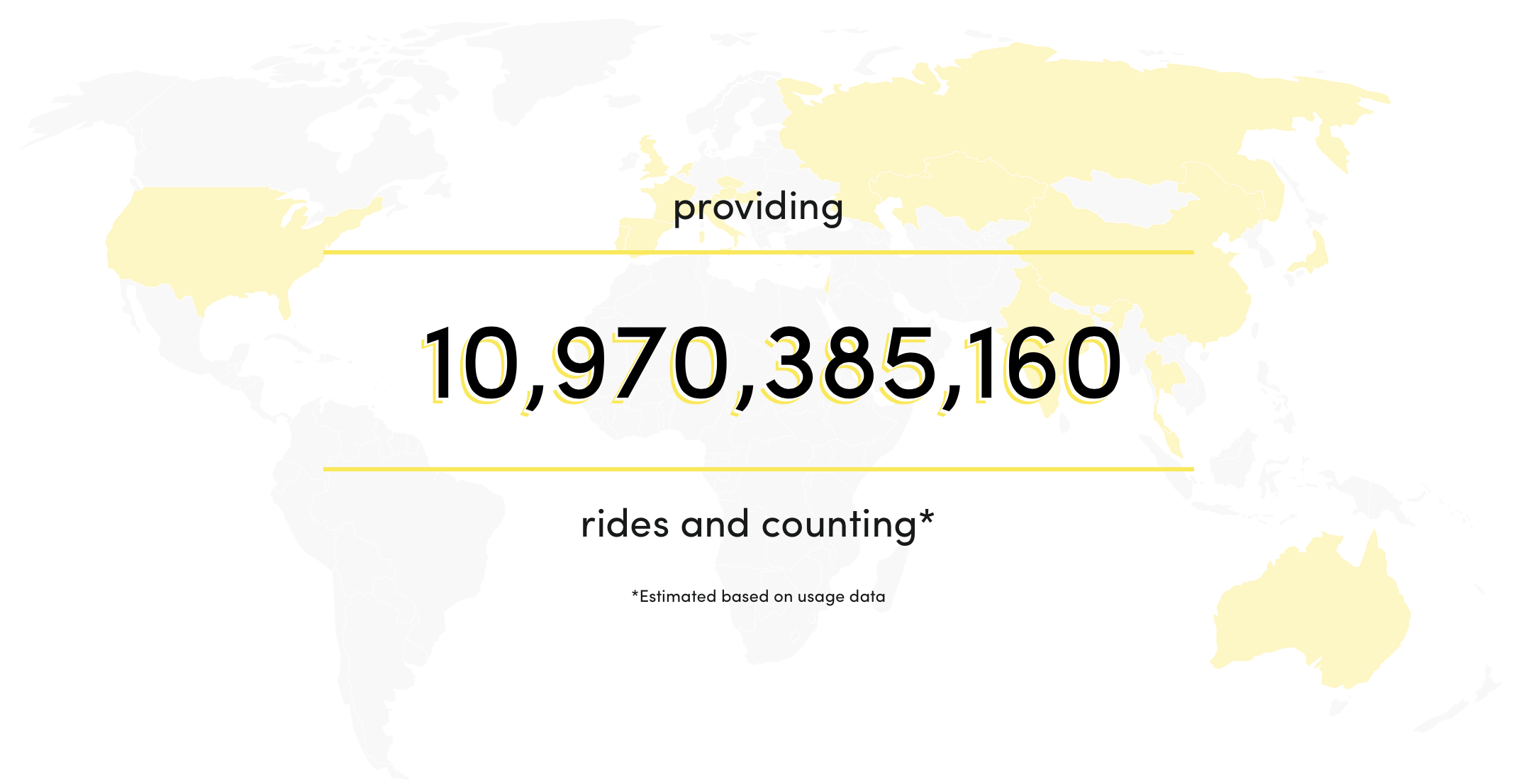
In France, Ofo has only been available in Paris for instance. Numbers are encouraging as the company handles 5,000 to 10,000 rides a day with 2,500 bikes.

“[In Paris,] We crossed an important milestone to prove that our business model is sustainable,” Kennel said. “Our revenue covers all our operational and maintenance costs.” That doesn’t include occasional investments to purchase new bikes.

Overall, Kennel was quite optimistic about those remaining markets. By focusing on a limited number of cities, the company can invest properly on each of those markets. In Europe, Ofo is going to focus on the U.K., France and Italy.

Just like in the U.S., Ofo is also reducing the number of cities in the U.K. and Italy. The company recently shut down its service in Norwich and Sheffield. In Italy, there was an internal reorganization and the company stopped operating in the mid-sized city of Varese.

Following Mobike’s acquisition by Meituan, Mobike recently announced that it would stop requiring deposits in China. Ofo still asks for a refundable deposit when you sign up in China, but not in Europe.

Mobike’s deep pockets increase the pressure on Ofo. Ofo needs to find a sustainable business model to become a viable independent company in the long term. “It has an impact on international markets, but also on the internal organization in China,” Kennel said.

Ofo doesn’t want to comment on the situation market-by-market. So it’s hard to know for sure where Ofo still operates and where it plans to scale back. On Ofo’s website, you can find a map with all the markets where it claims to operate. I looked at this map, listed the 21 countries and tried to find out what’s happening at a local level.

This isn’t a perfect list, but it gives a good overview of what’s happening at the company.

Still operating normally as far as I know:

  • China
  • France (Paris)
  • Japan
  • Malaysia
  • Portugal (small operation)
  • Singapore
  • Thailand

Scaling back operations:

  • Italy: internal reorganization, shut down in Varese to focus on Milan
  • Spain: available in a handful of cities (Madrid, Valencia, Marbella, Granada) but recently scaled back in Madrid with less bikes and a smaller area of service
  • United Kingdom: focusing on London (and potentially Cambridge and Oxford) while shutting down operations in Norwich and Sheffield
  • United States: scaling back to some key cities, such as New York, Seattle and San Diego

Shutting down:

Unclear:

  • Hungary: service is unavailable in the app
  • Kazakhstan: service is unavailable in the app
  • Russia: service is unavailable in the app


  • https://ift.tt/2NpCd9V Ofo shuts down many international markets to focus on profitability https://ift.tt/2muIFAS

Facebook and Instagram change to crack down on underage children

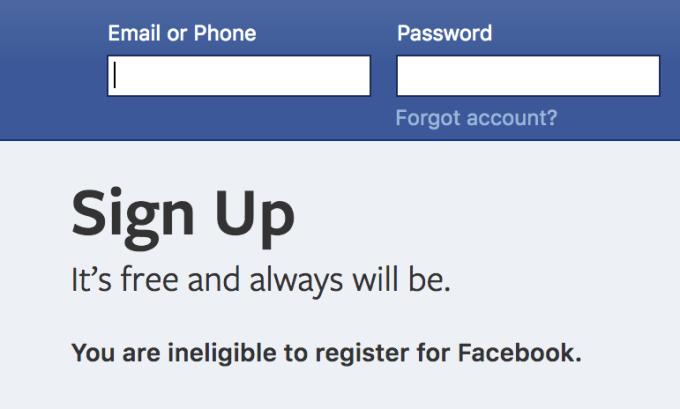
Facebook and Instagram will more proactively lock the accounts of users its moderators suspect are below the age of 13. Its former policy was to only investigate accounts if they were reported specifically for being potentially underage. But Facebook confirmed to TechCrunch that an ‘operational’ change to its policy for reviewers made this week will see them lock the accounts of any underage user they come across, even if they were reported for something else, such as objectionable content, or are otherwise discovered by reviewers. Facebook will require the users to provide proof that they’re over 13 such a government issued photo ID to regain access. The problem stems from Facebook not requiring any proof of age upon signup.

Facebook Messenger Kids is purposefully aimed at users under age 13

A tougher stance here could reduce Facebook and Instagram’s user counts and advertising revenue. The apps’ formerly more hands-off approach allowed them to hook young users so by the time they turned 13, they had already invested in building a social graph and history of content that tethers them to the Facebook corporation. While Facebook has lost cache with the youth over time and as their parents joined, Instagram is still wildly popular with them and likely counts many tweens or even younger children as users.

The change comes in response to an undercover documentary report by the UK’s Channel 4 and Firecrest Films that saw a journalist become a Facebook content reviewer through a third-party firm called CPL Resources in Dublin, Ireland. A reviewer there claims they were instructed to ignore users who appeared under 13, saying “We have to have an admission that the person is underage. If not, we just like pretend that we are blind and that we don’t know what underage looks like.” The report also outlined how far-right political groups are subject to different threshholds for deletion than other Pages or accounts if they post hateful content in violation of Facebook’s policies.

In response, Facebook published a blog post on July 16th claiming that that high-profile Pages and registered political groups may receive a second layer of review from Facebook employees. But in an update on July 17th, Facebook noted that “Since the program, we have been working to update the guidance for reviewers to put a hold on any account they encounter if they have a strong indication it is underage, even if the report was for something else.”

Now a Facebook spokesperson confirms to TechCrunch that this is a change to how reviewers are trained to enforce its age policy for both Facebook and Instagram. Facebook prohibits users under 13 to comply with the US Child Online Privacy Protection Act that demands that requires parental consent to collect data about children. The change could see more underage users have their accounts terminated. That might in turn reduce the site’s utility for their friends over or under age 13, making them less engaged with the social network.

The news comes in contrast to Facebook purposefully trying to attract underage users through its Messenger Kids app that lets children ages 6 to 12 chat with those approved by their parents, which today expanded to Mexico, beyond the US, Canada, and Peru. With one hand, Facebook is trying to make under-13 users dependent on the social network while pushing them away with the other.

Child Signups Lead to Problems As Users Age

A high-ranking source who worked at Facebook in its early days previously told me that one repercussion of a hands-off approach to policing underage users was that as some got older, Facebook would wrongly believe they were over 18 or over 21.

That’s problematic because it could make minors improperly eligible to see ads for alcohol, real money gambling, loans, or subscription services. They’d also be able to see potentially offensive content such as graphic violence that only appears to users over 18 and is hidden behind a warning interstitial. Facebook might also expose their contact info, school, and birthday in public search results, which it hides for users under 18.

Users who request to change their birthdate may have their accounts suspended, deterring users from coming clean about their real age. A Facebook spokesperson confirmed that in the US, Canada, and EU, if a user listed as over 18 tries to change their age to be under 18 or vice versa, they would be prompted to provide proof of age.

Facebook might be wise to offer an amnesty period to users who want to correct their age without having their accounts suspended. Getting friends to confirm friend requests and building up a profile takes time and social capital that formerly underage users who are now actually over 13 might not want to risk just to able to display their accurate birthdate and protect Facebook. If the company wants to correct the problem, it may need to offer a temporary consequence-free method for users to correct their age. It could then promote this options to its youngest users or those who algorithms suggest might be under 13 based on their connections.

Facebook doesn’t put any real roadblock to signup in front of underage users beyond a self-certification that they are of age, likely to keep it easy to join the social network and grow its business. It’s understandable that some 9- or 11-year-olds would lie to gain access. Blindly believing self-certifications led to the Cambridge Analytica scandal, as the data research firm promised Facebook it had deleted surreptitiously collected user data, but Facebook failed to verify that.
There are plenty of other apps that flout COPPA laws by making it easy for underage children to sign up. Lip-syncing app Musically is particularly notorious for featuring girls under 13 dancing provocatively to modern pop songs in front of audiences of millions — which worryingly include adults. The company’s CEO Alex Zhu angrily denied that it violates COPPA when I confronted him with evidence at TechCrunch Disrupt London in 2016.

Facebook’s Reckoning

The increased scrutiny brought on by the Cambridge Analytica debacle, Russian election interference, screentime addiction, lack of protections against fake news, and lax policy towards conspiracy theorists and dangerous content has triggered a reckoning for Facebook.

Yesterday Facebook announced a content moderation policy update, telling TechCrunch “There are certain forms of misinformation that have contributed to physical harm, and we are making a policy change which will enable us to take that type of content down. We will be begin implementing the policy during the coming months.” That comes in response to false rumors spreading through WhatsApp leading to lynch mobs murdering people in countries like India. The policy could impact conspiracy theorists and publications spreading false news on Facebook, some of which claim to be practicing free speech.

Across safety, privacy, and truth, Facebook will have to draw the line on how proactively to police its social network. It’s left trying to balance its mission to connect the world, its business that thrives on maximizing user counts and engagement, its brand as a family-friendly utility, its responsibility to protect society and democracy from misinformation, and its values that endorse free speech and a voice for everyone. Something’s got to give.


from Social – TechCrunch https://ift.tt/2LaNWfS Facebook and Instagram change to crack down on underage children Josh Constine https://ift.tt/2uApDNX
via IFTTT

Trump just noticed Europe’s $5BN antitrust fine for Google

{rss:content:encoded} Trump just noticed Europe’s $5BN antitrust fine for Google https://ift.tt/2L9n93t https://ift.tt/2JCtyOT July 19, 2018 at 05:08PM

In other news bears shit in the woods. In today’s second day Trump news: President ‘The Donald’ has seized, belatedly, on the European Commission’s announcement yesterday that it had found Google guilty of three types of illegal antitrust behavior with its Android OS since 2011 and was fining the company $5 billion; a record breaking penalty the Commission’s antitrust chief Margrethe Vestager said reflects the length and gravity of the company’s competition infringements.

Trump is not! at all! convinced! though!

“I told you so!” he has tweeted triumphantly just now. “The European Union just slapped a Five Billion Dollar fine on one of our great companies, Google. They truly have taken advantage of the U.S., but not for long!”

Also not so very long ago, Trump was the one grumbling about tech giants. Though Amazon is his most frequent target in tech, while Google has been spared the usual tweet lashings. Albeit, on the average day he may not necessarily be able to tell one tech giant from another.

Vestager can though, and she cited Amazon as one of the companies that had suffered as a direct result of contractual conditions Google imposed on device makers using its Android OS — squeezing the ecommerce giant’s potential to build a competing Android ecosystem, with its Fire OS.

Presumably, for Trump, Amazon is not ‘one of our great companies’ though.

At least it’s only Google that gets his full Twitter attention — and a special Trumpian MAGA badge of honor call-out as “one of our great companies” — in the tweet.

Presumably, he hasn’t had this pointed out to him yet though. So, uh, awkward.

Safe to say, Trump is seizing on Google’s antitrust penalty as a stick to beat the EU, set against a backdrop of Trump already having slapped a series of tariffs on EU goods and Trump recently threatening the EU with tariffs on cars — in what is fast looking like a full blown trade war.

Even so, the tweet probably wasn’t the kind of support Google was hoping to solicit via its own Twitter missive yesterday…

#AndroidWorksButTradeWarsDon’t doesn’t make for the most elegant hashtag.

But here’s the thing: Vestager has already responded to Trump’s attack on the Android decision — even though it’s taking place a day late. Because the EU’s “tax lady”, as Trump has been known to vaguely refer to her, is both lit and onit.

During yesterday’s press conference she was specifically asked to anticipate Trump’s tantrum response on hearing the antitrust decision against Google, and whether she wasn’t afraid it might affect next week’s meeting between the US president and the European Commission president, Jean-Claude Juncker.

“As I know my US colleagues want fair competition just as well as we do,” she responded. “There is a respect that we do our job. We have this very simple mission to make sure that companies play by the rulebook for the market to serve consumers. And this is also my impression that this is what they want in the US.”

Pressed again on political context, given the worsening trade relationship between the US and the EU, Vestager was asked how she would explain that her finding against Google is not part of an overarching anti-US narrative — and directly asked how would she answer Trump’s contention that the EU’s “tax lady… really hates the US”.

“Well I’ve done my own fact checking on the first part of that sentence. I do work with tax and I am a woman. So this is 100% correct,” she replied. “It is not correct for the latter part of the sentence though. Because I very much like the US. And I think that would also be what you think because I from Denmark and that tends to be what we do. We like the US. The culture, the people, our friends, traveling. But the fact is that this [finding against Google] has nothing to do with how I feel. Nothing whatsoever. Just as well as enforcing competition law — well, we do it in the world but we don’t do it in a political context. Because then there would never, ever be a right timing.

“The mission is very simple. We have to protect consumers and competition to make sure that consumers get the best of fair competition — choice, innovation, best possible prices. This is what we do. It has been done before, we will continue to do it — no matter the political context.”

Maybe Trump will be able to learn the name of the EU’s “tax lady” if Vestager ends up EU president next year.

Or, well, maybe not. We can only hope so.

Lifebit raises $3M to scale-up AI-powered analysis of DNA data

Making sense of DNA data is a two-step process, namely the biochemical-sequencing of the DNA and the analyzing and extracting insights from the sequenced DNA data. As of today in 2018, the first part of this process is now almost fully automated requiring minimal human intervention. Even sequencing costs have dropped below $1,000 and soon they will reach $100, according to the industry. The second part of the process, however, is a long way from being automated because it’s very complex, time-consuming and requires highly specialized experts to analyze the data.

Now a startup plans to address this problem.

London-based Lifebit is building a cloud-based cognitive system that can reason about DNA data in the same way humans do. This offers researchers and R&D professionals, with limited-to-no computational and data analysis training, and their corresponding organisations (ie. pharmaceutical companies), a highly scalable, modular and reproducible system that automates the analysis processes, learns from the data and provides actionable insights.

It’s now closed a $3m (£2.25m) Seed funding round led by Pentech and Connect Ventures, with participation from Beacon Capital and Tiny VC (AngelList). The company is simultaneously announcing the launch of its first product, Deploit, what it claims is the world’s first AI-powered genomic data analysis platform, and, says the company, is already being trialled by major pharmaceutical and biotech companies.

The main “competitor” for Lifebit is the DIY process of analysing and getting actionable insights out of genomics and biodata. Organisations, both in industry and research, build custom software and hardware solutions to be able to analyse the huge volumes of genomic and biodata at scale. This leads to a large waste of resources since custom software and hardware is expensive and hard to scale and maintain.

A few platforms have been created like DNAnexus and SevenBridges. However, these platforms tend to lack flexibility, don’t integrate with the way the vast majority of bioinformaticians work, operate like black boxes which fail to provide the user with full control and transparency, can be very costly to use, and enforce lock-downs. All in all, if the user stops using these platform, all their past work is no longer accessible. And they are not designed for AI and advanced learning from previous analysis performed.

Lifebit’s Deploit platform is designed to address all these problems with a particular highlight on the machine learning functionalities that automate the process and on creating the next tool that will be used by everyone in the community who is trying to analyse and understand genomic and bio data, very much like GitHub changed software engineers’ lives.

In fact, Deploit will be priced with a pricing model similar to GitHub. It is free for individual, non-commercial, usage, and then you pay for team functionalities and for enterprise deployment and usage.

Lifebit was incorporated in April 2017 but founders Dr. Maria Chatzou (CEO) and Dr. Pablo Prieto only started working on it full-time in July when we moved to London to join Techstars.

“The problem these organizations face is no longer sequencing vast quantities of genomic data, but rather making sense of this data quickly and affordably,” says Chatzou. “This requires new data analysis technologies, which is where Lifebit comes in. Our mission as a company is to enable cloud-based real-time genomic analysis at scale, anywhere, by anyone.”


https://ift.tt/eA8V8J Lifebit raises $3M to scale-up AI-powered analysis of DNA data https://ift.tt/2uO7jQV

Uber partners with Cargo to help drivers make money by selling stuff to riders

Uber has teamed up with Cargo, a startup that makes it easy for ride-share drivers to sell goods to their passengers. Cargo works by giving drivers free boxes, filled with goods like gum, phone chargers and snacks, to sell to passengers from the center of the car console.

Cargo, which has partnered with brands like Kellogg’s, Starbucks and Mars Wrigley Confectionary, provides these boxes to drivers for free. The only requirement is that drivers must have at least a 4.7 rating and be relatively active on the platform, Cargo founder and CEO Jeff Cripe told TechCrunch.

Each Cargo box comes with both free samples and items for purchase. Drivers earn at least $1 per order, even if what the rider gets is free.

Starting today, Uber drivers in San Francisco and Los Angeles can pick up Cargo boxes at one of Uber’s driver support locations, called Greenlight Hubs. While this is an exclusive business partnership, Cargo will continue to let drivers sell its goods even if they don’t drive for Uber. 

Since launching in 2017, about 7,000 drivers have made more than $1 million. On an annual basis, drivers can earn between $1,500 – $3,000 in additional income. This seems like a great deal for drivers and also a way for Uber to attract and retain drivers.

As it stands today, customers request and pay for goods via Cargo’s mobile site, but down the road, Uber envisions integrating Cargo’s functionality into its app. To date, Cargo has raised $7.3 million in funding.


https://ift.tt/eA8V8J Uber partners with Cargo to help drivers make money by selling stuff to riders https://ift.tt/2LqtE12

Even raises $40m to transform the working class to the savings class

The working class of the United States doesn’t get many breaks these days. It’s not just a function of low pay and long hours, but also the incredible uncertainty of income and expenses that makes surviving week-to-week so challenging. One in five Americans have a negative net wealth, even in an economy where the unemployment rate is the lowest in almost two decades. Banks, meanwhile, are actively dissuading the working class from banking with them, creating a permanent class of unbanked and underbanked citizens.

For Jon Schlossberg, CEO and co-founder of Even.com, improving the plight of ordinary Americans and their finances is a deeply personal and professional mission. And now that mission has a huge new bucket of capital behind it, with Keith Rabois of Khosla Ventures leading a $40 million Series B round into the Oakland-based startup. Rabois is a return investor, having previously backed the company in its late 2014 seed round. With this latest round of capital, Even.com has now raised $50.5 million.

When Even.com first launched its eponymous app, the goal was to offer income smoothing for workers, helping them avoid usurious payday loans to make ends meet. Since that first launch several years ago, Schlossberg and his team learned that the only way to improve the finances for the working class is to help them budget better — ending the need for loans in the first place. “To do anything with your life, unless you are just born to the right family, you need to spend your money wisely, but we never teach you how to do that,” Schlossberg explained to me.

Last year, Even.com announced that it had stopped evening through its Pay Protection product. Instead, Schlossberg said that Even.com has evolved and wanted to “build a new kind of financial institution with products that fit your life.” It still has a feature it brands as Instapay, which allows users to request their earned pay in advance of their payday.

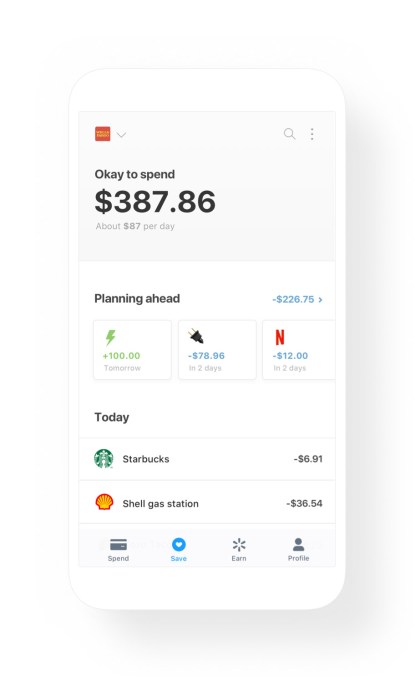
But Even.com is increasingly focused on improving the quality of its intelligent budgeting feature. Using artificial intelligence models honed over the past few years, the company now gives users of its Even app an “Okay to Spend” figure that helps them think through their cash flow. By giving a predictive figure rather than a checking account balance, Even can help its users avoid sudden surprise expenses that can trigger the kind of financial death spiral that has become a familiar story in America. The company will also soon launch an automatic savings feature similar to Digit or Acorns that helps people build up regular savings.

Even’s Okay to Spend feature gives insight into future cash flows before it is too late

While the company offers an increasingly comprehensive suite of financial tools, it has decided to avoid charging users specific use fees, opting instead for a subscription model. Schlossberg explained that “We are a mission-oriented company, but talk is cheap and where the rubber hits the road, it’s how you make money.” Even is free for users participating through partner employers, or $2.99 a month for individuals without a sponsor.

The company’s highest expense feature is Instapay due to underwriting, and so the company makes higher profits when fewer of its customers need access to payday credit. In other words, the better that its users budget, the fewer loans it will underwrite, and the more money the company makes. We are “directly incentivized to help people with their financial health,” Schlossberg noted.

Even has proven attractive to corporate customers, including Walmart, which partnered with the startup last December to offer its service to all 1.4 million employees at the retailer. Since the launch of that partnership, more than 200,000 Walmart employees regularly use the app according to Even, and the typical active user checks their Okay to Spend balance four times a week. A majority of active users have also taken out an Instapay through Even.

More interestingly, salaried employees at Walmart used the app slightly more than hourly workers, proving that just having a guaranteed income isn’t necessarily a panacea to financial trouble for many American households.

Even.com’s Series B round is all about expansion and growth for the company. Even intends to open an East Coast office this year, and intends to expand its product further into the Fortune 500 with partnerships similar to its Walmart deal. The company currently has 37 employees. In addition to Khosla, the startup raised funding from Valar Ventures, Allen & Company, Harrison Metal, SV Angel, Silicon Valley Bank, and others.


https://ift.tt/2mvkliy Even raises $40m to transform the working class to the savings class https://ift.tt/2JyVMtT

Europe updates its predatory pricing investigation against Qualcomm over UMTS baseband chips

{rss:content:encoded} Europe updates its predatory pricing investigation against Qualcomm over UMTS baseband chips https://ift.tt/2LwSSru https://ift.tt/2Nvl9PL July 19, 2018 at 04:31PM

On the heels of Google getting served a $5 billion fine by the EU over monopolistic practices related to its Android operating system, the European Commission today resurfaced another ongoing case in the world of large U.S. tech companies. The EC said that it has added to its investigation into Qualcomm and its predatory pricing of UMTS baseband chips. Specifically, today the Commission has sent more details relating to elements of the “price cost” test that it had applied to measure just how much below cost Qualcomm was selling UMTS baseband chips to edge out competitors.

If the case is decided against Qualcomm, the company could face an additional fine of up to 10 percent of its worldwide revenues. In 2009, these were $10.4 billion, while in 2017, global turnover was over $22 billion.

The original, 2015 case was based on a complaint filed by Icera — once a big player in baseband chips — and dates back to practices between 2009 and 2011 and alleged that Qualcomm used its market position to negotiate artificially low prices for UMTS chips — used in 3G phones — in order to oust out Icera. Others that made similar chips include Nvidia.

Qualcomm has wasted little time in responding to the notice posted by the EC.

“This investigation, now in its ninth year, alleges harm in 2009-2011, to a competitor who chose years later to exit the market for reasons unrelated to Qualcomm,” said Don Rosenberg, general counsel and executive vice president of Qualcomm in a statement. “While the investigation has been narrowed, we are disappointed to see it continues and will immediately begin preparing our response to this supplementary statement of objections. We belief that once the Commission has reviewed our response it will find that Qualcomm’s practices are pro-competitive and fully consistent with European competition rules.”

Qualcomm is already in the middle of appealing a $1.23 billion fine in the EU over LTE chip dominance in the iPhone, related to deals that were made with Apple at the expense of another big rival of Qualcomm’s, Intel. (Never mind that Apple and Qualcomm are also in the middle of a patent dispute.)

This older case, as Qualcomm points out, has been narrowed since it was first announced almost exactly three years ago. And while we don’t know what the exact details of the supplementary objections are and whether they have expanded them again (we have contacted the EC to try to find out), the Commission also notes in its short statement — printed in full below — that sending an update to its calculations doesn’t necessarily imply the outcome of this case.

Statement below.

The European Commission has sent a Supplementary Statement of Objections to Qualcomm Inc. This is a procedural step in the Commission’s ongoing investigation under EU antitrust rules looking into whether Qualcomm engaged in ‘predatory pricing’. The Commission sent a Statement of Objections to Qualcomm in December 2015 detailing its concerns. In particular, the Commission’s preliminary view is that between 2009 and 2011 Qualcomm sold certain UMTS baseband chipsets at prices below cost, with the intention of eliminating Icera, its main competitor in the leading edge segment of the market at that time. UMTS chipsets are key components of mobile devices. They enable both voice and data transmission in third generation (3G) cellular communication. The Supplementary Statement of Objections sent today focuses on certain elements of the “price-cost” test applied by the Commission to assess the extent to which UMTS baseband chipsets were sold by Qualcomm at prices below cost. The sending of a Supplementary Statement of Objections does not prejudge the outcome of the investigation. More information is available on the Commission’s competition website, in the public case register under the case number AT.39711.

Printrbot has shut down

Printrbot, a popular Kickstarter-backed 3D printer company, has shut down, leaving only a barebones website and little explanation. The founder, Brook Drumm, wrote that “Low sales led to hard decisions.”

“We will be forever grateful to all the people we met and served over the years,” he wrote. “Thank you all.”

Printrbot’s machines costs about $200 during the Kickstarter and Drumm created multiple add-ons including a belt for printing multiple objects.

Drumm also ran Vault Multimedia and appeared on Science Channel’s All-American Makers TV and a pastor. Drumm created his product after having trouble assembling an early Makerbot and finding the hardware and software difficult to use.

There is no clear information on future support or parts availability for current customers. I’ve reached out to the company for comment.


https://ift.tt/eA8V8J Printrbot has shut down https://ift.tt/2zOKl1y

Sinemia drops prices for its movie ticket subscriptions, which now start a $3.99 per month

MoviePass competitor Sinemia is lowering prices on the already low-cost movie ticket subscription plans that it introduced earlier this year.

Its monthly prices are being cut by $1 across-the-board. The cheapest plan now costs $3.99 per month, which gets you one standard movie ticket for that month. The priciest one, which covers three tickets (and includes 3D, 4D and IMAX screens), now costs $13.99 per month.

Sinemia says it’s also offering discounts on its family plans, and on plans in Canada, the United Kingdom and Australia.

You might think that this summer promotion (which ends on September 3) seems timed to take advantage of the negative publicity around MoviePass’ new “peak pricing” for popular movies, and Sinemia’s press release doesn’t exactly deny it — the release literally begins: “At a time when MoviePass is running surge pricing …”

Sinemia subscribers also benefit from being able to purchase tickets in advance. And unlike AMC’s Stubs A-List program, Sinemia isn’t limited to a specific theater chan.

One caveat is that these plans are billed annually, so you’ll be making a bigger commitment upfront. On the bright side, this presumably locks in the lower price for a full year.

“With the release of highly-anticipated summer blockbusters, and with seasonal temperatures hitting record highs, we want to provide moviegoers a more affordable way to see must-watch films and get a break from the heat,” said Sinemia founder and CEO Rifat Oguz in the release.


https://ift.tt/eA8V8J Sinemia drops prices for its movie ticket subscriptions, which now start a $3.99 per month https://ift.tt/2zODkOm

PureSec exits stealth to secure serverless code

PureSec, a startup out of Israel emerged from stealth today to provide a way to make serverless computing more secure.

Serverless computing reduces programming to writing functions, so that when a certain event happens, it triggers an automated action. The cloud vendor takes care of the underlying infrastructure and developers just write the code. It may sound like Shangri La for tech, but in reality there are still security concerns.

You might think that a process that lasts only milliseconds wouldn’t be subject to conventional kinds of attacks, but the fact is serverless functions are designed to take human checks and balances out of the equation, says company co-founder Ory Segal, and if you don’t set up the functions correctly you could be vulnerable.

As with any type of cloud security, there is a shared security model with serverless computing. On the vendor side, they ensure their data centers and systems are secure, but at the application level, it’s up to the developer. Certainly we have seen many instances where applications have been left exposed and data has leaked.

Segal says the function may be only a few lines of code triggering an action, but the action usually involves interacting with one or more external services. When that happens, there is an opportunity to manipulate the function and make it do something it wasn’t designed to do such as inject malicious code.

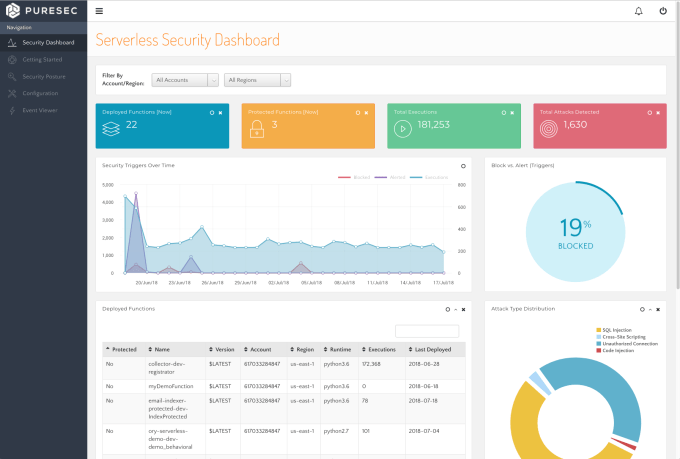
The product looks at your serverless code and lets you know which vulnerabilities you may have left exposed. It can even fix those problems for you if you wish. It also allows you to configure a security profile for your code from a dashboard and see a log of activity to track problems when they occur.

Screenshot: PureSec

Segal says when the company launched in 2016, it was just a couple of years after AWS launched its Lambda serverless product. At the time, it was not widely used or understood. Serverless computing remains very early in its development, but in order to grow it needs a set of underlying tools like security to really take off.

PureSec is built from the ground up to provide serverless security, and itself is built on top of serverless architecture. As Segal points out, traditional security products require underlying infrastructure to deploy something either on the server or network. With serverless architecture, there is no underlying architecture on which to deploy until event is triggered and the cloud provider figures out what compute, memory and storage is required to complete the process.

The company has been in stealth mode up until today and has raised $3 million in seed investment, according to Crunchbase. It has 7 employees based in Tel Aviv.


https://ift.tt/2NYUgEO PureSec exits stealth to secure serverless code https://ift.tt/2uxcu8o

blogger better Headline Animator