l
l
blogger better. Powered by Blogger.

Search

Labels

blogger better

Followers

Blog Archive

Total Pageviews

Labels

Download

Blogroll

Featured 1

Curabitur et lectus vitae purus tincidunt laoreet sit amet ac ipsum. Proin tincidunt mattis nisi a scelerisque. Aliquam placerat dapibus eros non ullamcorper. Integer interdum ullamcorper venenatis. Pellentesque habitant morbi tristique senectus et netus et malesuada fames ac turpis egestas.

Featured 2

Curabitur et lectus vitae purus tincidunt laoreet sit amet ac ipsum. Proin tincidunt mattis nisi a scelerisque. Aliquam placerat dapibus eros non ullamcorper. Integer interdum ullamcorper venenatis. Pellentesque habitant morbi tristique senectus et netus et malesuada fames ac turpis egestas.

Featured 3

Curabitur et lectus vitae purus tincidunt laoreet sit amet ac ipsum. Proin tincidunt mattis nisi a scelerisque. Aliquam placerat dapibus eros non ullamcorper. Integer interdum ullamcorper venenatis. Pellentesque habitant morbi tristique senectus et netus et malesuada fames ac turpis egestas.

Featured 4

Curabitur et lectus vitae purus tincidunt laoreet sit amet ac ipsum. Proin tincidunt mattis nisi a scelerisque. Aliquam placerat dapibus eros non ullamcorper. Integer interdum ullamcorper venenatis. Pellentesque habitant morbi tristique senectus et netus et malesuada fames ac turpis egestas.

Featured 5

Curabitur et lectus vitae purus tincidunt laoreet sit amet ac ipsum. Proin tincidunt mattis nisi a scelerisque. Aliquam placerat dapibus eros non ullamcorper. Integer interdum ullamcorper venenatis. Pellentesque habitant morbi tristique senectus et netus et malesuada fames ac turpis egestas.

Thursday, June 13, 2019

Calendar influencers? Event social network IRL raises $8M

Why is there no app where you can follow party animals, concert snobs, or conference butterflies for their curated suggestions of events? That’s the next phase of social calendar app IRL that’s launching today on iOS to help you make and discuss plans with friends or discover nearby happenings to fill out your schedule.

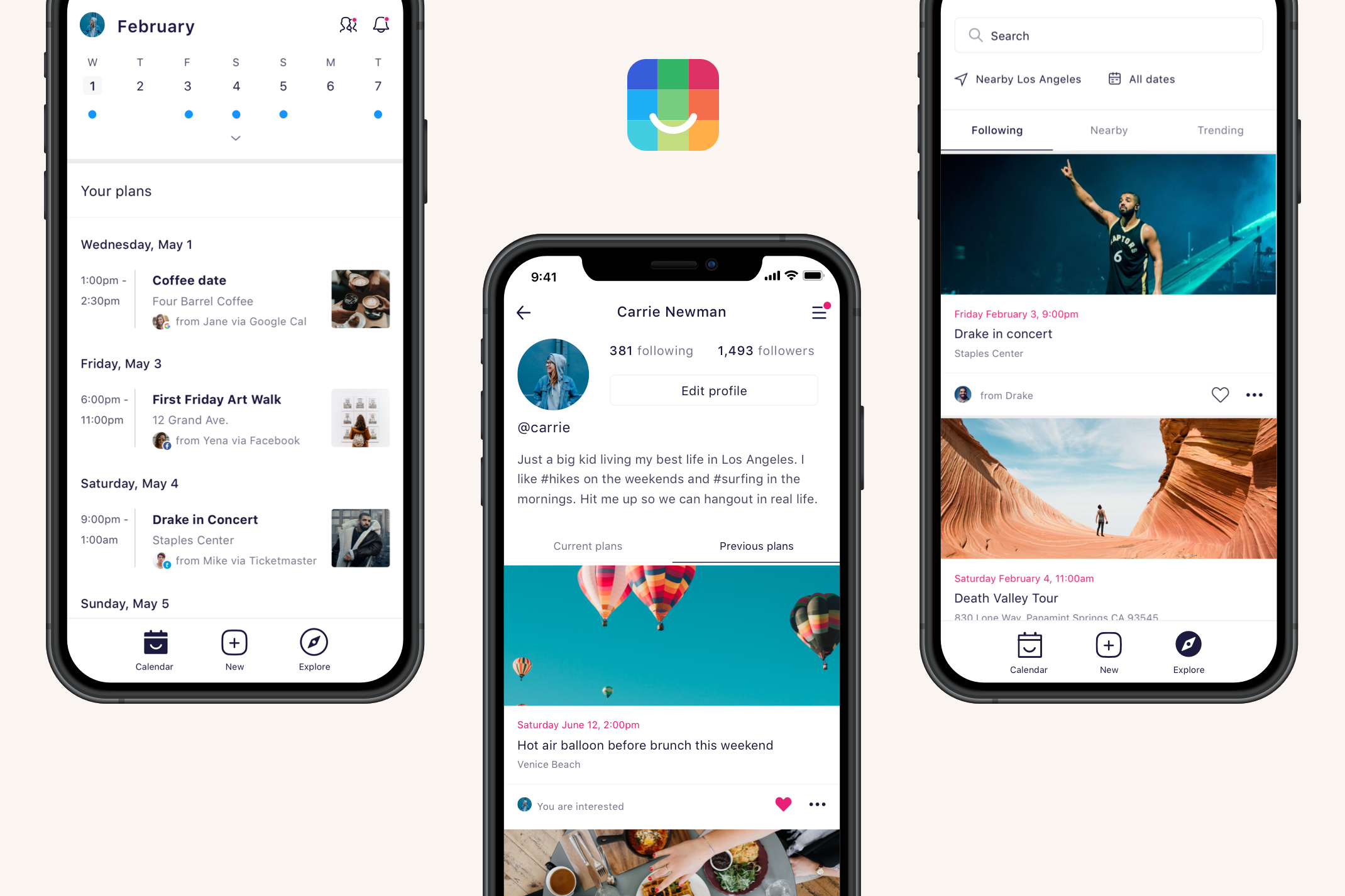
The calendar, a historically dorky utility, seems like a strange way to start the next big social network. Many people, especially teens, either don’t use apps like Google Calendar, keep them professional, or merely input plans made elsewhere. But by baking in an Explore tab of event recommendations and the option to follow curators, headliners, and venues, IRL could make calendars communal like Instagram did to cameras.

“There’s Twitter for ‘follow my updates’, there’s Soundcloud for ‘follow my music’, but there’s no ‘follow my events'” IRL CEO Abe Shafi tells me of his plan to turbocharge his calendar app. “They’re arguably the best product that’s been built for organizing what you’re doing but no one has Superhuman’d or Slack’d the calendar. Let’s build a super f*cking dope calendar!” he says with unbridled excitement. He’ll need that passion to persevere as IRL tries to steal a major use case from SMS, messaging apps, and Facebook.
Finding a new opportunity for a social network has attracted a new $8 million Series A funding round for IRL led by Goodwater Capital and joined by Founders Fund and Kleiner Perkins. That builds on its $3 million seed from Founders Fund and Floodgate, whose partner Mike Maples is joining IRL’s board. The startup has also pulled in some entertainment and event CEOs as strategic investors including Warner Bros president Greg Silverman, Lionsgate films president Joe Drake, and Classpass CEO Fritz Lanman to help it recruit calendar influencers users can follow.

Filling Your Social Calendar

In Shafi, investors found a consumate extrovert who can empathize with event-goers. He dropped out of Berkeley to build out his recruitment software startup getTalent before selling it to HR platform Dice where he became VP of product. He started to become disillusioned by tech’s impact on society and almost left the industry before some time at Burning Man rekinkled his fever for events.

IRL CEO Abe Shafi

Shafi teamed up with PayPal’s first board member Scott Banister and early social network founder Greg Tseng. Shafi’s first attempted Gather pissed off a ton of people with spammy invites in 2017. By 2018, he’d restarted as IRL with a focus on building a minimalist calendar where it was easy to create events and invite friends. Evite and Facebook Events were too heavy for making less formal get-togethers with close friends. He wisely chose to geofence his app and launch state by state to maximize density so people would have more pals to plan with.

IRL is now in 14 states with a modest 1.3 million monthly active users and 175,000 dailies, plus 3 million people on the waitlist. “50% of all teens in Texas have downloaded IRL. I wanted to focus on the central states, not Silicon Valley” Shafi explains. Users log in with a phone number or Google, two-way sync their Google Calendar if they have one, and can then manage their existing schedule and create mini-events. The stickiest feature is the ability to group chat with everyone invited so you can hammer out plans. Even users without the app can chime in via text or email. And unlike Facebook where your mom or boss are liable to see your RSVPs, your calendar and what you’re doing on IRL is always private unless you explicitly share it.

The problem is that most of this could be handled with SMS and a more popular calendar. That’s why IRL is doubling-down on event discovery through influencers, which you can’t do anywhere else at scale. With the new version of the app launching today, you’ll be recommended performers, locations, and curators to follow. You’ll see their suggestions in the Explore tab that also includes sub-tabs of Nearby and Trending happenings. There’s also a college-specific feed for users that auth in with their school email address. Curators and event companies like TechCrunch can get their own IRL.com/… URL people can follow more easily than some janky list of events of gallery of flyers on their website. Since pretty much every promoter wants more attendees, IRL’s had little resistance to it indexing all the events from Meetup.com and whatever it can find.

IRL is concentrating on growth for now, but Shafi believes all the intent data about what people want to do could be valuable for directing people to certain restaurants, bars, theaters, or festivals, though he vows that “we’re never going to sell your data to advertisers.” For now IRL is earning money from affiliate fees when people buy tickets or make reservations. Event affiliate margins are infamously slim, but Shafi says IRL can bargain for higher fees as it gains sway over more people’s calendars.
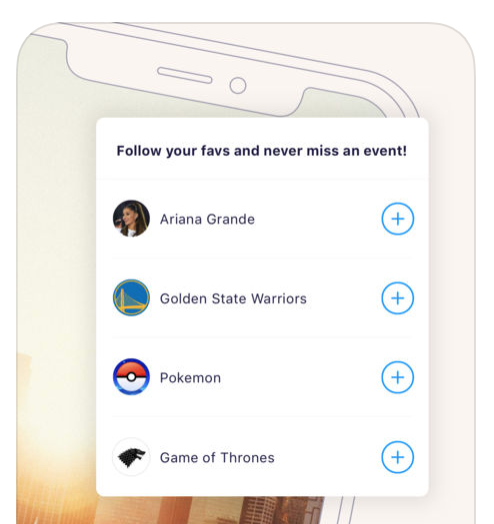
Unfortunately without reams of personal data and leading artificial intelligence that Facebook owns, IRL’s in-house suggestions via the Explore tab can feel pretty haphazard. I saw lots of mediocre happy hours, crafting nights, and community talks that weren’t quite the hip nightlife recommendations I was hoping for, and for now there’s no sorting by category. That’s where Shafi hopes influencers will fill in. And he’s confident that Facebook’s business model discourages it moving deeper into events. “Facebook’s revenue driver is time spent on the app. While meaningful to society, events as a feature is not a primary revenue driver so they don’t get the resources that other features on Facebook get.”

Yet the biggest challenge will be rearranging how people organize their lives. A lot of us are too scatterbrained, lazy, or instinctive to make all our plans days or weeks ahead of time and put them on a calendar. The beauty of mobile is that we can communicate on the fly to meet up. “Solving for spontaneity isn’t our focus so far” Shafi admits. But that’s how so much of our social lives come together.

My biggest problem isn’t finding events to fill my calendar, but knowing which friends are free now to hang out and attend one with me. There are plenty of calendar, event discovery, and offline hangout apps. IRL will have to prove they deserve to be united. At least Shafi says it’s problem worth trying to solve. “I know for a fact that the product of a calendar will outlive me.” He just wants to make it more social first.


https://tcrn.ch/31xzVNV Calendar influencers? Event social network IRL raises $8M https://tcrn.ch/2XKeOW4

Monzo, the UK challenger bank with over 2 million users, expands to the US

Monzo, the U.K. challenger bank with more than two million customers and a unicorn valuation to go with it, has formally announced its U.S. expansion.

The tentative move — which TechCrunch exclusively reported was underway five months ago — will see a U.S. Monzo app and connected Mastercard debit card made available via in-person signups at events to be held soon. The roll-out will initially consists of a few thousand cards, supported by a waitlist in preparation for a wider launch.

In a call, Monzo co-founder and CEO Tom Blomfield told me he thinks the key to cracking North America is to create a fully localised version of Monzo based on carefully listening to U.S. users in order to find market-fit. There are obvious and less obvious cultural and technical differences in the way Brits and Americans save, spend and manage their finances and this will require significant product divergence.

In other words, Monzo isn’t presuming that specific features of the U.K. offering, which is currently seeing 200,000 people sign up each month, will automatically resonate with customers across the pond. To equally succeed in the U.S., it will be about the details and in a sense the company will need to act like a startup within what is now a scale-up if it is to repeat much of the Monzo playbook.

In the U.K., Monzo currently has an NPS score of 80, which Blomfield says is unusually high for a bank. He also tells me 60% of U.K. signups remain long-term active, transacting at once per week. However, as a counterpoint, the percentage of Monzo users that pay their salary into the Monzo account sits at between about 27% and 30% of active users, suggesting that a significant number of Monzo customers aren’t yet using it as their main account. Monzo’s definition of salaried is anyone who deposits at least £1,000 per month by bank transfer.

Returning back to America, Monzo says it will develop the U.S. version into a “fully-featured digital account” that can be accessed on your smartphone and will have the ability to extend into various “Monzo and third-party financial services”.

Initially, the challenger bank is partnering with an established U.S. bank, but is also working on applying for its own U.S. bank license. As in the U.K., the plan is to build and own as much of its technology stack as possible, which Blomfield says will be needed to give Monzo the agility to serve U.S. customers successfully.

To achieve this, Monzo will open an office in L.A., California, chosen “because it isn’t San Francisco,” says Blomfield. He says he was mindful of putting Monzo within the Silicon Valley bubble where rents are not only ridiculously high but product groupthink could be detrimental.

Meanwhile, Monzo joins a growing list of London-based B2C fintechs hoping to conquer America. Earlier today, money management app Emma announced that it had launched in the U.S. via a partnership with Plaid. Another example is banking chatbot and app Cleo, which quietly entered the U.S. nine months ago.

Added to this, Blomfield has always talked openly about his ambition to bring Monzo to the U.S. Over the years the challenger bank has attracted an array of U.S. investors. They include General Catalyst, Thrive Capital, Goodwater Capital, Stripe, Michael Moritz and Instagram co-founder Kevin Systrom. Most recently, TechCrunch reported that Y Combinator is also set to join the company’s cap table.


https://ift.tt/eA8V8J Monzo, the UK challenger bank with over 2 million users, expands to the US https://tcrn.ch/2WIdtmt

Emma, the London-based money management app, launches in the US and Canada

Emma, the U.K. money management app (now calling itself your “best financial friend”), has launched in the United States and Canada — and is now one of a plethora of London fintechs venturing states-side.

Competing banking app Cleo entered the U.S. nine months ago, and challenger bank Monzo is thought to be gearing up to launch across the pond soon, to name just two.

Emma says the U.S. launch comes after partnering with Plaid, the U.S.-based fintech that specialises in bank account aggregation. The London startup says that with its U.S. launch, 350 million people will now be able to have access to Emma’s money management features.

Described as your “financial friend,” the Emma app connects to your bank accounts (and crypto wallets) to help you budget, track spending and save money. It aims to help you understand things like how much money you have left to spend until your next payday, track and find wasteful subscriptions, and preemptively avoid going into your bank’s overdraft.

The PFM-styled app was launched in the U.K. in January 2018 and claims more than 100,000 downloads in just a year “without any marketing spend”. Furthermore, the company says users open the app five times a week, twice a day, and are using it as a “true alternative” to their traditional banking app.


https://ift.tt/eA8V8J Emma, the London-based money management app, launches in the US and Canada https://tcrn.ch/2Rj2Pg0

Target Circle and TapHeaven team up in a mobile marketing merger

{rss:content:encoded} Target Circle and TapHeaven team up in a mobile marketing merger https://tcrn.ch/2WIkjIz http://bit.ly/2WF2zJ8 June 13, 2019 at 03:29PM

Target Circle and TapHeaven have announced that they’re merging into a single company under the Target Circle brand.

TapHeaven co-founder and CEO Chris Hoyt, who is becoming chief growth officer at the combined organization, said the two companies have been “trying to solve the same problem” — namely, eliminating many of the inefficiencies in the mobile advertising business.

Hoyt said that for Target Circle, that meant trying to “unify this fragmented ecosystem into a single dashboard for contracts, invoices and offers.” And for TapHeaven, that meant a focus on automation, resulting in the launch of what the company calls a “command center” for user acquisition, where advertisers can optimize their ad campaigns “at the source level, by country” while getting high-quality traffic without fraud.

The companies are also complement each other geographically — Target Circle is headquartered in Oslo, Norway, while TapHeaven is headquartered in San Francisco.

According to Hoyt, they first came across each other because they were talking to the same mobile studio about supporting the launch of a new game, and it became clear they “both had the same vision for our businesses, the same future with a unified dashboard wrapped in automation and machine learning to simplify and help the ecosystem perform for these advertisers.”

Target Circle founder and CEO Heiko Hildebrandt will continue to serve as chief executive for the combined companies — in the announcement, he said TapHeaven allows the company to “strengthen and expand its technology in the automation of advertising and fraud prevention and resolution.” Meanwhile, TapHeaven executives Brian Krebs and Jeremy Jones will become CIO and chief of user experience, respectively.

The financial terms of the deal were not disclosed. Moving forward, Hoyt said Target Circle will continue to support its existing products while focusing on the new UA Command Center as “the future of our business.” He also suggested that the platform could help advertisers move away from Facebook and Google, allowing them to get the performance they need from other ad networks.

“What impact this is going to have on the market is really lifting up the rest of the ecosystem,” he said. “I feel like Facebook and Google have had their day, a little bit … With the serious things that are going on with these companies, advertisers are desperate for the answers to where [else] can they spend their money and diversify their portfolio.”

AT&T cancels Samsung Galaxy Fold orders

{rss:content:encoded} AT&T cancels Samsung Galaxy Fold orders https://tcrn.ch/31vnWAl http://bit.ly/2WDKSi5 June 13, 2019 at 03:26PM

AT&T has cancelled early orders for the Samsung Galaxy Fold.

Tom’s Guide first reported the cancellation, noting that AT&T said the Galaxy Fold would be available again to order as soon as Samsung announces a new launch date.

The Samsung Galaxy Fold was originally scheduled to launch on April 26. However, early reviews indicated that there were issues with the phone, which Samsung initially said was the fault of reviewers. The company eventually decided to postpone the launch and get back to the drawing board.

Earlier this week, a Samsung rep told Cnet that it would announce timing on the nearly $2,000 phone “in the coming weeks.”

However, AT&T’s move here suggests that it may be a while before the Galaxy Fold resurfaces, if at all.

Samsung itself asked customers who pre-ordered to confirm that they still want the device following the review period. On May 24, Best Buy cancelled all pre-orders of the phone.

Airbnb launches ‘Adventures’ for tourists seeking more thrills

Airbnb has debuted a new extension of its growing business in providing travel experiences in addition to temporary housing – it’s called Airbnb Adventures, and it’s effectively a collection of tours and trips lasting between three days and a week that go beyond the usual city walking tour.

One such trip, for example, is a wildlife excursion in Kenya that spans three days and centers around a walking trip with a promise to “encounter lions” as well as a campfire learning session, and “bush tea.” The cost is $500 per person, which includes five meals, drinks and two nights’ stay in a tent.

To source these ‘Adventures,’ Airbnb is working with local experts and tour companies, and doing so directly rather than working with larger tour providers that can be a one-to-many connection for sourcing like it does with some of its more vanilla Experiences. The direct route is probably necessary for these types of experiences, which have more implications in terms of liability and insurance. The company is also working with a third-party for verifying the certifications that are often required to provide these kinds of activities safely.

Airbnb is increasingly investing in ares that complement its core product of short-term peer-to-peer vacation housing rentals, and it debuted Experiences, of which Adventures is a part, in 2016. It’s also recently been reported that the company is exploring streaming media. It’s also expected to go public sometime this year, and recently claimed profitability in its operations.


https://ift.tt/eA8V8J Airbnb launches ‘Adventures’ for tourists seeking more thrills https://tcrn.ch/2WC8XAT

Target Circle and TapHeaven team up in a mobile marketing merger

Target Circle and TapHeaven have announced that they’re merging into a single company under the Target Circle brand.

TapHeaven co-founder and CEO Chris Hoyt, who is becoming chief growth officer at the combined organization, said the two companies have been “trying to solve the same problem” — namely, eliminating many of the inefficiencies in the mobile advertising business.

Hoyt said that for Target Circle, that meant trying to “unify this fragmented ecosystem into a single dashboard for contracts, invoices and offers.” And for TapHeaven, that meant a focus on automation, resulting in the launch of what the company calls a “command center” for user acquisition, where advertisers can optimize their ad campaigns “at the source level, by country” while getting high-quality traffic without fraud.

The companies are also complement each other geographically — Target Circle is headquartered in Oslo, Norway, while TapHeaven is headquartered in San Francisco.

According to Hoyt, they first came across each other because they were talking to the same mobile studio about supporting the launch of a new game, and it became clear they “both had the same vision for our businesses, the same future with a unified dashboard wrapped in automation and machine learning to simplify and help the ecosystem perform for these advertisers.”

Target Circle founder and CEO Heiko Hildebrandt will continue to serve as chief executive for the combined companies — in the announcement, he said TapHeaven allows the company to “strengthen and expand its technology in the automation of advertising and fraud prevention and resolution.” Meanwhile, TapHeaven executives Brian Krebs and Jeremy Jones will become CIO and chief of user experience, respectively.

The financial terms of the deal were not disclosed. Moving forward, Hoyt said Target Circle will continue to support its existing products while focusing on the new UA Command Center as “the future of our business.” He also suggested that the platform could help advertisers move away from Facebook and Google, allowing them to get the performance they need from other ad networks.

“What impact this is going to have on the market is really lifting up the rest of the ecosystem,” he said. “I feel like Facebook and Google have had their day, a little bit … With the serious things that are going on with these companies, advertisers are desperate for the answers to where [else] can they spend their money and diversify their portfolio.”


https://ift.tt/eA8V8J Target Circle and TapHeaven team up in a mobile marketing merger https://tcrn.ch/2WIkjIz

Willo is a robot that wants to replace your toothbrush

If you think about it, the basic concept of a toothbrush hasn’t evolved since… forever. Sure, many people have switched to an electric toothbrush, but it remains a stick with a brush at the end.

Willo thinks that’s not good enough. The company has developed an oral care device to improve brushing with a focus on plaque. The company says that basic brushing only cleans 42 percent of dental plaque, while electric brushes clean 46 percent of dental plaque.

The startup has worked with actual dentists to design its product. It still sounds a bit mysterious as the company isn’t sharing much about the product. The photo is the only image of the product right now.

But what we know is that the startup has raised a $7.5 million funding round led by Kleiner Perkins, with Bpifrance and Nest co-founder Matt Rogers also participating. The company has been founded by Hugo de Gentile and Ilan Abehassera, and it attended The Refiners accelerator program.

Now let’s see how it actually works, how much it costs and if people are willing to change everything about the way they brush their teeth.


https://ift.tt/eA8V8J Willo is a robot that wants to replace your toothbrush https://tcrn.ch/2WIH13i

VidMob raises raises $25M for its video advertising tools

Video advertising company VidMob is announcing that it has raised $25 million in Series B funding.

When I wrote about VidMob’s seed funding back in 2015, it was focused on building a marketplace that connected marketers and professional video editors. That’s still a component of the VidMob business, said founder and CEO Alex Collmer, but the company has also built a broader platform for video advertising, which it calls the Agile Creative Studio.

So Collmer said that with VidMob, not only can marketers find professionals (editors, animators, graphic designers and more) to create their ads, they can also “with a single click, send hundreds and in some cases thousands of custom ads” to VidMob partners like Facebook, Google/YouTube, Instagram, Snapchat and Twitter.

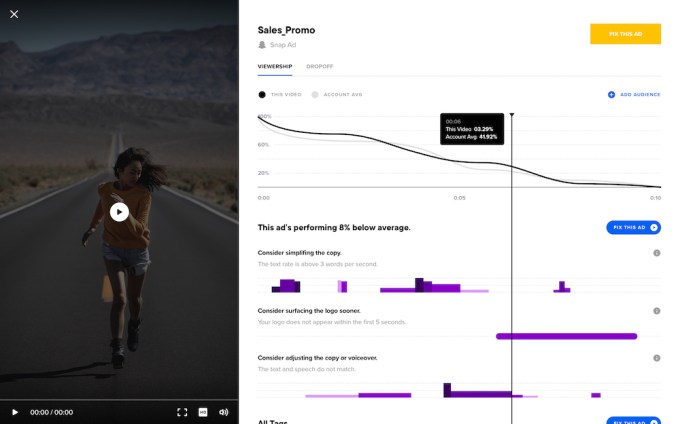
The platform analyzes how the different creative elements are affecting the way audiences are responding to an ad and uses this data to make campaigns more effective. The result, Collmer said, is that “the decay curve actually inverts and the ad actually improves over time through this iterative process of creating and learning, creating and learning.”

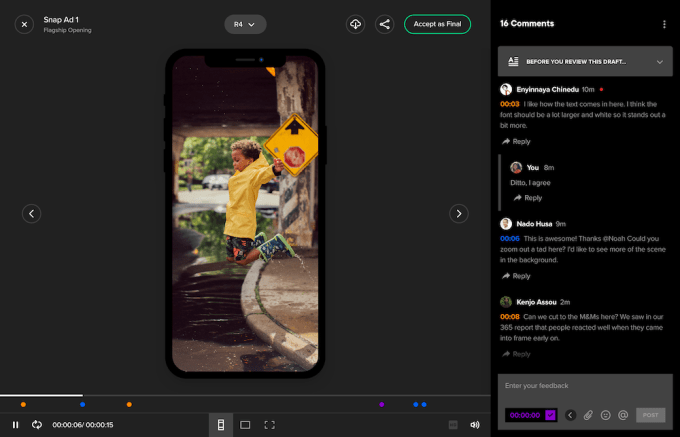
VidMob screenshot

Brands using VidMob include Bayer, Intercontinental Hotel Group, Ikea and Neutrogena, as well as startups like Acorns. In a statement, Joshua Palau, the vice president of media platforms and strategy for Bayer U.S., said the platform has “allowed us to meaningfully improve the ROI on our social video campaigns.”

VidMob has now raised more than $45 million in total funding. The round was led by Austin-based BuildGroup, with participation from Acadia Woods, Herington, Interlock Partners, Macanta Investments, the limited partners at Manifest and “brandtech” firm You & Mr Jones.

“VidMob solves a really important pain point for brands — how to deliver the volume of content that brands now need for all the different platforms, at the speed and price they need it at,” said You & Mr Jones founder David Jones in a statement. “In the near future all content will be intelligent and driven by data and VidMob has a product that delivers that now.”

And, BuildGroup co-founder and CEO Lanham Napier offered a statement praising VidMob for “not only offering up meaningful insights, but also providing the tools and talent to quickly and cost-effectively activate on that intelligence.”

“But it’s their vision for the future that gets us most excited,” Napier added. “As the world moves towards more complex forms of communication, the idea of an API for creativity is so powerful that you can see it becoming another foundational service layer of the web.”

VidMob screenshot

Collmer expanded on this idea in our interview, suggesting that VidMob could eventually do much more than facilitate video ads on social media platforms.

“As the web is moving from text and images to more complex media types — today that’s video, tomorrow it’s augmented reality, who knows what it will be after that — I’m fairly certain needle is always going to point towards greater complexity,” he said. “That creative friciton becomes a tax on the entire internet. We’re trying to build what I think of as an API for creativity … Today, that friction point is frequently with our platform partners, with the Facebooks and Snaps, but we see it expanding to other areas where you see imagery as the central point of communication.”


https://tcrn.ch/2ZoR62i VidMob raises raises $25M for its video advertising tools https://tcrn.ch/2XHS5Kj

Facebook backs social commerce startup Meesho in first India investment

As Facebook explores ways to generate revenue from WhatsApp, the company is now turning to a startup that already has a lead. The social juggernaut said today it has invested in social-commerce startup Meesho in what is the first time the firm takes equity in an Indian startup.

Neither Facebook nor Meesho, which prior to this announcement had raised about $65 million, shared financial terms of the deal. A source familiar with the matter told TechCrunch the size of the capital was “very significant.”

Meesho, a Y Combinator alumnus, is an online social commerce that connects sellers with customers on social media platforms such as WhatsApp. The four-year-old startup claims to have a network of more than 5 million resellers who largely deal with apparels and electronics items.

These resellers are mostly homemakers, most of whom have purchased a smartphone for the first time in recent years. Meesho has most of its customers in smaller cities and towns, popularly dubbed as India 2 where the next phase of internet users are joining from. These are two things that attracted Facebook to Meesho, Ajit Mohan, VP and Managing Director of Facebook India, told TechCrunch in an interview.

“A platform that is aimed at India 2 and has such a large user base of women — when most people online in India are predominantly men — is a remarkable achievement,” he said. According to several estimates, males account for more than 80% of India’s internet user base.

Meesho claims that it is helping thousands of resellers earn more than Rs 25,000 ($360) each month. In an interview with TechCrunch last year, Meesho co-founder and CEO Vidit Aatrey said the startup, which operates in India currently, planned to enter international markets.

Even as WhatsApp is a crucial play for Meesho, the startup will continue to work with other social media platforms, Facebook’s Mohan said. Last year, Facebook launched its Marketplace, which operates in the same space as Meesho. Mohan said the company does not see Meesho as a vehicle to expand its own family of services.

On the contrary, Facebook is now open to exploring investment in other startups that are building unique solutions for the Indian market. “Wherever we believe there is opportunity beyond the work we do today, we are open to exploring further investment deals,” he said. There is no particular category that Facebook is necessarily focused on, he added.

Even as Facebook has not made any push to make WhatsApp expand beyond a communications service, users in India, the service’s largest market, are increasingly finding ways to incorporate Facebook’s app into their businesses.


from Social – TechCrunch https://ift.tt/eA8V8J Facebook backs social commerce startup Meesho in first India investment Manish Singh https://tcrn.ch/2F8lmGL
via IFTTT

Facebook backs social commerce startup Meesho in first India investment

As Facebook explores ways to generate revenue from WhatsApp, the company is now turning to a startup that already has a lead. The social juggernaut said today it has invested in social-commerce startup Meesho in what is the first time the firm takes equity in an Indian startup.

Neither Facebook nor Meesho, which prior to this announcement had raised about $65 million, shared financial terms of the deal. A source familiar with the matter told TechCrunch the size of the capital was “very significant.”

Meesho, a Y Combinator alumnus, is an online social commerce that connects sellers with customers on social media platforms such as WhatsApp. The four-year-old startup claims to have a network of more than 5 million resellers who largely deal with apparels and electronics items.

These resellers are mostly homemakers, most of whom have purchased a smartphone for the first time in recent years. Meesho has most of its customers in smaller cities and towns, popularly dubbed as India 2 where the next phase of internet users are joining from. These are two things that attracted Facebook to Meesho, Ajit Mohan, VP and Managing Director of Facebook India, told TechCrunch in an interview.

“A platform that is aimed at India 2 and has such a large user base of women — when most people online in India are predominantly men — is a remarkable achievement,” he said. According to several estimates, males account for more than 80% of India’s internet user base.

Meesho claims that it is helping thousands of resellers earn more than Rs 25,000 ($360) each month. In an interview with TechCrunch last year, Meesho co-founder and CEO Vidit Aatrey said the startup, which operates in India currently, planned to enter international markets.

Even as WhatsApp is a crucial play for Meesho, the startup will continue to work with other social media platforms, Facebook’s Mohan said. Last year, Facebook launched its Marketplace, which operates in the same space as Meesho. Mohan said the company does not see Meesho as a vehicle to expand its own family of services.

On the contrary, Facebook is now open to exploring investment in other startups that are building unique solutions for the Indian market. “Wherever we believe there is opportunity beyond the work we do today, we are open to exploring further investment deals,” he said. There is no particular category that Facebook is necessarily focused on, he added.

Even as Facebook has not made any push to make WhatsApp expand beyond a communications service, users in India, the service’s largest market, are increasingly finding ways to incorporate Facebook’s app into their businesses.


https://ift.tt/eA8V8J Facebook backs social commerce startup Meesho in first India investment https://tcrn.ch/2F8lmGL

Lifen raises $22.7 million for its healthcare messaging platform

French startup Lifen is raising a $22.7 million (€20 million) funding round. Partech is leading the round with Idinvest Partners and Majycc eSanté Invest also participating. Existing investors Serena and Daphni are also investing again.

Most of the healthcare industry in France still relies on good old physical letters with stamps and everything. Lifen wants to help practitioners and hospitals switch to digital letters instead to save time and money.

While it’s easy to send a digital receipt instead of printing one, it gets a bit more complicated with health information. Companies have to comply with regulation and make sure that everything remains confidential. Lifen says that everything is encrypted in transit and at rest, and the company can’t access your data.

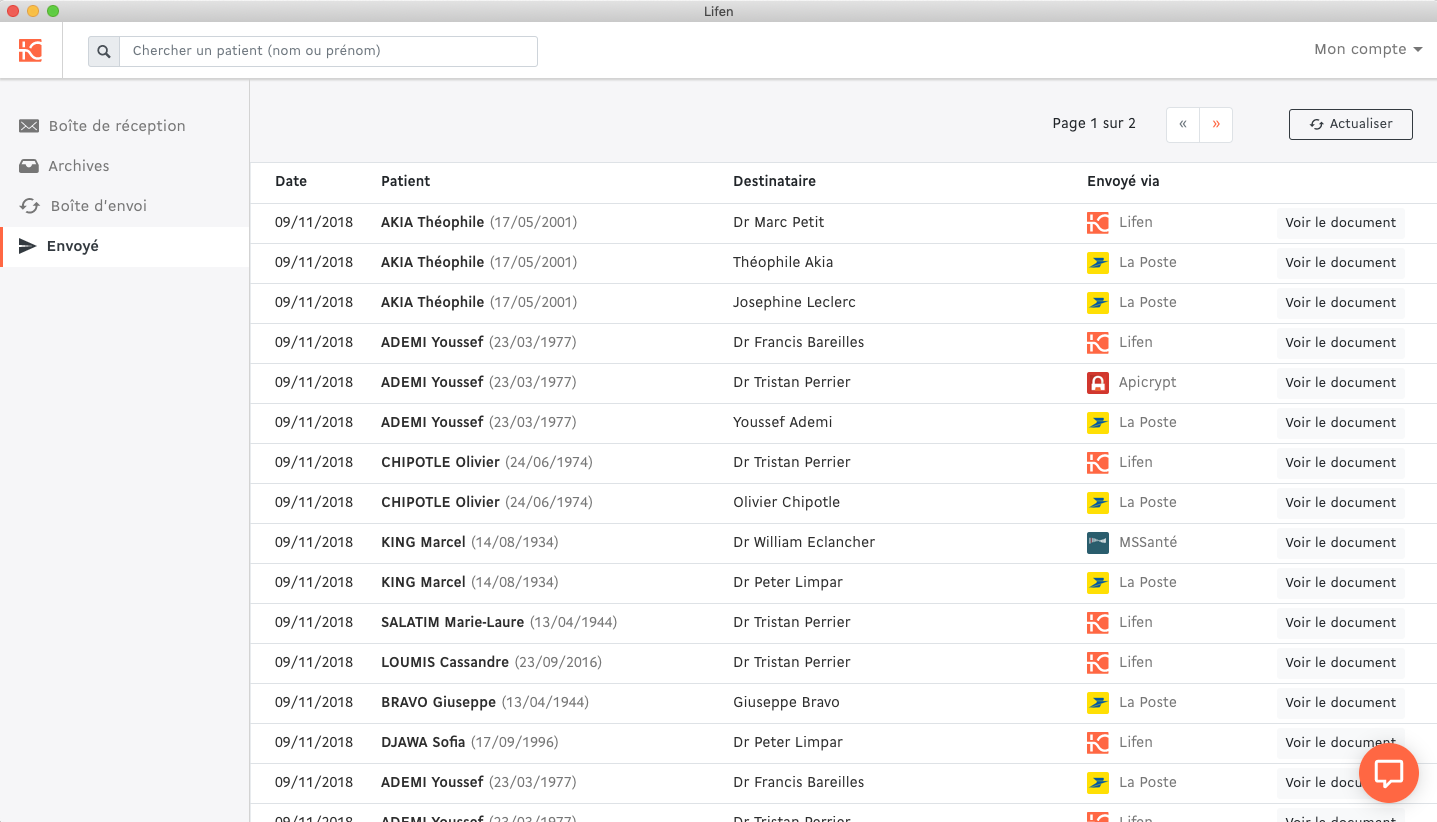
Lifen acts as an interface with multiple electronic messaging protocols — MS Santé, Apicrypt, Zepra and Medimail. You can send a letter using those protocols in a few clicks. And because paper isn’t going to die overnight, you can also send letters through the French postal service using Lifen as well.

The startup manages a directory of healthcare professionals and also handles read receipts. When it comes to receiving messages, Lifen acts as a unified inbox that lets you receive messages, documents and reports from various channels — it essentially looks like an email interface with an inbox and an outbox. You can then export each document and sort them in a patient folder.

When it comes to user experience, the startup tries to automate as many things as possible. After setting up Lifen, you can select it as a printer in the printing popup — it’s compatible with any app that supports printing.

The service then tries to detect names and addresses to figure out who is supposed to receive the letter. Lifen searches its directory to find out how to contact this particular healthcare professional.

Individual healthcare professionals can access Lifen for €25 per month. And I’m sure hospitals pay a lot more to access the service.


https://tcrn.ch/2ZkHVQj Lifen raises $22.7 million for its healthcare messaging platform https://tcrn.ch/31vYpa0

blogger better Headline Animator