l
l
blogger better. Powered by Blogger.

Search

Labels

blogger better

Followers

Blog Archive

Total Pageviews

Labels

Download

Blogroll

Featured 1

Curabitur et lectus vitae purus tincidunt laoreet sit amet ac ipsum. Proin tincidunt mattis nisi a scelerisque. Aliquam placerat dapibus eros non ullamcorper. Integer interdum ullamcorper venenatis. Pellentesque habitant morbi tristique senectus et netus et malesuada fames ac turpis egestas.

Featured 2

Curabitur et lectus vitae purus tincidunt laoreet sit amet ac ipsum. Proin tincidunt mattis nisi a scelerisque. Aliquam placerat dapibus eros non ullamcorper. Integer interdum ullamcorper venenatis. Pellentesque habitant morbi tristique senectus et netus et malesuada fames ac turpis egestas.

Featured 3

Curabitur et lectus vitae purus tincidunt laoreet sit amet ac ipsum. Proin tincidunt mattis nisi a scelerisque. Aliquam placerat dapibus eros non ullamcorper. Integer interdum ullamcorper venenatis. Pellentesque habitant morbi tristique senectus et netus et malesuada fames ac turpis egestas.

Featured 4

Curabitur et lectus vitae purus tincidunt laoreet sit amet ac ipsum. Proin tincidunt mattis nisi a scelerisque. Aliquam placerat dapibus eros non ullamcorper. Integer interdum ullamcorper venenatis. Pellentesque habitant morbi tristique senectus et netus et malesuada fames ac turpis egestas.

Featured 5

Curabitur et lectus vitae purus tincidunt laoreet sit amet ac ipsum. Proin tincidunt mattis nisi a scelerisque. Aliquam placerat dapibus eros non ullamcorper. Integer interdum ullamcorper venenatis. Pellentesque habitant morbi tristique senectus et netus et malesuada fames ac turpis egestas.

Thursday, April 23, 2020

The changing face of employment law during a global pandemic

Prompted by Jeff Bezos’s plans to test all Amazon employees for the virus that causes COVID-19, we wondered whether employers can mandate employee testing, regardless of symptoms. The issue pits public safety against personal privacy, but limited testing availability has rendered the question somewhat moot.

But as the World Health Organization and U.S. Centers for Disease Control and Prevention have noted, asymptomatic COVID-19 carriers can spread the virus without realizing they’re infected. To learn more about workers’ rights in this arena, we spoke to Tricia Bozyk Sherno, counsel at Debevoise & Plimpton, who focuses on employment and general commercial litigation.

The answer, for now, is not entirely straightforward, though updates from the U.S. Equal Employment Opportunity Commission could make the situation clearer going forward as more tests are made available and state governments begin pushing to reopen businesses.

Sherno offered a fair amount of insight into the EEOC’s updated guidance and made some predictions about how things may look for both employers and workers going forward.

TechCrunch: Prior to the COVID-19 pandemic, what sorts of laws governed an employer’s ability to test employees for infectious diseases?

Tricia Bozyk Sherno: Covered employers (employers with 15 or more employees) must comply with the requirements of the Americans with Disabilities Act (ADA), which limits an employer’s ability to make disability-related inquiries or require medical examinations. (Note that certain states may also have similar statutes in place.) Generally, disability-related inquiries and medical examinations are prohibited by the ADA except in limited circumstances. A “medical examination” is a procedure or test that seeks information about an individual’s physical or mental impairments or health — so infectious disease testing would fall into this category.


https://ift.tt/eA8V8J The changing face of employment law during a global pandemic https://ift.tt/3eKzIxp

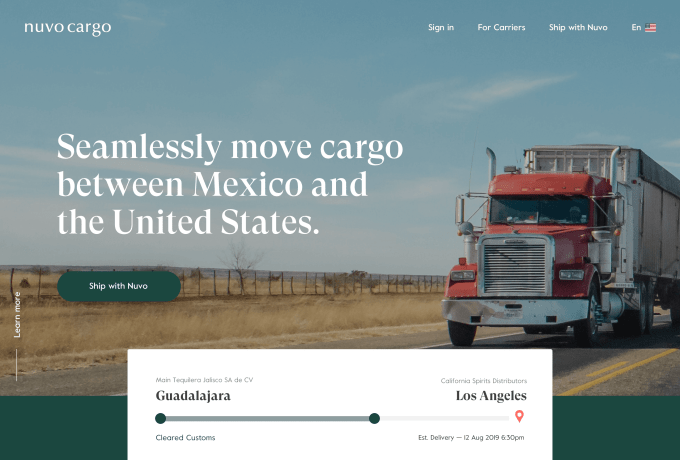
Nuvocargo, a trucking managed marketplace, raises $5.3M in seed funding

U.S. companies rely on Mexican manufacturers for goods ranging from automotive and aerospace parts, to avocados and other produce, to electronics and furniture. But the trucking system that transports these things across the border relies on an inefficient mix of paper, phone calls, faxes and too many stakeholders who drive up costs.

These snarls congesting border traffic are precisely why Nuvocargo founder and CEO Deepak Chhugani has raised a $5.3 million seed round for a managed marketplace for door to door freight transportation, serving trade routes between the United States and Mexico. 

Investment came from both sides of the border. The round was co-led by Silicon Valley-based NFX and Mexico City-based ALLVP. And Nuvocargo marks the first deal for Antonia Rojas-Eing, the youngest female VC in Latin America, under ALLVP which she joined earlier this year as a partner. 

The seed round also saw participation from One Way Ventures, Maya Capital, Magma Partners, the co-founders of Rappi, the former CMO of Cabify, and other angels. The total includes earlier backing from Y Combinator, when Nuvocargo existed under a different name.

Chhugani joined Y Combinator’s W18 class with a startup called The Lobby, which sought to connect job seekers to personalized coaches. He raised $1.2 million for the startup, but decided to pivot into logistics and work on Nuvocargo. The change in direction was fairly natural for the Ecuador-raised entrepreneur, who cited his family’s previous work in the Latin American logistics industry.

When the time came to pivot, Chhugani offered investors their money back. Some chose to leave, but Y Combinator elected to stay under the new promise of digitizing trucking between Mexico and the U.S. Nuvocargo says that the $5.3 million seed is its first round, and what they’ve raised to date. Investors who stayed in from The Lobby are part of this round for Nuvocargo.

Nuvocargo, which calls itself a modern managed marketplace for door to door freight transportation, has set up shop with fully bilingual teams in both New York and Mexico.

Mexico is already one of the United States’ largest trade partners, and Chhugani predicts that relationship will only strengthen in the next decade. The U.S.-China trade war shows no signs of easing and tariffs have increased buying friction. With the 2018 United States-Mexico-Canada Agreement that aims to renegotiate NAFTA and uncertainty around coronavirus, Chhugani believes Mexico will become an even more attractive trade opportunity to capitalize on with Nuvocargo. 

To the company’s knowledge, U.S.-Mexico trucking is within the top five biggest trade lanes in the world, with 6.5 million trucking shipments going between Mexico and the U.S. every year. Notably, 80% of all the goods transported between the US and Mexico move by truck.

VCs have jumped on the freight and logistics opportunity as startups like NEXT Trucking, Convoy and Flexport secure hundreds of millions dollars from investors like Sequoia and SoftBank. 

Now, smaller startups like Nuvocargo that specialize on specific routes and countries, are focusing in regionally to bring these systems that rely on paper, phone calls, faxes and spreadsheets to do business, online. 

Nuvocargo’s free software digitizes the different steps with timestamps, geo tracking and document housing in a centralized cloud based dashboard providing a snapshot understanding of every step of a cross border shipment. Customers can request new shipments using Nuvocargo using a WhatsApp integration, email or SMS. 

The 15-person startup wants to house the entire shipping process within its tracking software, simplifying the customer experience. The customer, Chhugani says, is any company that needs to move goods between Mexico and the U.S., and he notes that Nuvocargo is working with dozens of customers ranging from beverage companies to multi billion dollar corporations – though he declined to specify who. 

Chhugani says that in a typical U.S.-Mexico cross border trucking transaction, up to 12 stakeholders are involved in a single shipment, and that is too many. Multiple people on the U.S. side are procuring the trucks and managing customs, FDA inspection and warehouse storage. On the Mexico side there are even more entities handling scheduling and pick up for the trucking companies and drivers. 

With the new seed funding, Nuvocargo will prioritize early hires in product, operations, finance and engineering in its New York and Mexico offices on its fully bilingual team. 

Chhugani says he’s especially appreciative of the truck drivers that put themselves in harms way to ensure critical items are getting to the right destination ensuring shelves are stocked. He says that in this uncertain time, Nuvocargo is working to give drivers predictable business near their homes, and pay them faster.  “All of us as a society should be more appreciative of truck drivers and the trucking industry, because this is something that really fuels the economy in both the United States and in Mexico.” 

In the current age of the coronavirus pandemic, Nuvocargo says it is focusing significant efforts on working with companies that are transporting essential goods to aid in the supply crisis.


https://ift.tt/2yA5zQK Nuvocargo, a trucking managed marketplace, raises $5.3M in seed funding https://ift.tt/2VuQWau

Digits launches a free expense monitoring dashboard for small businesses, closes on $22M Series B

Digits, a fintech startup hailing from the same team that built and sold Crashlytics to Twitter, is officially launching today after two years of development. It’s also announcing a $22 million Series B round of funding led by GV, as it makes its public debut.

While the company had been fairly quiet about product details while in stealth mode, it’s today unveiling its first product: a visual, machine-learning powered expense monitoring dashboard aimed at startups and small businesses.

The dashboard, called Digits for Expenses, helps business owners track how their company is spending money, by showing things like spend by category, by identifying vendors and recurring expenses, and by offering real-time alerts, among other features.
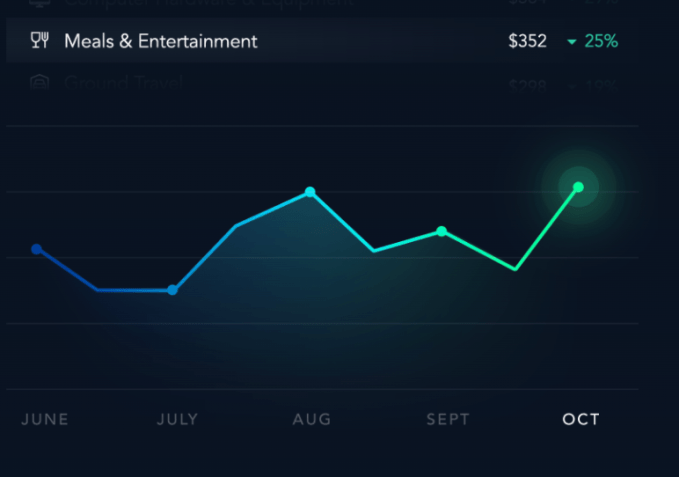
Instead of requiring business owners to make a switch from their existing financial solutions, Digits connects with the accounting software, banks, payroll providers, financial packages, sources of revenue and credit cards the business already uses — like Xero, QuickBooks, NetSuite, Citi, Bank of America, or Chase, for example.

At launch, the list includes over 9,000 banks, with support for Xero and NetSuite coming soon.

After setup, Digits will then automatically analyze the company’s spend and visualize it, in real-time.

While visualizations of data may be reminiscent of personal finance startup Mint, Digits’ web-based solution is more technical in nature and offers an expanded analysis of the data on hand. Plus, as a business solution, it has to offer features like security, permissioning, and collaborative workflows, which results in a more sophisticated product.
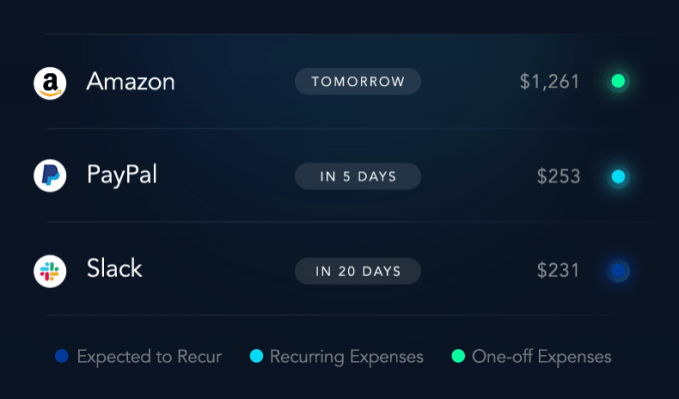
Digits also uses machine learning technology to predictively categorize transactions as they happen and the software can alert users to anomalies — like suspicious activity or unexpectedly large transactions — in real-time. Business owners can use the dashboard to find out things like how quickly expenses are growing, what the cash flow looks like, where costs can be trimmed, what services are being paid for on a recurring basis, and more, and can search for transactions.

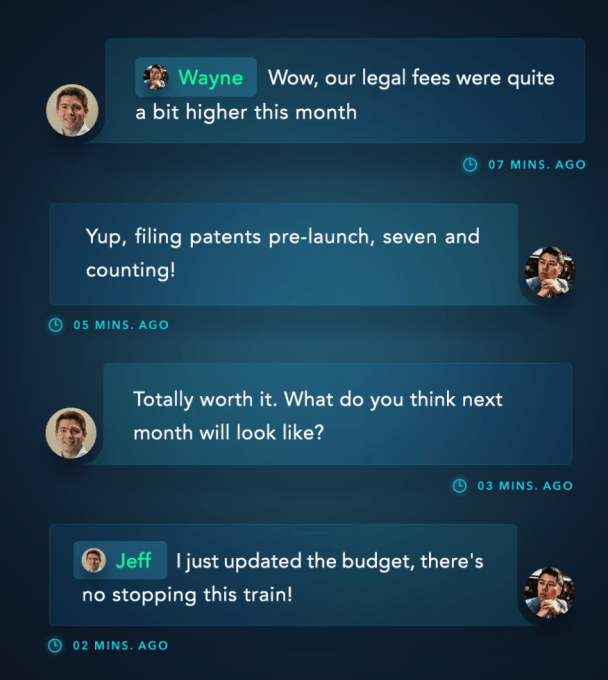
The software also supports the ability to comment on transactions, loop in a colleague to ask for clarification about a charge, and upload missing receipts. Everything uses HTTPS along with TLS and certificates so data is encrypted between Digit’s services and at rest.

The original idea for Digits came from a problem that co-founders Wayne Chang and Jeff Seibert faced themselves when building Crashlytics. As they explained previously, their focus as entrepreneurs was on solving technical challenges, not on the operational side of running a business.

Many entrepreneurs also find themselves in this same space. They’re trying to solve a problem or crack a tough engineering puzzle, but instead have to redirect their time and resources to spreadsheets, financial reports, transaction records, and other paperwork required to actually run the business.
“Startups and small businesses today simply don’t have the resources to manage their finances internally. Most of them still settle for spreadsheets, and the lucky ones work on an hourly basis with external accountants,” explains Seibert. “As a result, their accounting itself is seen as a cost-center, and they pay for little beyond the basic monthly financial statements  — Profit & Loss, Balance Sheet, etc. By the time those statements are delivered — weeks after the end of each month — they’re already out of date,” he said

That means things businesses need — like updates, one-off reports, and new budgets — can require additional costs and longer wait times, so they get skipped.

The COVID-19 pandemic has put even more pressure on small businesses, many of which are now struggling to even survive. As a result, Digits has decided to launch the product for free to those who sign up — not a free trial, but actually free. It plans to later charge for additional products and paid upgrades to support its own business.

Digits is able to make this offer because of its now-expanded venture funding.

Already, the company had raised $10.5 million in Series A funding in a round led by Benchmark. That round had included a sizable 72 angel investors as well, including founders and CEOs from companies like Box, GitHub, Tinder, Twitch, StitchFix, SoFi and several others — entrepreneurs with an understanding of the problems Digits is aiming to solve.

Today, Digits is announcing an additional $22 million led by Jessica Verrilli at GV,  who also now joins Digits’ board alongside Benchmark’s Peter Fenton. (Benchmark also participated in the new round).

“Jeff and Wayne are masterful at creating intuitive, high-utility products from complicated data,” said Verrilli about the GV investment. “I saw this up close with Crashlytics and Twitter, and I’m thrilled to partner with them on Digits as they reimagine financial software for startups,” she added.

The startup, now a team of 18 and hiring, was already offering its software solution to a group of customers ahead of today’s public launch, who effectively operated as beta testers allowing Digits to refine its product. Digits isn’t able to share its customer names, for the most part. However, it noted that Coda was one of early adopters and provided valuable feedback.

It also has over 10,000 companies who joined its waitlist over the past 2 years who are now being let in.

At the time of its Series A, Digits saw over $1.5 billion in transaction value flowing across its production systems. That number has since grown to $8 billion.

The software is free starting today for U.S.-based small businesses. The company plans to add support for international markets later this year.


https://ift.tt/3eNbQcf Digits launches a free expense monitoring dashboard for small businesses, closes on $22M Series B https://ift.tt/2Y1vJqe

Throw us your best 60-second pitch on May 13 at Pitchers and Pitches

Founders have always faced big challenges, but they pale in the face of the coronavirus pandemic. Moving your business forward will require new thinking, new tools and new opportunities along with tried-and-true essentials. We’ve got you covered on all fronts.

Case in point — catching investor attention in this climate will require a pitch par excellence. Pour yourself a cold one (or a tall glass of water because that’s great, too!) and join us on May 13 at 4pm ET / 1pm PT for Pitchers and Pitches, an interactive elevator pitch feedback session with TechCrunch editors. Get feedback that can help you take your pitch to a whole new level.

Our first Pitchers and Pitches session is free and open to the public — register now. You can let us know during registration if you want to participate and we’ll randomly select five startups to give us their best 60-second pitch. Even if you’re not selected to pitch, it’ll be a learning experience for all who attend and you can also give feedback via live polling. You’ll gain valuable insight into the art of telling your startup’s story in under a minute.

While we’ll continue with a series of content sessions, they will be exclusive to Startup Alley exhibitors — both those who exhibit onsite at Disrupt San Francisco 2020 (September 14-16) and founders who purchase a Digital Startup Alley Package.

Wait — you haven’t heard about the Digital Startup Alley? We tapped our resources and industry connections to replicate the Startup Alley experience as a truly world-class virtual event. It’s designed to help you keep momentum despite lockdowns, travel restrictions or budgetary concerns.

We don’t have a crystal ball to see how long this pandemic will remain in play. However, if it turns out you can attend Disrupt SF in person, you have the option to upgrade your exhibit package and still access the benefits of Digital Startup Alley. Value, meet add.

Startups in the age of COVID-19 will need every tool in the shed — and a few new ones — to adapt and keep moving forward. Start with exceptional coaching and sharpen your pitch to a keen edge.

Register now for our free Pitchers and Pitches session, which takes place on May 13 at 4:00pm ET / 1:00pm PT.

TechCrunch is mindful of the COVID-19 issue and its impact on live events. You can follow our updates here.


https://ift.tt/eA8V8J Throw us your best 60-second pitch on May 13 at Pitchers and Pitches https://ift.tt/2KpTnVm

Facebook pulls ‘pseudoscience’ from its list of targeted ad categories

Even as Mark Zuckerberg touted the “hundreds of thousands of pieces of misinformation related to COVID-19” that the site had pulled in recent months, Facebook continued to offer targeted ads classified as “pseudoscience.” It was an odd choice from a social network so publicly declaring its own campaigns to remove junk science amid a global pandemic.

Using Ad Manager, advertisers were able to serve ads to some 78 million people “who have expressed an interest in pseudoscience.” Following an investigation by The Markup that found the site buying ads to target that category, Facebook says it’s done with the pseudoscience tag.

In a statement to TechCrunch, the company reconfirmed the move. “This interest category of advertising should have been removed in a previous review and we’ve removed it,” Director of Product Management Rob Leathern said. There was never a great time to run junk science ads, of course, but the issue has come to a head in recent weeks and months, as COVID-19 has become a massive hotbed for conspiracy and dangerous cures.

As Zuckerberg noted in his piece last week, popular theories flagged by the company include the notions that “drinking bleach cures the virus or that physical distancing is ineffective at preventing the disease from spreading.” It’s unclear (beyond the obvious answer of ad revenue) why Facebook continued to offer the category until it was essentially called out on the matter.

Other ad networks and social media sites have been taking pains to slow the spread of misinformation. Twitter recently added 5G-related conspiracies to its list of COVID-19 related guidance, while Google just announced that it would be extending its ID verification for its ad systems.


from Social – TechCrunch https://ift.tt/39TsSCL Facebook pulls ‘pseudoscience’ from its list of targeted ad categories Brian Heater https://ift.tt/2yFTLfD
via IFTTT

Pandemic reset leads investors to focus on resilience, adaptability

For the vast majority of startup founders who were planning their capital raise in Q1 2020, the COVID-19 blow was so dramatic and sweeping, we cannot see all its effects at once.

One big question on the minds of most founders: How should we plan our next raise in terms of timing, valuation and amounts?

Sarah Guo, partner at Greylock Partners, says the fundraising environment has slowed down significantly, but founders who have built ties with VCs via informal coffee updates and check-ins are at a clear advantage. “Early-stage bets require relationship-building,” says Guo, who has been investing in seed through Series B rounds.

Ram Shanmugam, founder and CEO of AutonomIQ*, a seed-stage code and process automation company, has been strengthening his relationships. For a company that has low operating expenses and a community of 600,000 developers, he says he is not fazed. “Our automation code brings efficiencies and in fact, we have nine inbound leads in Q2. Having said that, we are being realistic at the pace at which we can close these contracts.”

Similarly, Fred Blumer, who exited Hughes Telematics at an enviable $750 million, says he is taking a more pragmatic approach to the Series A raise for his new company, Mile Auto. “We expect to have a 5x growth in our business in 2020, even after adjusting for COVID,” he said. “Our pay-per-mile insurance is a great fit for people who are driving less.” Because so many drivers are sheltering in place, legacy insurance companies are refunding hundreds of millions of dollars to customers, which offers an advantage (and an opportunity) to a startup like his.

“But we need to be patient and mindful. While our families, health and safety are top priority, we are staying focused on our customers,” Blumer said. “Insurtech is a resilient arena, and in my past company we raised $100 million, so working with investors has never been a challenge. Keeping up with growth and perfecting the customer experience are what keep us up at night.” He said he plans to get out in the market after investor confidence returns.


https://ift.tt/eA8V8J Pandemic reset leads investors to focus on resilience, adaptability https://ift.tt/3eLY61C

HealthJoy launches its revamped employee benefits assistance platform

HealthJoy, a platform that helps employees get the most use out of their benefits, launched its revamped user interface and technology stack today. The startup told TechCrunch that usage has doubled during the COVID-19 pandemic. While the new platform, called HealthJoy 2.0, has been in the works for two years, it is now helping the company handle increased demand for services, including telemedicine.

Launched in 2014, HealthJoy now has more than 500 employers on its platform. It has raised a total of $53 million so far, including a $30 million Series C announced in February.

The new interface includes features that tell users expected wait times for services like its inbox and healthcare concierge, and a new benefits wallet. Last month, HealthJoy also added features to address the pandemic, including help to get testing, online consultations and a guide to nearby in-network healthcare facilities with low wait times.

Co-founder and CEO Justin Holland told TechCrunch that the platform “initially saw a huge spike in telemedicine visits as awareness of the virus grew and people started looking for ways to avoid physically visiting a doctor’s office. Usage for telemedicine has stabilized in the last couple of weeks and is now only a little bit above our baseline.”

He added that HealthJoy is now encouraging more employees to use the HealthJoy Employee Assistance Program (EAP), which helps them find services like mental health counseling, financial planning, and child and elder care assistance.

“We’ve seen a corresponding spike in EAP utilization as people are seeking help,” he said.

HealthJoy 2.0’s improvements, which moves more processing away from local clients to the cloud and includes an updated CRM and dashboard for employers, will also make it easier for the company to implement new features in the future.

Other health benefit engagement platforms include Collective Health, League and Lumity. Holland said that HealthJoy 2.0 will help the startup better compete by “allowing for greater integration with partners, a larger collection of APIs and easier integration with third-party data.”


https://ift.tt/eA8V8J HealthJoy launches its revamped employee benefits assistance platform https://ift.tt/3eGKMeS

Opera Event closes $5M Series A for its esports-focused influencer platform

Today Opera Event, an influencer software service, announced that it closed a $5 million Series A. The Oakland-based startup raised the capital from new lead investor Antera, with prior investors Atlas Ventures, Everblue, and Konvoy Ventures coming along.

According to Crunchbase data, Opera Event had raised at least $1.2 million before this new round.

Opera Event is starting with a focus on influencers in the esports market, a business that founder Brandon Byrne knows well. Byrne previously worked for former esports organization Curse and served as the CFO of Team Liquid; Team Liquid is an active esports organization with players in a number of games, including League of Legends and Starcraft 2.

The startup wants to help esports teams monetize, a likely welcome effort given the industry’s historical issues with revenue generation, and reward micro-influencer fans. How it intends to do that is its core software service, one that Byrne expects will in time work for other verticals and influencer sets. Let’s explore.

Opera Event in practice

It’s perhaps best to explain what Opera Event does with a hypothetical example, built off notes from an interview with Opera Event’s Byrne. Let’s say that Alex Wilhelm Super Awesome Esports (AWSAE) is a small Starcraft 2 team — it’s just big enough to attract some sponsorship, but not as much as the team would like. However, AWSAE’s Starcraft 2 players have dedicated fans, many of whom also stream on Twitch and maintain a presence on Twitter.

By using Opera Event, AWSAE’s fans that stream can join the team’s commercial world, adding its sponsors to their Twitch pages, tweeting out the same campaigns and more. Opera Event sits between the team, its community and capital sources (brands), helping make everything click. It’s a situation that works well for Alex Wilhelm Super Awesome Esports. With its community streaming under its commercial banner, its demonstrable in-market impact (tweet impressions, minutes engaged on Twitch, etc) grows sharply. Its associate small streamers and fans get to take part in in the team’s world, and can be rewarded with things like social follows and other bits of love — all while brands can better deploy capital. (Opera Event calls this “the ability to engage and manage content creators efficiently and at scale.”)

Now AWSAE can get bigger sponsors as it can offer a bigger audience, it can share revenues or provide other succor to its fanbase, and brands can get their whatnot in front of more viewers at once.

One team that Byrne detailed had about 39 members doing around 50 million engaged minutes each month on Twitch. Using his startups software to create two affiliate programs, the same team grew to over 3,000 influencers that generated north of 450 million minutes per month of viewership. The latter set of figures are far more commercially viable.

The aggregation of small streamers is more than adding up views, it turns out. Byrne told TechCrunch that smaller esports streamers have better click through rates than the entertainment categories giants, which could help team fans and other community members that sign up as part of their Opera Event network have outsized impact on sponsor results.

Opera Event takes a material cut of deals it lands through its sales team (25% to 30% per the company) and a small cut for deals that flow through its platform but originated elsewhere (2% to 3%). The model generated around $1.8 million for the startup in 2019, and Opera Event hopes to reach $9 million in revenue this year.

Particularly important in today’s changed market, Byrne told TechCrunch that Opera Event is a quarter away from breaking even. That should keep the company safe during a downturn.

In time, Opera Event wants to add more niches to its stable. Its founder mentioned yoga as an example. Where there are influencers big and small, the startup wants to show up and help facilitate influencer commerce and collaboration.


https://ift.tt/eA8V8J Opera Event closes $5M Series A for its esports-focused influencer platform https://ift.tt/3cLoYwZ

Nextdoor and Walmart partner on a new neighborly assistance program

{rss:content:encoded} Nextdoor and Walmart partner on a new neighborly assistance program https://ift.tt/3bwJfWV https://ift.tt/2zpowWM April 23, 2020 at 06:22PM

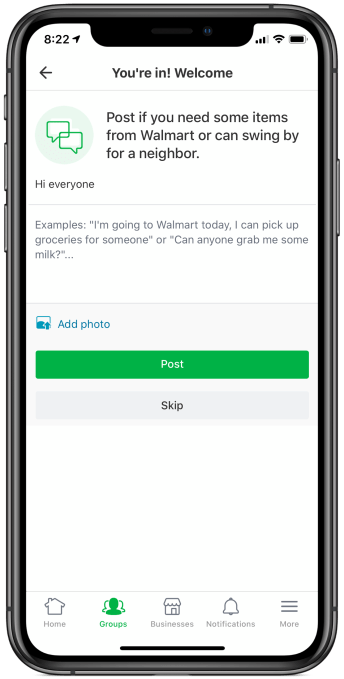
Neighborhood social network Nextdoor and Walmart are teaming up today to launch a new “Neighbors Helping Neighbors” program that will make it easier for vulnerable community members to get assistance from neighbors who are already planning a trip to Walmart. The new in-app feature will allow Nextdoor users to post to groups associated with their local Walmart store to request shopping assistance.

To find the new option, Nextdoor users can either use the Nextdoor website or mobile app.

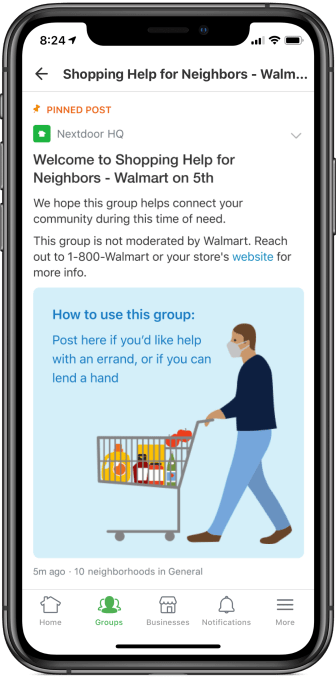
From there, users will click on the “Groups” tab where they’ll see local Walmart stores pinned to the top of the page. Members can then post a message to the group feed where they can ask for help or offer to help others.

Members who connect in the feed can then work out the details on the message board or through direct message, where they can share more private details like their address and what they need from the store.

The feature is designed to help elderly, high-risk or other vulnerable members find someone who will pick up groceries, medications, or other essentials when they’re planning a trip to the store.

This could also offer a low-cost alternative to using online grocery delivery services, which require tipping. In the case of a neighbor helping a neighbor, the assistance is offered on a volunteer basis, not as someone’s job. That could be potentially life-saving for low-income community members who can’t risk shopping in a store during the coronavirus pandemic, but who also struggle to afford alternatives like online grocery.

Walmart isn’t moderating or managing these Nextdoor groups, to be clear, but worked with Nextdoor to make the feature available.

For the retailer, the addition isn’t just beneficial in terms of directing customers to Walmart to shop, it’s also seen as a way to reduce the number of people who come to the store in-person.

“I’ve seen first-hand the countless ways our Walmart team is working together during this challenging time, leading with humanity, compassion and understanding to serve our customers,” said Janey Whiteside, Walmart’s Chief Customer Officer, in a statement about the feature’s launch. “We’re continuing to do that through our new program with Nextdoor. We’re connecting neighbors to each other so that more members of our communities have access to essential items, while limiting contact and the number of people shopping in our stores,” she added.

Nextdoor has launched several new features in response to the coronavirus pandemic in recent weeks.

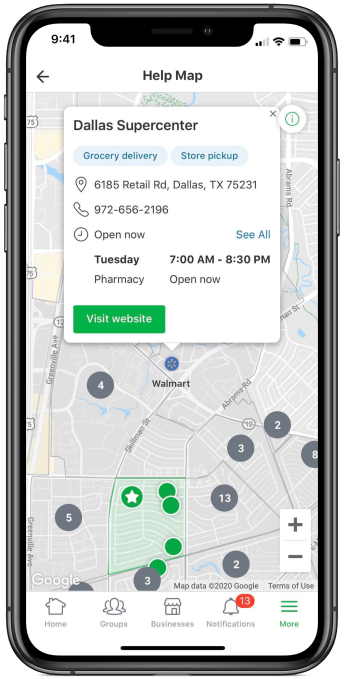
Its new “Help Maps” allowed members to post and offer help in their neighborhood, for example. But this feature had been buried on the “More” menu in the app and was being underutilized as a result. A dedicated place within Nextdoor Groups for these sorts of requests is more visible, making it easier to offer assistance or to ask for help.

Over the past few weeks, Nextdoor says it’s seen a 7x increase in people joining groups to help one another, a not surprising figure given its recent exit from beta.

Nextdoor will also make the Walmart groups easy to find by pinning them to the top of the Groups tab, it says.

Meanwhile, Walmart store locations and hours where “Neighbors Helping Neighbors” is available can be found on Nextdoor’s “Help Map.”

“We’re inspired everyday by the kindness of people around the world who are stepping up and helping out. In recent weeks, we’ve been blown away by the number of members who have raised their hand to run an errand, go to the grocery store, or pick up a prescription for a neighbor,” said Sarah Friar, Nextdoor CEO, about the feature. “We’re grateful for Walmart’s partnership to make this important connection between neighbors around vital services, and we’re proud to come together to ensure everyone has a neighborhood to rely on,” she said.

The new initiative is launching nationwide starting today, but may not be immediately available in the app as the rollout could take time to complete.

Daily Crunch: There’s a major iPhone email security bug

{rss:content:encoded} Daily Crunch: There’s a major iPhone email security bug https://ift.tt/3cG5PfH https://ift.tt/2CoAoqu April 23, 2020 at 06:10PM

Apple plans to fix an iPhone email security bug, Magic Leap cuts 1,000 staffers and Google is requiring all advertisers to identify themselves.

Here’s your Daily Crunch for April 23, 2020.

1. A new iPhone email security bug may let hackers steal private data

According to security firm ZecOps, the bug is in the iPhone’s default Mail app. By sending a specially crafted email to the victim’s device, an attacker can overrun the device’s memory, allowing the attacker to remotely run malicious code to steal data from the device.

The bug dates back to iOS 6, but on the latest version of iOS 13, it doesn’t require any user interaction. Motherboard, which first reported the story, said the bug has been fixed in a beta version of the software, and a fix will be rolled out in an upcoming update.

2. Magic Leap reportedly slashes 1,000 jobs and steps away from consumer plans

Magic Leap announced today that it has laid off a “number of employees” and is backing away from its consumer ambitions to focus more heavily on selling to enterprise customers. Bloomberg reports that half of the company’s employees were laid off, roughly 1,000 in total.

3. Google is extending identity verification requirements to all advertisers

The identity verification feature was first introduced in 2018, requiring political advertisers to provide documents to verify their identity, which is then displayed as part of the ad itself. Moving forward, Google says it will make identity verification a required part of the ad buying process, regardless of topic.

4. JustEat Takeaway $7.6B merger approved, pair pick up $756M in new funding

The UK’s competition watchdog officially gave a nod to the merger between UK’s JustEat and the Netherlands’ Takeaway.com. And the merged company announced that it had raised an additional €700 million ($756 million) in funding.

5. Cowboy VC’s Aileen Lee: Your coronavirus scenario planning should be more conservative

Lee and her fellow Cowboy Ventures partner Ted Wang joined us for our first episode of Extra Crunch Live, a virtual speaker series for Extra Crunch members. They covered a wide range of topics, including PPP loans, advice for business leaders around layoffs, the right time to seek funding and the right firms from which to seek that funding, how to pitch during a downturn and which sectors in particular Cowboy is interested in financing right now. (Extra Crunch membership required.)

6. Boston Dynamics’ Spot finds a new career in telemedicine amid COVID-19 pandemic

For two weeks, Boston Dynamics’ Spot robot has been walking the halls of local hospital Brigham and Women’s. Telemedicine wasn’t generally listed as one of the primary applications for the company’s first commercial product, but Boston Dynamics is only one in a long list of tech companies that’s found itself shifting on the fly as the COVID-19 pandemic has become an all-consuming part of life.

7. Bill Gurley is stepping away from an active role at Benchmark, 21 years after joining the firm

Gurley’s transition out of the firm won’t surprise many. Benchmark — which has always run a fairly small operation — has routinely groomed new investors as veterans of the firm have moved on.

The Daily Crunch is TechCrunch’s roundup of our biggest and most important stories. If you’d like to get this delivered to your inbox every day at around 9am Pacific, you can subscribe here.

Extra Crunch Live: Join Charles Hudson for a look at today’s seed-stage landscape

Earlier this week, we kicked off our Extra Crunch Live series with an interesting chat with Cowboy’s Aileen Lee and Ted Wang. Today, we will be back at 3 p.m. PST/6 p.m. EST/10 p.m. GMT with a new guest: Charles Hudson, the general partner of Precursor Ventures.

Extra Crunch members will find an AddEvent link below to drop the details directly into their calendar and folks who want to participate directly can hit up the Zoom link (also below). We’ll ask as many audience questions as we can, so please make them sharp — no pitches, please.

Charles Hudson founded Precursor Ventures to invest in pre-seed and seed-stage companies. Earlier this year, the firm filed paperwork to put together a $40 million third fund after previously raising two main funds and one $10 million “opportunity” fund.

As we await hard and accurate numbers on how COVID-19 is impacting fundraising, we’ll ask Hudson to walk us through the changes he has seen and will cover some basics: The best way to pitch him, what his to-do list looks like these days and if the pandemic has made Precursor newly bullish or bearish on certain sectors.

Then, we’ll get much nerdier: Will we see the number of party rounds fall further now that it’s harder to gather investors in real life? Do you think we’ll see pre-seed raises ask for more ownership terms? And what is the latest with the wacky world of early-stage valuations?

There’s a lot to talk about. And we haven’t even mentioned YC’s pro rata change yet.

After Hudson, we have a stacked lineup of Extra Crunch live guests, including Mitch and Freada Kapor, Mark Cuban, Roelof Botha and Kirsten Green, with more to be announced soon.

You can find information below with details for joining today’s discussion, as well as an AddEvent link to put the details directly onto your calendar.

Sign up for Extra Crunch to get access to all these episodes where you can view the talks live, participate in the Q&A with industry leaders and watch later on-demand if you can’t make the live timing. Talk soon!

Details


https://ift.tt/eA8V8J Extra Crunch Live: Join Charles Hudson for a look at today’s seed-stage landscape https://ift.tt/3bzKHYr

Otter.ai’s newest feature offers live, interactive transcripts of your Zoom meetings

Real-time voice transcription service Otter.ai is adding new functionality that will aid home school students and work-from-home employees alike. The company today is introducing an integration with Zoom in order to provide “Live Video Meeting Notes” — meaning, the ability to record and and view a live, interactive transcript directly from a video conference.

The feature is also designed to work even if the meeting participant is using a headset or earbuds, the company says.

To access the Live Video Meeting Notes, meeting participants can open the Otter.ai Live Transcript from the LIVE menu at the top of the Zoom window, then log into Otter.ai. However, they won’t need to remember to start or stop the live transcript — that happens automatically. The Otter live transcripts will also be available through the Zoom app on mobile.

When the meeting wraps, users can also refer back to the transcript to highlight, comment, and add photos to their meeting notes.

The feature is available for Otter for Teams and Zoom Pro subscribers or higher. The meeting host will need to have an Otter for Teams subscription, which is $20 per seat per month, with a minimum of 3 seats, based on the annual plan. Interested customers can trial the service for free for 2 months, using the code “OTTER RELIEF.”

The ability to access a transcription of the online meeting comes at a time when all business that can be managed virtually by home workers has been moved out of the office, amid the coronavirus pandemic. This, in turn, has seen the use of video conferencing apps skyrocket.

Otter.ai, too, has felt the effects of the COVID-19 pandemic on its business.

According to Otter.ai CEO and founder Sam Liang, Otter usage with Zoom meetings has increased by more than 5X in the past few weeks and the company has seen more sign-ups from remote workers and students engaged in distance learning.

Besides being a useful tool for those attending web conferencing meetings, Otter’s transcripts can help people catch up with meetings they missed — a more common occurrence these days, as workers juggle their jobs, health, parenting, and home school teaching duties simultaneously.

To date, Otter has transcribed more than 25 million meetings, totaling over 250 million transcribed meeting minutes. While the company doesn’t disclose its user numbers or revenue, Liang told TechCrunch Otter.ai’s annual revenue run rate has doubled in less than four months since the end of 2019. The company is not yet profitable, but features like this new Zoom integration may help to push free users to paid plans.

“Virtual meetings have skyrocketed during the COVID-19 outbreak as organizations recognize that high quality voice meeting notes are a critical tool for employee productivity when collaborating within an office or in any virtual meeting,” said Liang, in a statement about the new integration.

The launch comes on the heels of Otter.ai’s existing partnership with Zoom, which allowed the video conferencing solution to license Otter’s voice transcription technology to offer post-meeting transcription. These transcriptions, however, would only be available an hour or two after the meeting wrapped, without any way to view the transcript being written live, in-real time, as today’s new integration allows. It also didn’t offer any way to interact with the transcript, such as highlighting or leaving comments.

In addition, the post-meeting transcription service was only aimed at Zoom Business users, while the new features are offered to Zoom Pro users.

Otter.ai says the new Zoom feature set is only one of several video conferencing integrations it has in the works, but didn’t provide details on what other services may be supported in the future.

The startup earlier this year raised another $10 million in funding from new strategic investor NTT DOCOMO. To date, Otter.ai has raised $23 million from Fusion Fund, GGV Capital, Draper Dragon Fund, Duke University Innovation Fund, Harris Barton Asset Management, Slow Ventures, Horizons Ventures and others.


https://ift.tt/eA8V8J Otter.ai’s newest feature offers live, interactive transcripts of your Zoom meetings https://ift.tt/353bSIS

blogger better Headline Animator