l
l
blogger better. Powered by Blogger.

Search

Labels

blogger better

Followers

Blog Archive

Total Pageviews

Labels

Download

Blogroll

Featured 1

Curabitur et lectus vitae purus tincidunt laoreet sit amet ac ipsum. Proin tincidunt mattis nisi a scelerisque. Aliquam placerat dapibus eros non ullamcorper. Integer interdum ullamcorper venenatis. Pellentesque habitant morbi tristique senectus et netus et malesuada fames ac turpis egestas.

Featured 2

Curabitur et lectus vitae purus tincidunt laoreet sit amet ac ipsum. Proin tincidunt mattis nisi a scelerisque. Aliquam placerat dapibus eros non ullamcorper. Integer interdum ullamcorper venenatis. Pellentesque habitant morbi tristique senectus et netus et malesuada fames ac turpis egestas.

Featured 3

Curabitur et lectus vitae purus tincidunt laoreet sit amet ac ipsum. Proin tincidunt mattis nisi a scelerisque. Aliquam placerat dapibus eros non ullamcorper. Integer interdum ullamcorper venenatis. Pellentesque habitant morbi tristique senectus et netus et malesuada fames ac turpis egestas.

Featured 4

Curabitur et lectus vitae purus tincidunt laoreet sit amet ac ipsum. Proin tincidunt mattis nisi a scelerisque. Aliquam placerat dapibus eros non ullamcorper. Integer interdum ullamcorper venenatis. Pellentesque habitant morbi tristique senectus et netus et malesuada fames ac turpis egestas.

Featured 5

Curabitur et lectus vitae purus tincidunt laoreet sit amet ac ipsum. Proin tincidunt mattis nisi a scelerisque. Aliquam placerat dapibus eros non ullamcorper. Integer interdum ullamcorper venenatis. Pellentesque habitant morbi tristique senectus et netus et malesuada fames ac turpis egestas.

Friday, August 21, 2020

How one founder leveraged debt to drive early growth and avoid dilution

Avi Freedman is like any other founder: He wants to build a great company. In this case network analytics platform Kentik, and he needs venture capital to do it. Like pretty much all founders, he doesn’t like the dilution that comes from taking vast sums from VCs in order to grow. There’s always been an alluring solution to this dilemma, but one that comes with its own tradeoffs.

Debt.

The word has negative connotations, but the reality is that just like equity capital, debt is a key tool in the corporate finance toolbox. Judicious use of debt with the right terms and conditions can cut the cost of capital for a startup significantly, saving founders and early-stage investors from serious dilution as a company scales. Used too heavily or improperly however, and debt can turn a bad financial quarter into a dead company, stat.

Founders, particularly those who run companies with recurring revenues, are increasingly hearing the debt pitch from bankers and peers, leading many to consider debt options much earlier than has traditionally been the norm. Boards are also getting more comfortable with the idea of a startup taking on early debt to extend runways and double down on growth.

Let’s walk through how a founder sees debt today and discuss what the market looks like for debt options. Freedman was helpful in illuminating his recent fundraise, including the range of term sheets he got, and was willing to share his experience and thinking on how he approached his latest financing.

Debt and COVID-19

Some context to get started. Kentik is a six-year-old SaaS platform that has raised more than $60 million in venture capital, according to Crunchbase, including a seed round led by First Round Capital and a Series A led by the now-defunct August Capital (plus the company’s most recent equity/debt round we’re talking about today). Freedman himself has been a long-time entrepreneur, building the first ISP in Philadelphia back in 1992. Kentik was his first true “venture-backed” business in the Silicon Valley startup model.


https://ift.tt/eA8V8J How one founder leveraged debt to drive early growth and avoid dilution https://ift.tt/2E6HlAV

Medical imaging startup Nanox raises $165.2M as it prepares to list today on Nasdaq

Less than a month after the Israeli medical imaging startup Nanox raised $59 million in funding and said it was close to going public, the company has now bitten the bullet. Today the company announced that it raised $165.2 million in an initial public offering. And after its shares were priced at $18 for its debut on the Nasdaq Global Market later today, under the NNOX ticker, it opened at $20.34, a small pop of 13%.

Its shares have traded as high as $22.49 so far. We’ll continue to update this as the day goes on.

The $18-per-share price was at the higher end of the range that Nanox had originally set in its F-1 form of between $16 and $18, and it gives Nanox a valuation of about $1 billion.

Nanox’s business is based around a vertical model: It has designed a cutting-edge, downsized scanner that aims to compete against larger and more expensive existing x-ray machines, with the first model called the Nanox.ARC. Nanox says the ARC comes in at 70 kg versus 2,000 kg for the average CT scanner, and production costs are around $10,000 compared to $1-3 million for the CT scanner. The technology, size of the system and price also mean that it can be used for more regular scanning as part of wider research efforts or clinical and diagnostic strategies.

Alongside this, it has built a suite of cloud-based services based around charging for scans, and subsequently handling and evaluating the images that are made on these, sold as Nanox.CLOUD. The hardware is made in partnership with large manufacturers like Foxconn (which invests in Nanox), while the services are sold to doctors and other clinicians and researchers.

Nanox noted in its F-1 filing that it plans to use the proceeds, along with existing cash, to manufacture “the initial wave of Nanox.ARC units planned for global deployment and investment in manufacturing capacities, shipping, installation and deployment costs of the Nanox System, and continued research and development of the Nanox.ARC, the development of the Nanox.CLOUD and regulatory clearance in various regions and sales and marketing expenses, general and administrative expenses and other general corporate purposes.”

Nanox is working on something very cutting edge, and potentially disruptive, with a lot of big companies already supporting that effort. (In addition to Foxconn, the company counts the likes of imaging giant FujiFilm and SK Telecom among its investors.)

But it’s also something of a gamble that it will all come together. The company has yet to get regulatory approval for its imaging machines in any market and it posted a net loss of $13.8 million for the first six months of 2020, up from $1.7 million in the same period a year before.

In its F-1 the company did not post any historical data on its revenues to date, but in July, Nanox CEO and founder Ran Poliakine told TechCrunch that the startup makes the majority of its revenues from licensing deals, providing IP to manufacturers like Foxconn, SK and FujiFilm to build devices based on its concepts.

Nanox noted in its F-1 that it introduced a working prototype of its Nanox.ARC scanner in February 2020 and, “if cleared, we plan to deploy the first Nanox.ARC in the first half of 2021,” it wrote. If cleared, it targets a minimum installed base of at least 1,000 Nanox Systems (which combines the scanners themselves and the various imaging services) for the second half of 2021, and a longer-term goal of 15,000 Nanox Systems by 2024.

But it also acknowledged that the spread of the coronavirus pandemic — one reason why there has been so much more interest in general in medical technology companies — has also been the cause of some of its delays in getting regulatory clearance.

We’ll watch for the stock to start trading and will update this post with more information then.


https://ift.tt/eA8V8J Medical imaging startup Nanox raises $165.2M as it prepares to list today on Nasdaq https://ift.tt/2YiDEPe

As the pandemic creates supply chain chaos, Craft raises $10M to apply some intelligence

During the COVID-19 pandemic supply chains have suddenly become hot. Who knew that would ever happen? The race to secure PPE, ventilators, minor things like food, was and still is, an enormous issue. But perhaps, predictably, the world of ‘supply chain software’ could use some updating. Most of the platforms are deployed ‘empty’ and require the client to populate them with their own data or ‘bring their own data’. The UIs can be outdated and still have to be juggled with manual and offline workflows. So startups working in this space are now attracting some timely attention.

Thus, Craft, the enterprise intelligence company, today announces that it has closed a $10 million Series A financing to build what it characterizes as a ‘supply chain intelligence platform’. With the new funding, Craft will expand its offices in San Francisco, London, and Minsk, and grow remote teams across engineering, sales, marketing and operations in North America and Europe.

It competes with some large incumbents such as Dun & Bradstreet, Bureau van Dijk, Thomson Reuters. These are traditional data providers focused primarily on providing financial data about public companies, rather than real-time data from data sources such as operating metrics, human capital, and risk metrics.

The idea is to allow companies to monitor and optimize their supply chain and enterprise systems. The financing was led by High Alpha Capital, alongside Greycroft. Craft also has some high-flying Angel investors including Sam Palmisano, chairman of the Center for Global Enterprise and former CEO and chairman of IBM; Jim Moffatt, former CEO of Deloitte Consulting; Frederic Kerrest, executive vice-chairman, COO and co-founder of Okta; and Uncork Capital which previously led Craft’s Seed financing. High Alpha Partner, Kristian Andersen, is joining Craft’s Board of Directors.

The problem Craft is attacking is a lack of visibility into complex global supply chains. For obvious reasons, COVID-19 disrupted global supply chains which tended to reveal a lot of risks, structural weaknesses across industries and a lack of intelligence about how it’s all holding together. Craft’s solution is a proprietary data platform, API, and portal that integrates into existing enterprise workflows.

While many business intelligence products require clients to bring their own data, Craft’s data platform comes pre-deployed with data from thousands of financial and alternative sources, such as 300+ data points that are refreshed using both Machine Learning and human validation. It’s open-to-the-web company profiles appear in 50 million search results, for instance.

Ilya Levtov, co-founder and CEO of Craft said in a statement: “Today, we are focused on providing powerful tracking and visibility to enterprise supply chains, while our ultimate vision is to build the intelligence layer of the enterprise technology stack.”

Kristian Andersen, partner with High Alpha commented: “We have a deep conviction that supply chain management remains an underinvested and under-innovated category in enterprise software.”

In the first half of 2020, Craft claims its revenues have grown nearly threefold, with Fortune 100 companies, government and military agencies, and SMEs among its clients.


https://ift.tt/eA8V8J As the pandemic creates supply chain chaos, Craft raises $10M to apply some intelligence https://ift.tt/34hBmUp

Lambda School raises $74M for its virtual coding school where you pay tuition only after you get a job

In the world of technology, online learning has been one of the bigger beneficiaries of the last several months, with people staying home and away from their normal routines because of the coronavirus pandemic and using that time to expand their knowledge, or more critically, figure out what to do next if they want to change careers, or have found themselves without a job.

Now, one of the startups building a business around virtual computer science education — teaching people sitting at home before it became a mandate — is announcing a large round of funding to capitalise on that demand.

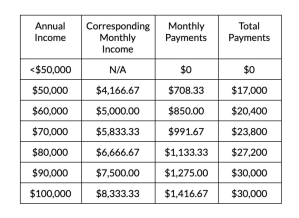
Lambda School, which runs virtual nine- and 18-month (part time) computer science courses for $30,000 — currently covering data science and full-stack web development — with payments for the course based on a sliding scale that only kicks in after you land a job that makes at least $50,000, has raised $74 million in equity in a Series C round.

The investment is largely coming from Gigafund, the VC started by ex-Founders Fund partners in 2017 originally to put more money into SpaceX, with Tandem Fund and Y Combinator (where Lambda School was incubated) also participating. Its list of other backers include GV, GGV, and Stripe. (Tommy Collison, the head of business development at Lambda, is the younger brother of the two Collison brothers who co-founded Stripe.)

Lambda School is not disclosing its valuation but CEO Austen Allred (who co-founded the company with Ben Nelson) confirmed that it is higher than the $150 million that Lambda had reached in its $30 million Series B in January 2019. He also said that he hopes that this will be the last funding that Lambda raises, not because it’s planning an IPO but because it’s aiming to become profitable. Allred confirmed that is not the case yet.

Allred added that the plan will be to use the funds to help the startup meet a surge in demand for its courses.

“There is more demand than we can handle right now, even with the fundraise,” he said. “I don’t know if that’s a good or bad thing.”

Currently there are about 3,000 students enrolled, all taking live (not on-demand) classes according to timetables programmed for different timezones. All the classes are set up on a specific personalised basis, with labs to extend your learning and “live” projects to put you in the middle of the kind of work that you would be expected to do with the skills your’re picking up. (It’s partly for this reason that Lambda doesn’t work like a typical MOOC and is more complicated to scale.)

The money will specifically be used to continue expanding the range of what Lambda School offers, both in terms of content but potentially also in terms of developing its business model.

Case in point: just yesterday, the startup got approved by California’s Bureau for Private Postsecondary Education, after a prolonged period of difficulties with the bureau that saw Lambda cease teaching in the state and get fined.

But part of the deal for approval involved Lambda no longer offering Income Share Agreements to students, for the moment at least. With ISAs a cornerstone of how the company presents its deferred-payment model, Allred said Lambda is still working on making ISAs available but is also looking at “student-friendly substitutes” in the interim.

To be clear, getting approved by that board is not the same as accreditation: Lambda School doesn’t offer official degrees but certificates when students complete the courses. Currently there is no plan to get accreditation to offer degrees, Allred said.

“From a regulatory standpoint we could receive accreditation and grant degrees but [boards] require you to submit changes to curriculum a year in advance and our students can’t afford that. Things like that are a nonstarter until the accrediting bodies change their requirements,” he said, and added that schools that have accreditation are not always better than this.

“There are thousands of schools fully accredited that have a 20% graduation rate,” he said. “It doesn’t make you good. We have to prove our worth to students in other ways, usually through outcomes.”

Lambda School’s funding may be coming amid a surge of demand for its courses — and interest in online education companies in general, as a way to keep learning even as schools close — but that doesn’t mean it hasn’t also been a tricky time for the startup.

In April, Lambda cut 19 staff and executives took a 15% pay cut amid market uncertainty due to the coronavirus pandemic (and maybe also to sharpen up its accounts, something that regularly happens when startups are in the process of raising money). The company currently has a team of around 150, which includes both operational and support staff as well as course teachers and team leads (which are essentially teaching assistants). All of them are working remotely at the moment, Allred said.

But even before April, Lambda has faced a lot of negative opinion around how it applies the deferred payment business model. Critics have described the process of paying back fees based on your income as indentured servitude and predatory. And they claim the business model is impractical because of how Lambda itself has to the risk when students don’t make their expected salaries, since the ISA model gives paybacks on a sliding scale based not just on salary. Also, because of the limit of 24 months to pay back the fees, some students will pay back the full $30,000 but some will not.

Lambda’s model is based around taking 17% of your pay each month, and so if you earn even more, you pay back before the 24 month period, and you may more. One reader who finished the Lambda program tells me that he is paying $1,700 / month at the moment, for example.

Allred didn’t disclose how many default on payments but said that about 15% of students drop out before the end of the first month, which means they pay nothing at all.

These may be sticking points for some people, but not enough to curtail the startup’s growth, or interest among investors at a time when others in the space, like Coursera, Vedantu, Kahoot, and many others are also getting big injections of funding.

“We were attracted to Austen as a CEO,” said Stephen Oskoui, a Gigafund partner who is joining Lambda School’s board, in an interview. “Gigafund is very focused on the strength of those that we think will build for multiple decades, and the model for how Lambda School is operating has the potential for tremendous impact.”


https://ift.tt/2FL1M6N Lambda School raises $74M for its virtual coding school where you pay tuition only after you get a job https://ift.tt/2ErwIZe

India’s logistics SaaS startup FarEye bags $13 million

More than 150 e-commerce and delivery companies globally use an Indian logistics startup’s service to work out the optimum way to ship items to their customers.

That startup, Noida-based FarEye, said today it has raised an additional $13 million to close its Series D financing round at $37.5 million.

FarEye first unveiled its Series D round in April this year when it raised from Microsoft’s venture fund M12, Eight Roads Ventures, Honeywell Ventures and SAIF Partners.

The startup said today industry veterans Nandan Nilekani and Sanjeev Aggarwal’s Fundamentum Partnership led the extended round, with participation from KB Global Platform Fund.

FarEye helps companies orchestrate, track and optimize their logistics operations. Say you order a pizza from Domino’s; the eatery uses FarEye’s service, which integrates into the system it is using to quickly inform the customer how long they need to wait for the food to reach them.

Behind the scenes, FarEye is helping Domino’s evaluate a plethora of moving pieces. How many delivery people are in the vicinity? Can it bundle a few orders? What’s the maximum number of items one can carry? How experienced is the delivery person? What’s the best route to reach the customer? And, would the restaurant need the same number of delivery people the following day?, explained Kushal Nahata, co-founder and chief executive of FarEye.

Logistics firms have made minimal investment in digitisation. So, “the amount of visibility they have over their own delivery network is minimal. Forget what a customer should expect,” said Nahata, explaining the challenges the industry faces.

FarEye is addressing this by using AI to parse through more than a billion data points to identify the optimum solution. In the past year, it has fine-tuned its algorithm to handle last-mile and long-haul deliveries to offer a full suite of services to its clients, said Nahata.

The startup, which raised capital for the second time in the middle of the global pandemic, said the virus has accelerated business activities for most of its clients as more people buy online to avoid visits to neighbourhood stores. In India, the current e-commerce orders exceed those of pre-coronavirus days already, he said.

The fresh capital will help the startup as it looks to scale ahead of the festive season, when people in India spend lavishly and thereby give more business to FarEye’s clients. It’s also the time when e-commerce firms clock record sales. The rest of the focus is on international expansion, said FarEye.

The startup, which already has clients in the U.S., Europe and Singapore, plans to further its growth outside of India. Nahata said several of its existing clients have extended their tie-up for operations in other markets.

“Investment in the logistics space is essential for the economic growth of any nation. FarEye has captured the pulse of this industry and has all the ingredients to head towards global leadership. I believe in the founders and the team has the clarity of vision. We are excited to partner with FarEye in its journey to create a global technology leader in the logistics space,” said Aggarwal of Fundamentum, in a statement.


https://ift.tt/eA8V8J India’s logistics SaaS startup FarEye bags $13 million https://ift.tt/31gygxZ

Exo raised $40 million for its handheld medical imaging device

Exo, a developer of new diagnostic hardware for the medical industry, has raised $40 million in a new round of funding as investors continue to back new companies that are reducing the cost and complexity of medical devices.

Cost, portability, image quality and the inability to image dense body compositions have all limited the impact that diagnostic tools like ultrasounds can have on patient care around the world, according to a statement from the company.

Exo solves that problem by building on a patented piezoelectric micromachined ultrasound transducer, the company said.

Its device improves image quality, while an accompanying software toolkit boosts the diagnostic capabilities of the device.

Exo predicts that the worldwide point of care ultrasound market will reach $1.5 billion in 2024 and grow at nearly 10% a year.

“Emergency room phyisicians around the world are often tasked with solving some of the most urgent healthcare problems — COVID-19 diagnosis and complications, cardiac emergencies, internal bleeding — without being able to see clearly into a patient they only have minutes to diagnose and treat,” said Exo chief executive Sandeep Akkaraju, in a statement.

The new $40 million round to back the company’s technology follows a $35 million investment in 2019 and brings the company’s total capital raised to nearly $100 million, according to a statement. The funding was led by Fiscus Ventures, Reimagined Ventures (both affiliates of Magnetar Capital) and Action Potential Ventures, with additional participation from TDK Ventures, Solasta Ventures and all previous investors, including Intel Capital and Applied Ventures.

Exo’s team comes from consumer tech giants like Apple and Google and leading medical device companies like GE, Johnson & Johnson, Maxim, Medtronic and Siemens.

“As both an emergency room physician and a venture capitalist, I know firsthand the transformative potential of the products that Exo is bringing to market,” said Dr. Ted Koutouzis of Fiscus and Reimagined Ventures, in a statement. “The Exo team is focused on building a device that works seamlessly within the often chaotic and urgent environment of a hospital, and delivers the image quality, clean interface, and diagnostic tools that doctors have dreamed about having in the palm of our hands.”

The Exo hardware comes with a suite of software tools that have been designed to integrate with existing workflows. And the company has plans to use its initial foray into medical imaging as a way to land and expand into a broader suite of tools for the hospital or urgent care environment. The company envisions a multi-functional device that can perform a number of different diagnoses.

“Exo is creating a platform technology that can drive true adoption of point of care imaging in emergency rooms and critical care units, can facilitate advanced surgical robotics and endoscopic procedures, and could enable therapeutic modalities in non-invasive neuromodulation and drug-delivery,” said Juan Pablo Mas, of Action Potential Venture Capital (the corporate venture arm of GlaxoSmithKline focused on bioelectronic technologies).


https://ift.tt/eA8V8J Exo raised $40 million for its handheld medical imaging device https://ift.tt/2Edyhdd

Unicorn rodeo: 6 high-flying startups that are set to go public

This week Airbnb announced that it has privately filed to go public, putting the famous unicorn on a path to a quick IPO if it wants. The recent move matches reporting indicating that the home-sharing upstart could yet go public in 2020 despite the collapse of the travel industry.


The Exchange explores startups, markets and money. You can read it every morning on Extra Crunch, or get The Exchange newsletter every Saturday.


But Airbnb is not the only venture-backed company of note that is looking to go public at the moment, or that has privately filed to go public. Indeed, so many unicorns are looking to get out the door in the next quarter or two, I’ve started to lose track of their status.

So, this morning, let’s gather a digest of each unicorn that has filed privately, is expected to debut shortly, or may go public in the next year or two. We’re talking Airbnb, Asana, ThredUp, Qualtrics, Palantir and Ant first, and then more loosely about the huge cadre of companies that could go public before the end of 2022, like UIPath, Intercom, and, sure, Robinhood as well.

Today is Friday, which means we can afford to take a minute, center ourselves and make sure that we’re ready for the news that next week will inevitably bring. So let’s repine and have a little fun.

Upcoming unicorn IPOs

In order to keep this digestible, we’ll proceed in bulleted-list format. Starting with the biggest news, let’s remind ourselves of Airbnb’s decline and recovery, starting with revenue numbers:

  • Airbnb has filed to go public and is expected to raise capital in its debut. While its filing is currently private, the company likely wouldn’t kickstart the process this early in its recovery from COVID-19-related issues if it didn’t mean to follow through. So, we can anticipate a somewhat-speedy offering provided that things don’t change again. Airbnb’s Q2 revenue fell by at least 67% from $1 billion or more to $335 million in the period, per Bloomberg. So, the late-Q2 and Q3 rebound story are likely the strength that Airbnb intends to lean on when it does debut.


    https://ift.tt/3d9UILS Unicorn rodeo: 6 high-flying startups that are set to go public https://ift.tt/2CLMvRV

Facebook trails expanding portability tools ahead of FTC hearing

Facebook is considering expanding the types of data its users are able to port directly to alternative platforms.

In comments on portability sent to US regulators ahead of an FTC hearing on the topic next month, Facebook says it intends to expand the scope of its data portability offerings “in the coming months”.

It also offers some “possible examples” of how it could build on the photo portability tool it began rolling out last year — suggesting it could in future allow users to transfer media they’ve produced or shared on Facebook to a rival platform or take a copy of their “most meaningful posts” elsewhere.

Allowing Facebook-based events to be shared to third party cloud-based calendar services is another example cited in Facebook’s paper.

It suggests expanding portability in such ways could help content creators build their brands on other platforms or help event organizers by enabling them to track Facebook events using calendar based tools.

However there are no firm commitments from Facebook to any specific portability product launches or expansions of what it offers currently.

For now the tech giant only lets Facebook users directly send copies of their photos to Google’s eponymous photo storage service — a transfer tool it switched on for all users this June.

“We remain committed to ensuring the current product remains stable and performant for people and we are also exploring how we might extend this tool, mindful of the need to preserve the privacy of our users and the integrity of our services,” Facebook writes of its photo transfer tool.

On whether it will expand support for porting photos to other rival services (i.e. not just Google Photos) Facebook has this non-committal line to offer regulators: “Supporting these additional use cases will mean finding more destinations to which people can transfer their data. In the short term, we’ll pursue these destination partnerships through bilateral agreements informed by user interest and expressions of interest from potential partners.”

Beyond allowing photo porting to Google Photos, Facebook users have long been able to download a copy of some of the information it holds on them.

But the kind of portability regulators are increasingly interested in is about going much further than that — meaning offering mechanisms that enable easy and secure data transfers to other services in a way that could encourage and support fast-moving competition to attention-monopolizing tech giants.

The Federal Trade Commission is due to host a public workshop on September 22, 2020, which it says will  “examine the potential benefits and challenges to consumers and competition raised by data portability”.

The regulator notes that the topic has gained interest following the implementation of major privacy laws that include data portability requirements — such as the European Union’s General Data Protection Regulation (GDPR) and the California Consumer Privacy Act (CCPA).

It asked for comment submissions by August 21, which is what Facebook’s paper is responding to.

In comments to the Reuters news agency, Facebook’s privacy and public policy manager, Bijan Madhani, said the company wants to see “dedicated portability legislation” coming out of any post-workshop recommendations.

It reports that Facebook supports a portability bill that’s doing the rounds in Congress — called the Access Act, which is sponsored by Democratic Senators Richard Blumenthal and Mark Warner, and Republican senator Josh Hawley — which would require large tech platforms to let their users easily move their data to other services.

Albeit Madhani dubs it a good first step, adding that the company will continue to engage with the lawmakers on shaping its contents.

“Although some laws already guarantee the right to portability, our experience suggests that companies and people would benefit from additional guidance about what it means to put those rules into practice,” Facebook also writes in its comments to the FTC.

Ahead of dipping its toe into portability via the photo transfer tool, Facebook released a white paper on portability last year, seeking to shape the debate and influence regulatory thinking around any tighter or more narrowly defined portability requirements.

In recent months Mark Zuckerberg has also put in facetime to lobby EU lawmakers on the topic, as they work on updating regulations around digital services.

The Facebook founder pushed the European Commission to narrow the types of data that should fall under portability rules. In the public discussion with commissioner Thierry Breton, in May, he raised the example of the Cambridge Analytica Facebook data misuse scandal, claiming the episode illustrated the risks of too much platform “openness” — and arguing that there are “direct trade-offs about openness and privacy”.

Zuckerberg went on to press for regulation that helps industry “balance these two important values around openness and privacy”. So it’s clear the company is hoping to shape the conversation about what portability should mean in practice.

Or, to put it another way, Facebook wants to be able to define which data can flow to rivals and which can’t.

“Our position is that portability obligations should not mandate the inclusion of observed and inferred data types,” Facebook writes in further comments to the FTC — lobbying to put broad limits on how much insight rivals would be able to gain into Facebook users who wish to take their data elsewhere.

Both its white paper and comments to the FTC plough this preferred furrow of making portability into a ‘hard problem’ for regulators, by digging up downsides and fleshing out conundrums — such as how to tackle social graph data.

On portability requests that wrap up data on what Facebook refers to as “non-requesting users”, its comments to the FTC work to sew doubt about the use of consent mechanisms to allow people to grant each other permission to have their data exported from a particular service — with the company questioning whether services “could offer meaningful choice and control to non-requesting users”.

“Would requiring consent inappropriately restrict portability? If not, how could consent be obtained? Should, for example, non-requesting users have the ability to choose whether their data is exported each time one of their friends wants to share it with an app? Could an approach offering this level of granularity or frequency of notice could lead to notice fatigue?” Facebook writes, skipping lightly over the irony given the levels of fatigue its own apps’ default notifications can generate for users.

Facebook also appears to be advocating for an independent body or regulator to focus on policy questions and liability issues tied to portability, writing in a blog post announcing its FTC submission: “In our comments, we encourage the FTC to examine portability in practice. We also ask it to recommend dedicated federal portability legislation and provide advice to industry on the policy and regulatory tensions we highlight, so that companies implementing data portability have the clear rules and certainty necessary to build privacy-protective products that enhance people’s choice and control online.”

In its FTC submission the company goes on to suggest that “an independent mechanism or body” could “collaboratively set privacy and security standards to ensure data portability partnerships or participation in a portability ecosystem that are transparent and consistent with the broader goals of data portability”.

Facebook then further floats the idea of an accreditation model under which recipients of user data “could demonstrate, through certification to an independent body, that they meet the data protection and processing standards found in a particular regulation, such as the [EU’s] GDPR or associated code of conduct”.

“Accredited entities could then be identified with a seal and would be eligible to receive data from transferring service providers. The independent body (potentially in consultation with relevant regulators) could work to assess compliance of certifying entities, revoking accreditation where appropriate,” it further suggests.

However its paper also notes the risk that requiring accreditation might present a barrier to entry for the small businesses and startups that might otherwise be best positioned to benefit from portability.


from Social – TechCrunch https://ift.tt/eA8V8J Facebook trails expanding portability tools ahead of FTC hearing Natasha Lomas https://ift.tt/34rH7Pc
via IFTTT

Thursday, August 20, 2020

Figma CEO Dylan Field discusses fundraising, hiring and marketing in stealth mode

You’d be hard pressed to hang out with a designer and not hear the name Figma.

The company behind the largely browser-based design tool has made a huge splash in the past few years, building a massive war chest with more than $130 million from investors like A16Z, Sequoia, Greylock, Kleiner Perkins and Index.

The company was founded in 2012 and spent several years in stealth, raising both its seed and Series A without having any public product or user metrics.

At Early Stage, we spoke with co-founder and CEO Dylan Field about the process of hiring and fundraising while in stealth and how life at the company changed following its launch in 2016. Field, who was 20 when he founded the company, also touched on the lessons he’s learned from his team about leadership. Chief among them: the importance of empowering the people you hire.

You can check out the full conversation in the video embedded below, as well as a lightly edited transcript.

Raising a Series A a year behind schedule while still in stealth

I actually had approached John Lilly from Greylock in our seed round. For those who don’t know, John Lilly was the CEO of Mozilla and an amazing guy. He’s on a lot of really cool boards and has a bunch of interesting experience for Figma, with very deep roots in design. I had approached him for the seed round, and he basically said to us, “You know, I don’t think you guys know what you’re doing, but I’m very intrigued, so let’s keep in touch.” This is the famous line that you hear from every investor ever. It’s like “Yeah, let’s keep in touch, let me know if I can be helpful.” Sometimes, they actually mean it. In John’s case, he actually would follow up every few months or I would follow up with him. We’d grab coffee, and he helped me develop the strategy to a point that got us to what we are today. And that was a collaboration. I could really learn a lot from him on that one.

When we started off the idea was: Let’s have this global community around design, and you’ll be able to use the tool to post to the community and someday we’ll think about how people can pay us. Talking with John got me to the point where I realized we need to start with a business tool. We’ll build the community later. Now, we’re starting to work toward that.

At some point, John told me, “Hey, if you ever think about raising again, let me know.” A few weeks later, I told him maybe we would raise because I just wanted to work with him. We talked to a few other investors. I think it’s pretty important that there’s always a competitive dynamic in the round. But really, it was just him that we were really considering for that round. He really did us a solid. He really believed in us. At the time, it wasn’t like there were metrics to look at. He had conviction in the space, a conviction in the attack, and he had conviction in me and Evan, which I feel very, very honored by. He’s a dear mentor to this day, and he’s on our board. And it’s been a really deep relationship.

How to recruit while in stealth mode


https://ift.tt/eA8V8J Figma CEO Dylan Field discusses fundraising, hiring and marketing in stealth mode https://ift.tt/2YiQJIs

Humanity Inc. raises funding to allow us to monitor and affect our rate of aging

Most of us are now familiar with apps that track what’s known as our “digital biomarkers.” These include the steps, we’ve taken, our heart rate and our weight. In recent years startups have appeared which can, in a relatively turnkey manner, track our “biomedical markers,” such as cholesterol levels, for instance. Few, however, are seeking to combine the two to get a 360-degree view of how our bodies are doing.

Into this gap steps Humanity Inc., which will seek to do exactly that. Founded by two seasoned entrepreneurs, Humanity will combine digital and biomedical biomarkers into a consumer app that will fully launch next year.

Today it announces its initial seed fundraise of $2.5 million in a round led by Boston fund One Way Ventures and the legendary and long-time health tech angel investor Esther Dyson, among others.

Serial entrepreneurs Peter Ward (who co-founded early social network WAYN) and Michael Geer (formerly of Badoo) are aiming to “help humanity live healthier, longer lives” with a health and longevity company that will leverage AI to maximize people’s health span.

Their aim is to give users the ability to monitor their “actual rate of aging” and show them which actions are working or not working, and how they can even potentially reverse the aging process.

They are attracting some leading names from the world of genetics and the science of aging, including George Church and Aubrey de Grey, to their “Science Advisory Board.”

De Grey is best known for co-founding the Methuselah Foundation, which runs the Methuselah Mouse Prize in search of anti-aging technologies.

In a statement, de Grey commented: “The scientists of the world are focusing more and more on aging science, which is thankfully accelerating breakthroughs exponentially. However, we still need better vehicles to deliver these discoveries directly to the people. That is what Humanity is poised to do and why I am so excited to support them on this mission.”

Semyon Dukach, the managing partner of Humanity’s lead investor One Way Ventures, said: “We’re proud to be leading this round and backing this extraordinary team, along with a number of other great investors including leading funds and angels in the consumer tech and health space. We believe in the Humanity mission and clearly the timing could not be better for people to get access to such a product.”

Ward added: “Many people feel helpless when it comes to avoiding disease and slowing down the aging process. In the COVID-19 world, where we all now clearly understand that risk increases significantly with age and poor health, people’s number one question is, rightly, ‘what actions can I take each day to stay healthy and for much longer?’ ”

Geer said: “People have never had an accurate clear feedback loop to help them know whether what they’re doing to be healthier was really working or not. We want to finally give them that superpower.”

Humanity is currently testing its Alpha product on “a few hundred users” and claims to have “thousands” waiting to gain early access. The app will launch in the U.K. and the U.S. in early 2021, followed by a global rollout in 2022.


https://ift.tt/eA8V8J Humanity Inc. raises funding to allow us to monitor and affect our rate of aging https://ift.tt/2Eos2Dq

Patient engagement startup raises $15 million from Google’s Gradient Ventures

Klara, a New York-based healthcare startup that pitches itself as a better tool for patient engagement for doctor’s offices and other clinical practices, has raised $15 million in new financing. 

The money comes as investors continue to pour cash into companies developing new communications, diagnostics and management tools for medical offices as patients look for more virtual care options.

For Simon Bolz and his co-founder Simon Lorenz, the aspect of Klara’s business that differentiates it from its many, many competitors is the company’s emphasis on putting patient communications at the center of its user interface.

“The other products, maybe they started with intake or payments and they added messaging as an add-on. Building it that way, like others do, is not the most engaging way,” says Bolz.

Klara focuses on independent practices and practice groups beginning with dermatologists, but the company’s services work with any medical practice.

Integrations with EHRs and communication history are table stakes for most patient engagement services these days, and Klara offers those. The company works through a portal on a mobile web browser. Patients are sent a link via text and then interact with the service via text messaging.

It’s that text messaging component that attracted Google’s Gradient Ventures, according to Bolz. The company wants to automate more and more of the medical process and is going to rely on natural language processing technologies to do it.

“We are going more and more into automation. We have started to automate a lot of these processes, integrating with EHRs and practice management systems,” Bolz said. 

Darian Shirazi, a general partner at Gradient Ventures, and Navid Farzad, a partner at Frist Cressey Ventures, will both take seats on the Klara board.

“The traditional physician practice must transform to improve communication and engagement with their patients — especially in a post-COVID world. Existing practice technology infrastructure is inadequate. Klara’s seamless solution modernizes the practice infrastructure without disrupting workflows,” said Farzad in a statement.


https://ift.tt/eA8V8J Patient engagement startup raises $15 million from Google’s Gradient Ventures https://ift.tt/2YiAdYJ

Moon lander startup ispace raises $28 million and launches a new lunar data platform

Ispace, one of the startups working on putting a private lunar lander on the moon sometime in the next few years, has raised a $28 million Series B funding round, which will be used to help it continue to develop its commercial lander ahead of planned 2022 and 2023 launches. Alongside the investment, the Japanese startup is also announcing a new data platform business that will leverage the lunar data it will collect to provide other companies, space agencies, research organizations and more with an informed basis for planning their own moon missions and eventual lunar commercial developments.

The $28 million Series B, which was led by IF SPV 1st Investment Partnership (through Incubate Fund), and includes funding by Space Frontier Fund (a fund whose LPs include Toyota, Mizuho Bank and more), Takasago Thermal Engineering Co. and Mitsui Sumitomo, brings the startup’s total funding to date to $125 million. The funds will also be used to help ispace develop a larger version of its HAKUTO-R lunar lander, which is set to be put into use for the company’s third and following moon missions.

The lunar data business that ispace is developing, which is called “Blueprint Moon,” anticipates increasing investment in human presence on and near the moon. The commercialization of space thus far has focused on Earth’s own orbital environment, with NASA planning a spate of lunar missions, as well as an orbital lunar space station and sustained human surface activities, as well as interest and investment from many other space agencies globally.

Ispace has managed to attract a lot of strategic commercial partners already to support its lander program, including Takasago Thermal, which will be testing its own electrolysis tech on the moon on a future mission with ispace, and Mitsui Sumitomo, which is creating a lunar insurance product that will be able to underwrite future commercial moon missions. Blueprint Moon will use existing publicly available lunar data, along with information collected on future ispace surface missions, to help other businesses and agencies create similar business, research and exploration opportunities in the future, while also generating more near-term revenue for the startup as it continues to focus on its more ambitious launches.


https://ift.tt/eA8V8J Moon lander startup ispace raises $28 million and launches a new lunar data platform https://ift.tt/3aFbnau

blogger better Headline Animator